Finding Things Out – Before The Internet

It crossed my mind recently that any time I want to know something I can reach for my phone, tablet or laptop. It wasn’t always so!

Humans are curious by nature. As infants we ask our parents endless questions. Next comes school and the teachers and the books on the shelves.

Parents

As toddlers, pre-schoolers and very young children, we assumed our parents knew the answer to everything. They could have told us anything and we’d have believed it. In fact, many adults have funny stories about being told daft things for fun – and believing every word.

Teachers

Once in school, children had another oracle to consult – the teacher. Up went the hand and “Please Sir/ Miss, how did……………?” and so on. Of course teachers didn’t know everything, any more then parents did, but very young children didn’t know that.

Atlases, dictionaries, encyclopaedias etc.

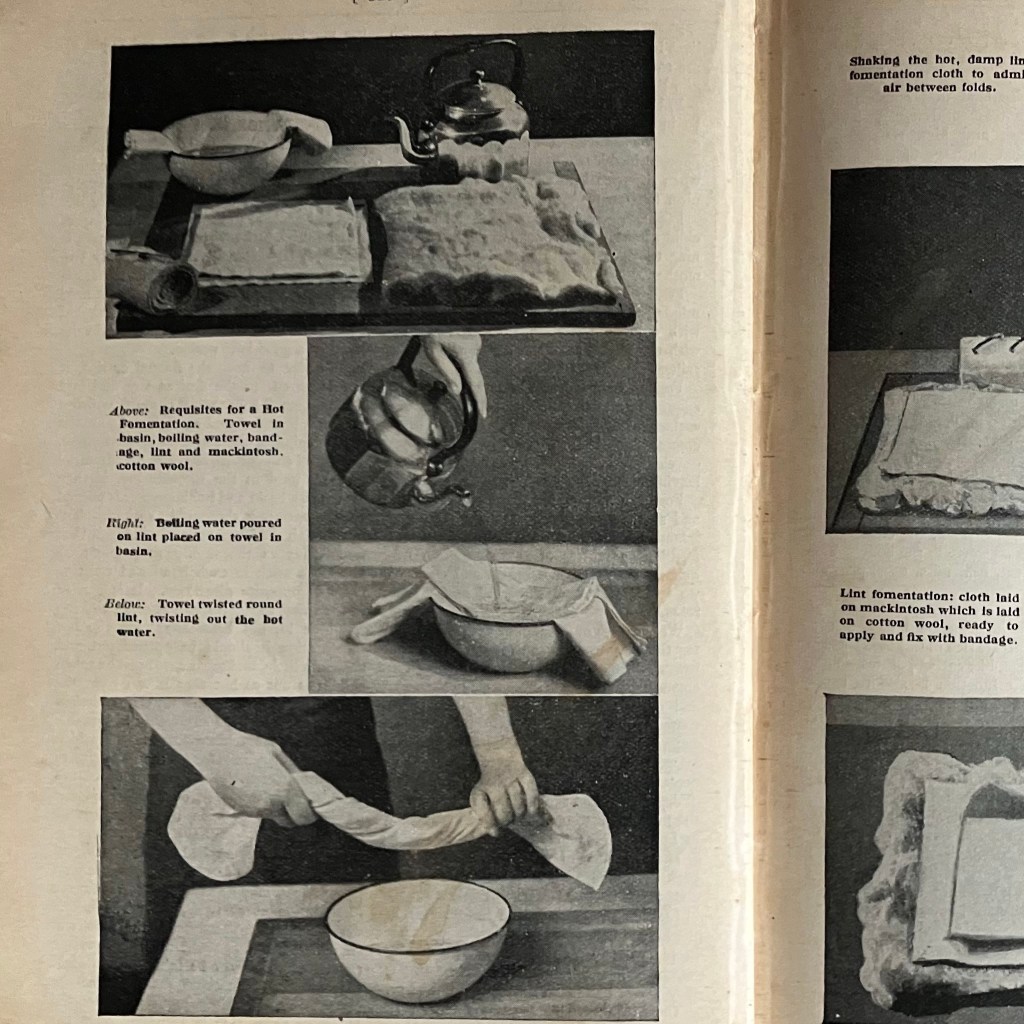
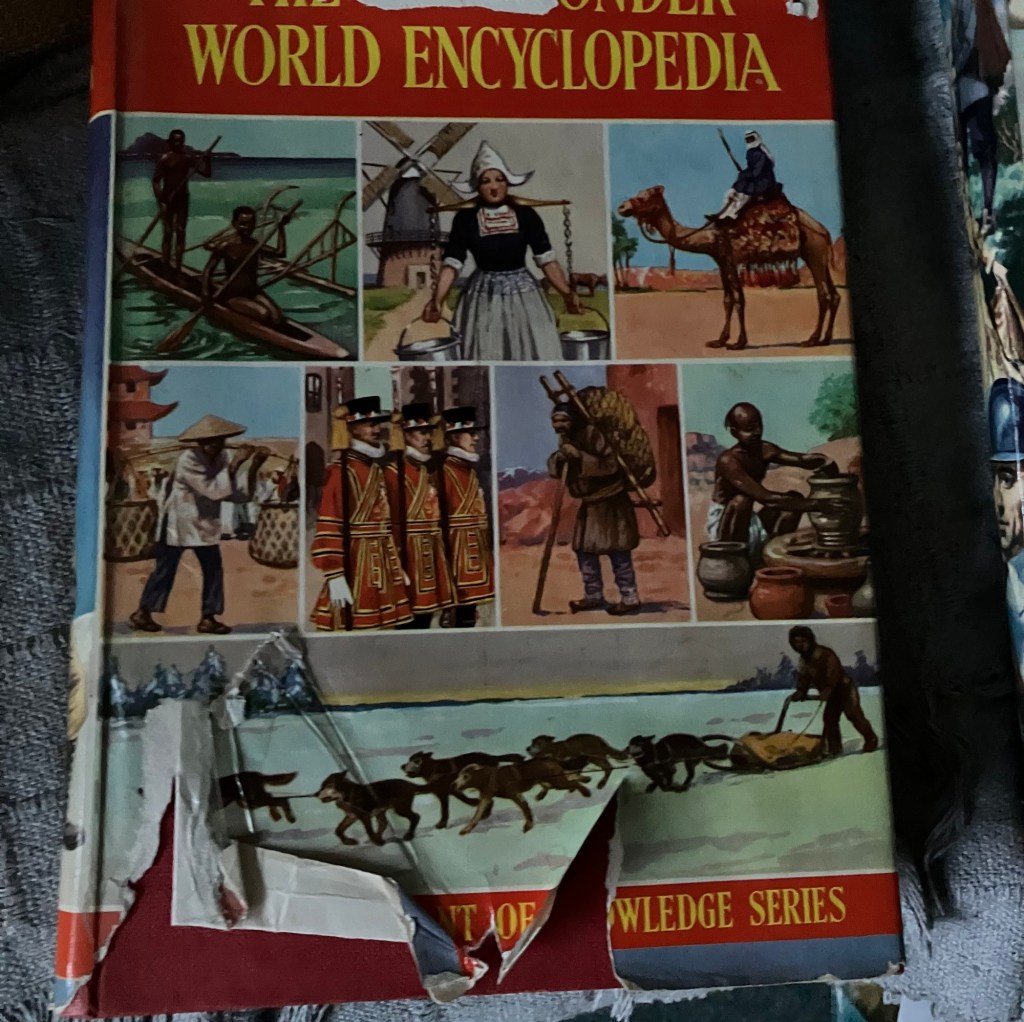
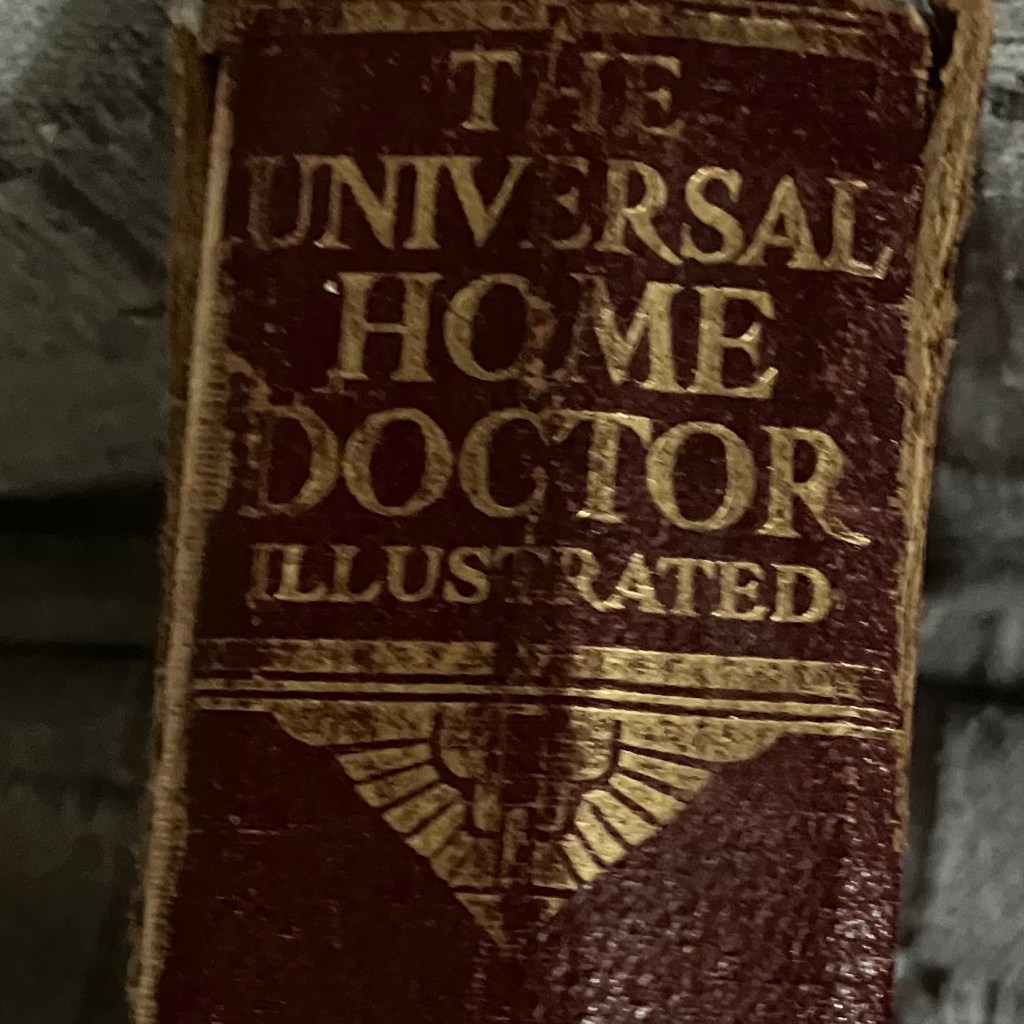
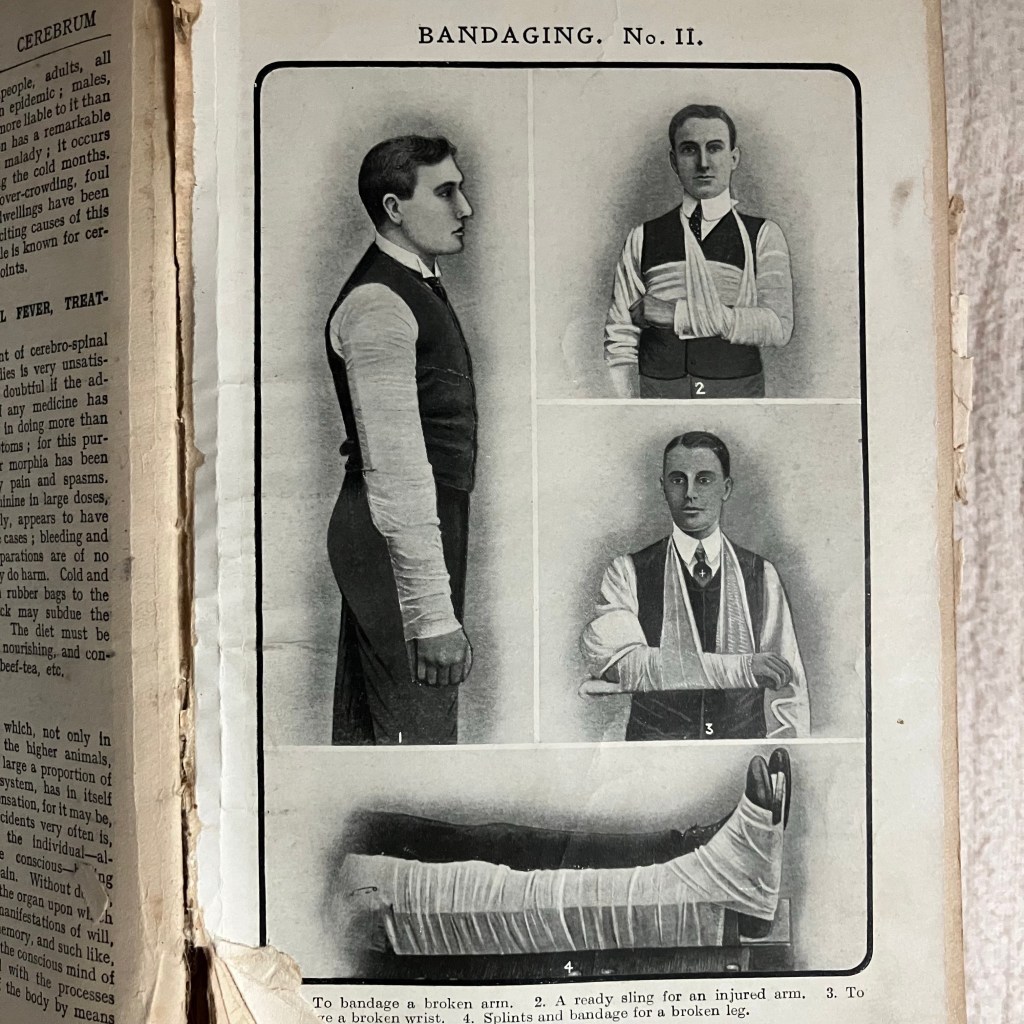
Once children became fluent readers, a whole new world opened up. Reference books were on hand in the classroom and most homes had a selection of books. A set of encyclopaedias was a popular thing to have. I know that’s how my grandfather collected his. These were often bought one at a time through a scheme, so I’ve been told. There would also be a Bible, a dictionary and often a world atlas. In many houses there would be a ‘Home Doctor’ book. I still have the two which were in my grandparents’ house. One is from the 1800s and the other from around 1920. They make fascinating reading!
Libraries

Libraries, particularly the reference sections, were a very important source of information. As an adult, and before the days of the Internet, I would make a note of anything I wished to find out more about and then take my list with me when I next had a chance to visit the local library.

Motoring Handbooks

For households with a car, and many didn’t when I was a child, the motoring handbook was a very useful travel guide. In the UK back in the 50s, we had the RAC and the AA. My dad favoured the RAC. With the membership the motorist got breakdown and rescue cover and every year received a new handbook. These held a wealth of information! There were road maps, of course, but also information on any town you were interested in, charts for calculating travelling distances and a full list of all registration letters so you could look up any car you spotted and find out which county it was from. We children had a lot of fun with that in the back of the car on holiday.

The Dawn of the Internet

This is a whole new era and not one I’m covering here. Now we walk around with ALL of the above reference material in our pockets. Children, even very young ones, are adept at looking things up on laptops in school and at home.

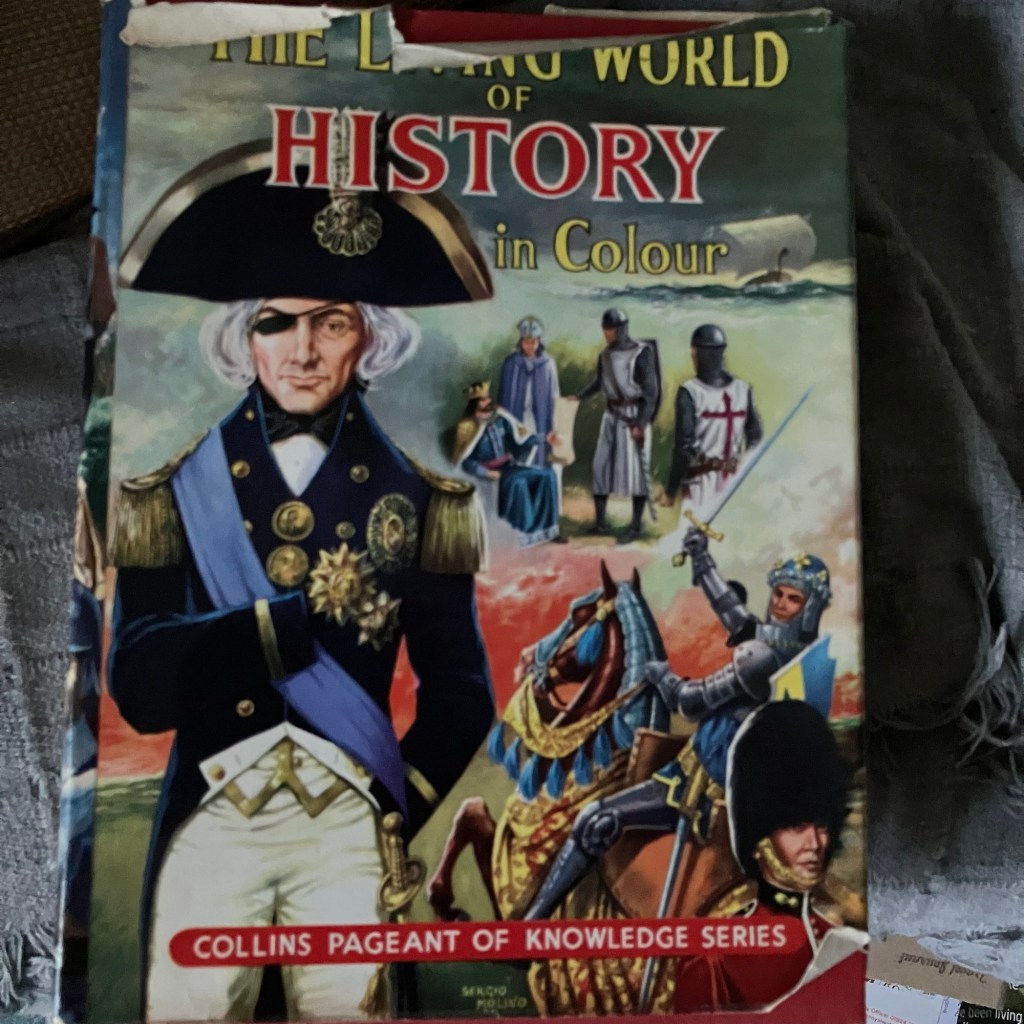
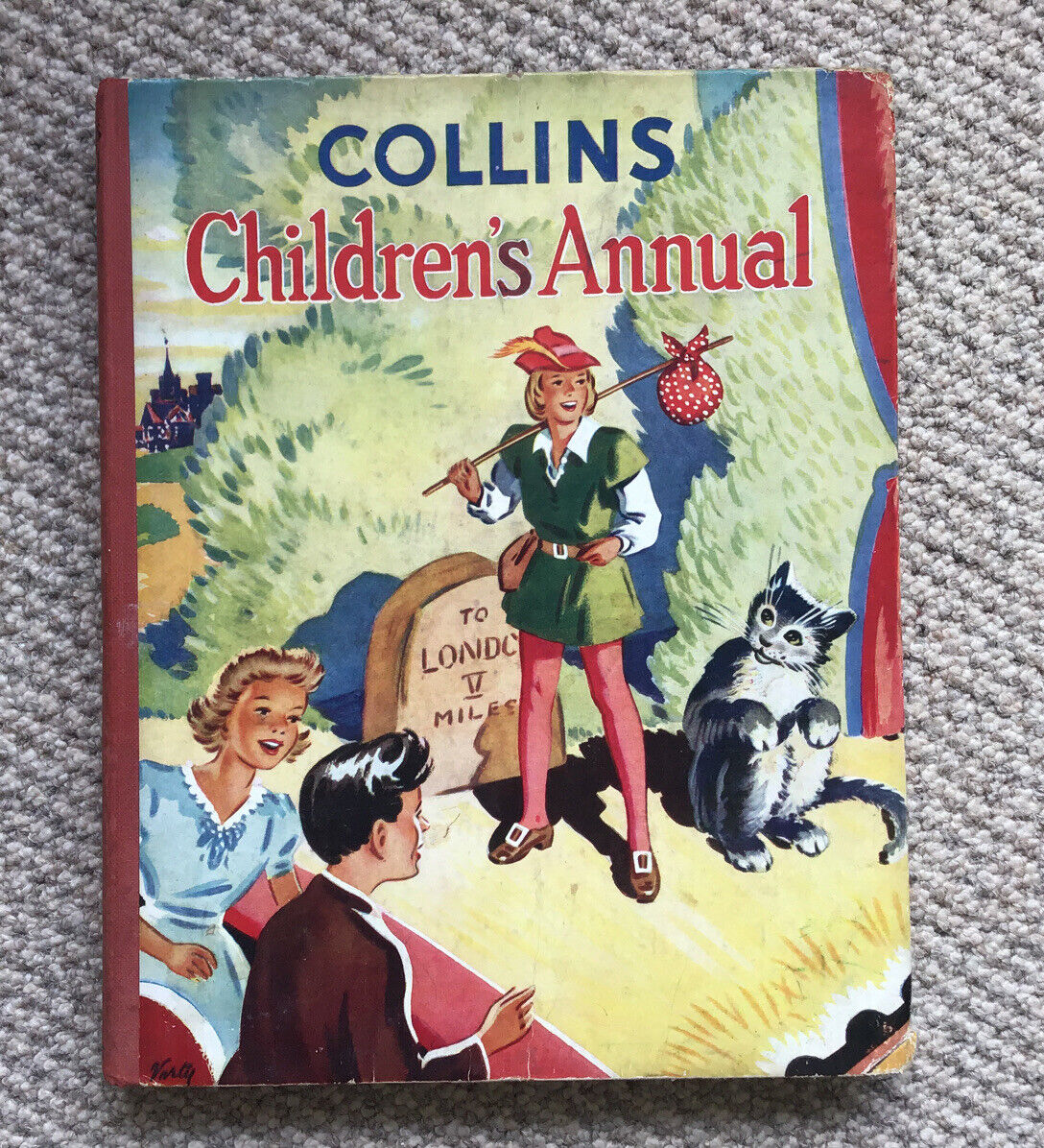
Finally, here are three of my own books from my childhood.
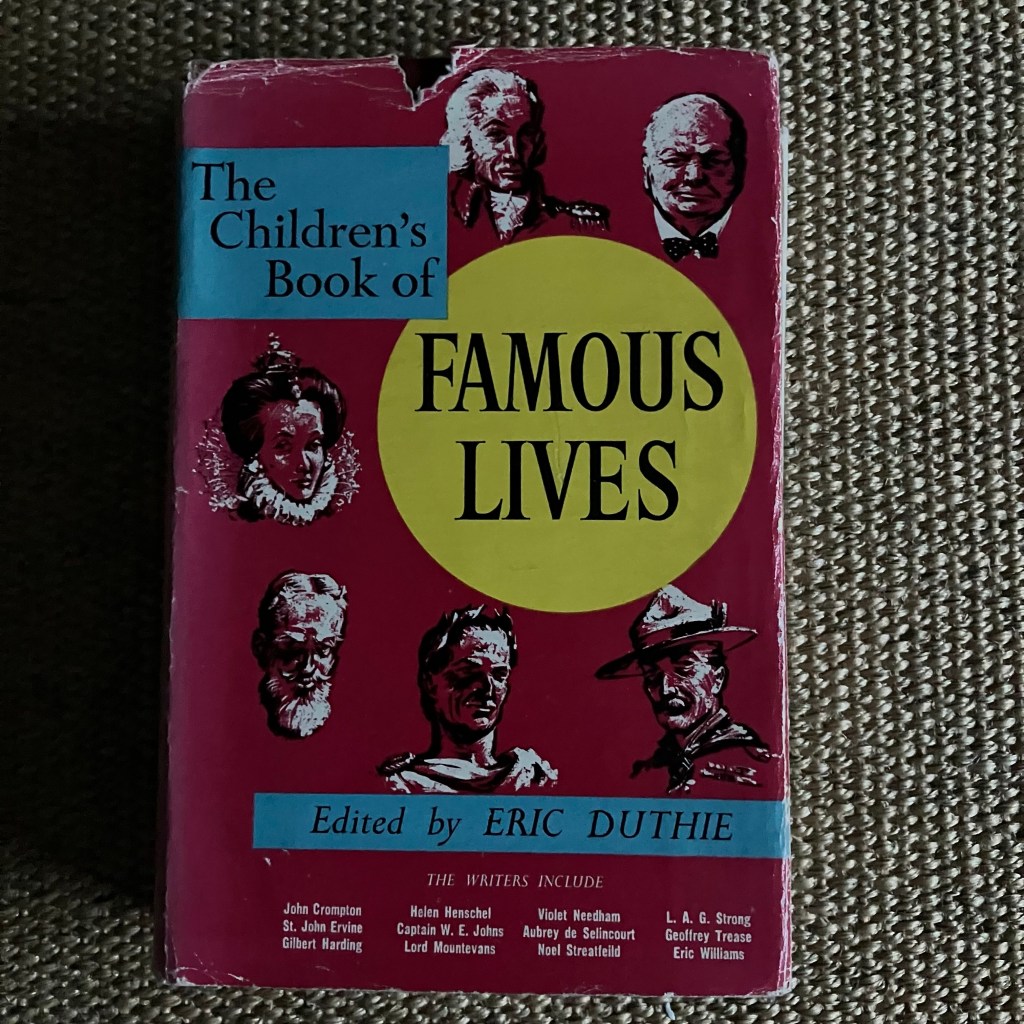
These are my own thoughts and memories, I am not attempting to write a history book!

The photographs are my own.
Changes Part 2

I have had so many lovely comments responding to my Changes Since the 50s post. Thank you all! So I’ve decided to post another one. A simple list again, brief, no pictures. I hope it rings some bells.

Cars had no seat belts or reversing lights. They had three gears and you had to pull the choke out in order to start the engine – then remember to push it in again.

Most people smoked (80% of men and 40% of women in the early 1950s) and you could smoke anywhere. In cinemas, on trains and buses, in hospitals, cafes and restaurants.

Peaches, pineapples, salmon and cream came mostly in tins.

Nobody wore helmets when cycling.

Suitcases didn’t have wheels.

You answered the telephone with a greeting, your exchange and your number e.g. “Hello, Somewhereton 456”.

All children had ‘hobbies’.

Everyone wore vests, winter and summer.

The word vegetarian was rarely heard. Likewise vegan.

Most people did the football pools weekly.

You used encyclopaedias to look things up. A home set if you had one, in the library if not.

What Happened To?

Apologies for a longer than usual break between posts. Perhaps I had bloggers’ block or maybe it’s becoming harder to think of topics I haven’t already covered. Over the past few weeks things have occasionally popped into my head and I’ve realised that they aren’t around any more. So this is a random collection of items. The only thing they have in common is that we don’t see them any more.

Motorbikes and Sidecars

My dad used to ride a motorcycle. When he married my mum he added a sidecar. My mum finally dug her heels in when she was pregnant with me and, as she described it, was being squished into the small space, hurtling along feeling too close to the road and unable to communicate with my dad. So he bought his first car! I have no idea of the make or model of either his motorbike or the sidecar so this is a stock image of something I imagine to be similar to what they had in 1951.

TV Westerns

We acquired our first TV when I was ten in 1961. It was so exciting! We three children enjoyed many programmes such as Sketch Club, Tales of the Riverbank, Zoo Quest and David Nixon’s magic show – which led me to want to be a magician when I grew up. For a while, anyway! Adventure programmes like Whirlybirds and RCMP we also loved. But right at the top of the list were the cowboy serials. We absolutely loved The Lone Ranger and The Range Rider. I also recall Laramie and Bronco. There is no cowboy history here in Britain so we devoured those Westerns as they were a totally new genre of story-telling for us and their adventures and heroic deeds were like nothing we’d ever come across before. My brother and I even got cowboy outfits for Christmas one year.

Enid Blyton

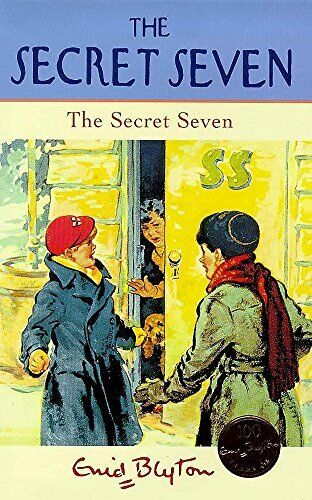
Oh, how we loved the Enid Blyton books! When I was enjoying the ripping yarns of the Famous Five and the Secret Seven my sister, who was younger than me, was enchanted by Tales of Green Hedges and The Magic Faraway Tree. The Five and the Seven had the most amazing adventures such as catching robbers and smugglers and yet always seemed to get home in time for tea.                Although disapproved of nowadays by some, Enid Blyton was a prolific and hugely successful children’s author. At her peak she was writing fifty books a year. She usually began writing soon after breakfast, with her portable typewriter on her knee and, stopping only for a short lunch break, she continued writing until five o’clock, by which time she would usually have produced 6,000–10,000 words. Rumours that Blyton operated “a company of ghost writers” persisted, as some found it difficult to believe that one woman working alone could produce such a volume of work.

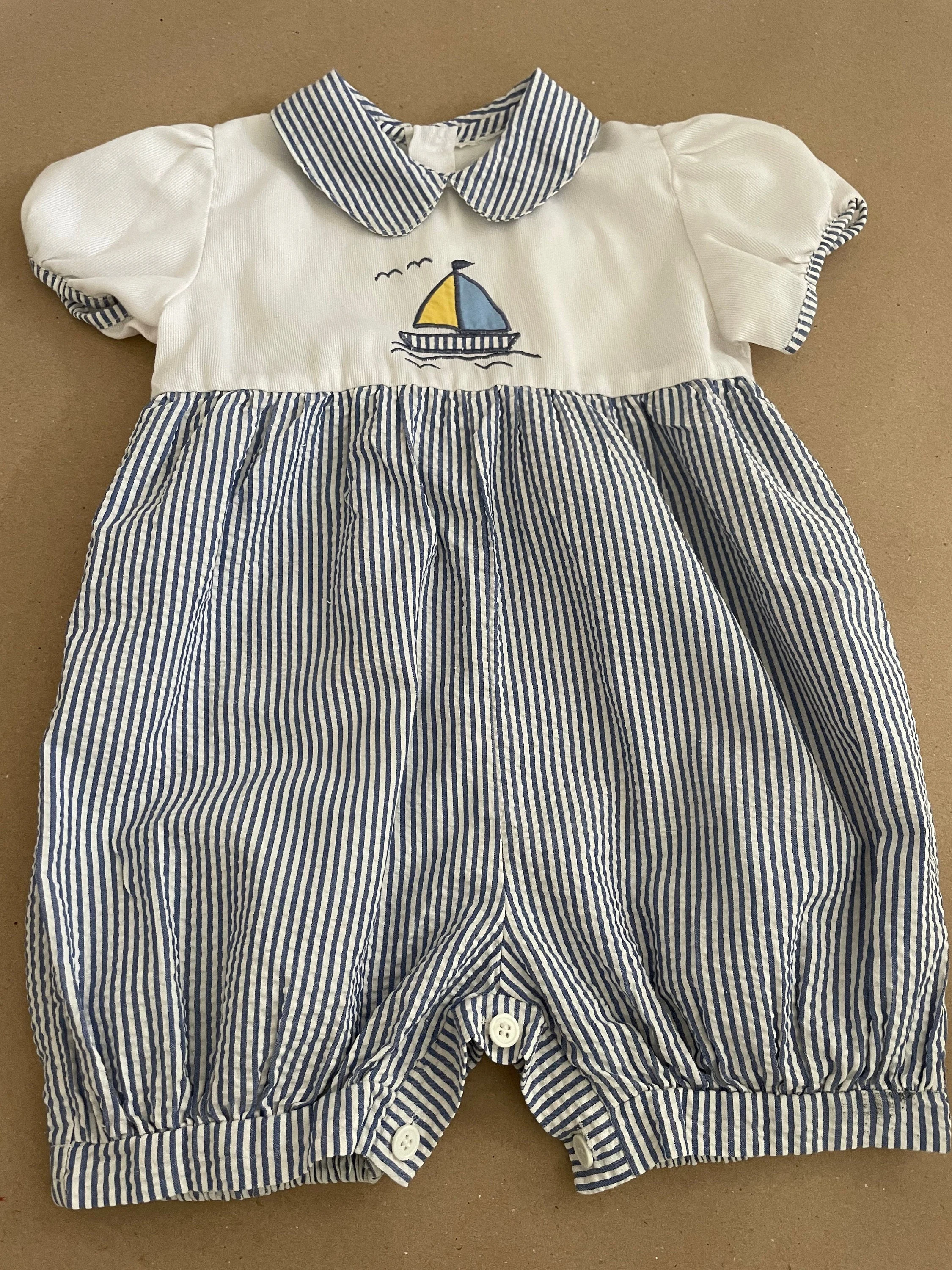
Rompers

When I was little, girl babies and toddlers wore dresses and little boys wore rompers. There were no unisex clothes, no Babygro’s, no tiny denim jeans and sweatpants and no tights, just socks.

Above is one of our family photographs of a brother and sister (they will know who they are!). The boy is in rompers and the girl in a dress.

45’s and 78’s

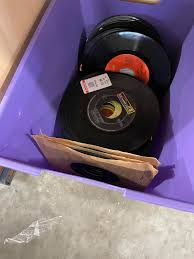
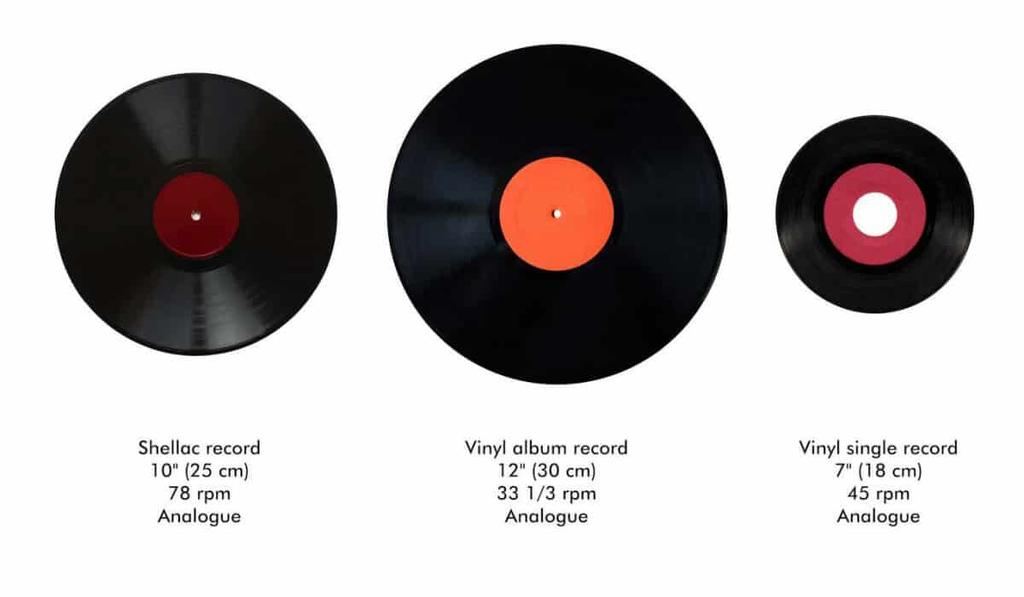
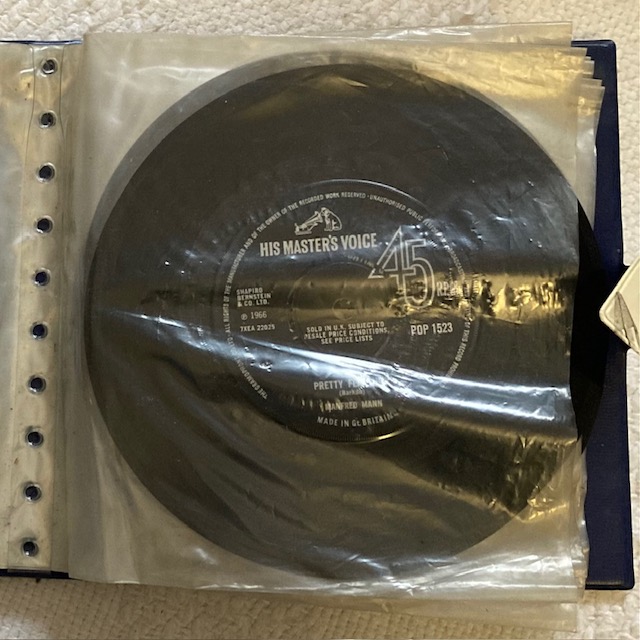
Music was played on discs. The very first ones were wax, then shellac and later they were made of vinyl. They were identified by their speed. When I was small the gramophone records (as they were known then) my mum and dad had were LPs (albums) which were played at 33 rpm and singles known as 78’s. Both were 12″ wide. Then, by the time I was old enough to be buying my first pop records, the singles were known as 45’s and were much smaller (7″) .

This is a potted history of the vinyl record. From 1939, Columbia Records were developing vinyl technology and in 1948, introduced the 12” Long Play (LP) 33 1/3 rpm record. The rivalry between RCA Victor and Columbia led to the introduction of another competing format by RCA, the 7”/45 rpm EP. The period where both of these formats fought for dominance from 1948-1950 was known as the “War of the Speeds.” After a few years, the 12”/33 rpm LP became the predominant format for albums, and the 7”/ 45 rpm record became the format of choice for singles. They always had paper sleeves and great care had to be taken with them as they scratched very easily. Or they could be kept in a wallet like the one below.

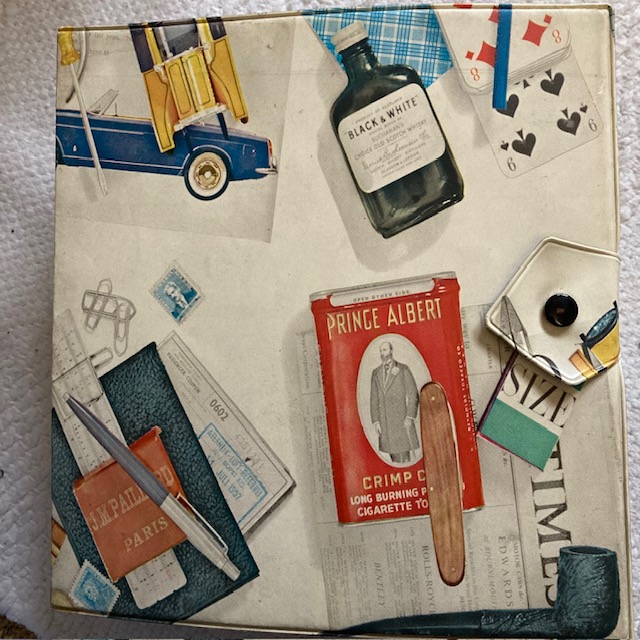
This is a handy little holder for 45’s which my brother gave me for as a birthday present when I was in my teens. It’s still full of my old singles. It has enough plastic wallets for 20 singles but I’ve got two in each so it’s quite a collection! There are no scratches on any of them, I was very careful with my records! The folder was really useful for taking records to parties or to friends’ houses.

Talcum Powder, Milk of Magnesia and Calamine Lotion

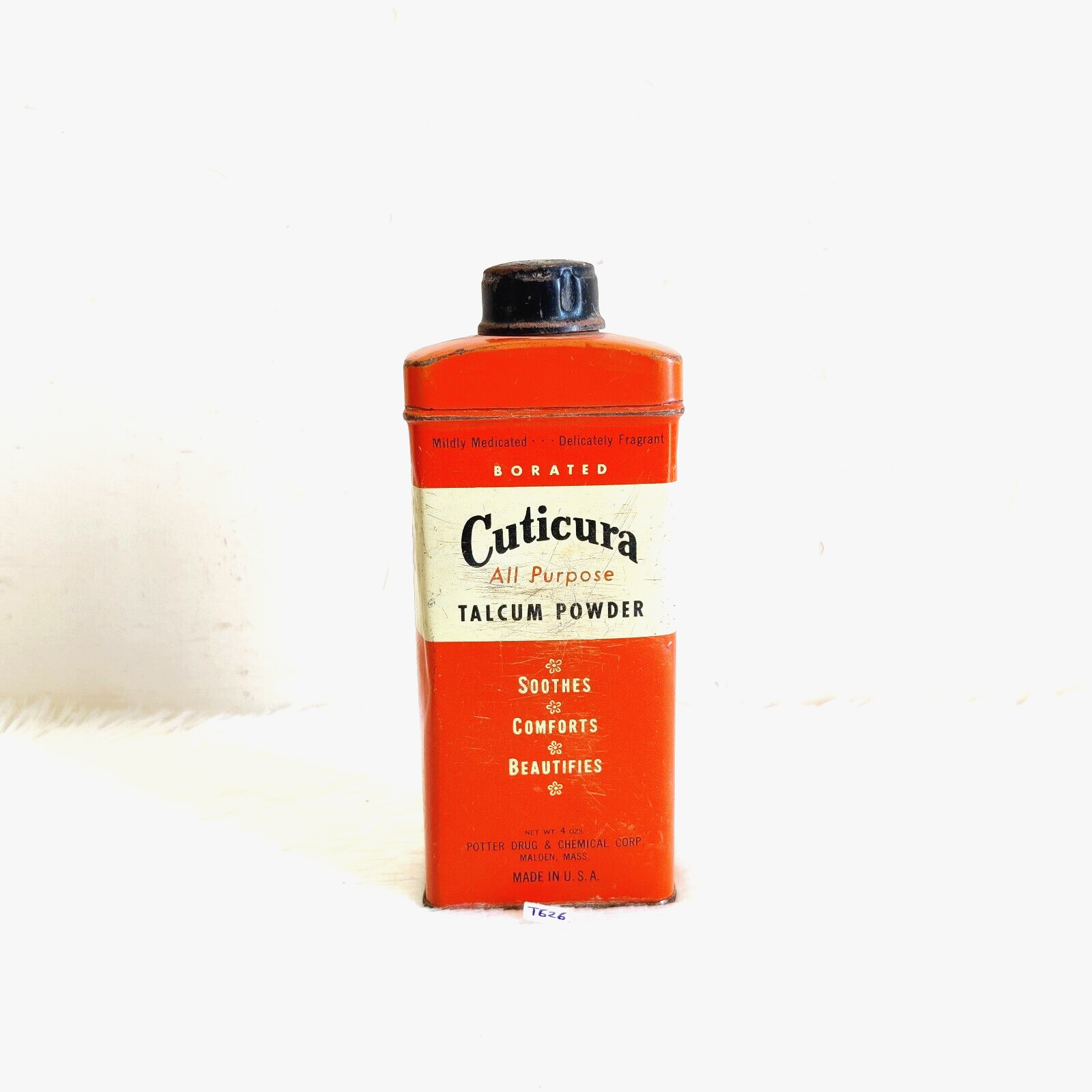
No bathroom was complete without a tin or two of talcum powder and a bottle each of Milk of Magnesia (for indigestion) and calamine lotion (for skin problems like sunburn, rashes and insect stings). Iodine was also popular and it’s what the teachers used to put on a cut if you fell and hurt yourself at playtime. How it stung!!!

There were everyday talcs like Johnson’s Baby Powder and, one of my mum’s favourites, Cuticura. You could also by talcum powder to go with a favourite perfume, sometimes they came in gift sets. A scented talcum powder was always a much appreciated gift for a mum, aunt or grandmother.

Credit to Google Images and Wikipedia. If anyone objects to my use of a particular image please contact me and it will be removed.

Annuals.

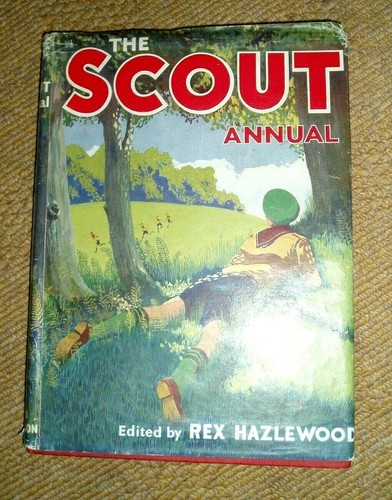
No, not the garden variety! Those wonderful, colourful, hardbacked books full of articles, photographs, cartoons, puzzles, competitions, facts, jokes, craft ideas and SO much fun! The books we loved to be bought at Christmas and which were eagerly awaited every year. Those mines of fun, facts and entertainment which you could carry on dipping into all year – until the next one came out. Most children had a regular weekly comic and that comic would produce an annual every winter. Even as an early teen when I and my sister were taking magazines like Jackie, they, too had annuals. Radio and TV programmes, newspapers, clubas, organisations etc etc ALL published annuals.

In the late 50s/ early 60s I, my brother and my sister took Princess, Hotspur and Bunty and the annuals were something to be looked forward to all year.

EAGLE ANNUAL: THE BEST OF THE 1950s COMIC Hardcover 2007 Features DAN DARE - L03      Roy-of-the-Rovers-The-Best-of-the-1950s-by-Frank-Pepper-9781781087176     

It was a Jackie Annual from 1980 which made me think of writing this post. I often buy, on EBay or in charity shops, an annual for a friend’s year of birth when they have reached a milestone birthday. I enjoy sourcing them – even if they wonder what on earth that gift was all about! I recently acquired the Jackie 1980 annual for a family 40th birthday – female, obviously! I enjoyed leafing through it before posting it. They’re such a glimpse into how the world was in another era.

The-Scout-annual-1958

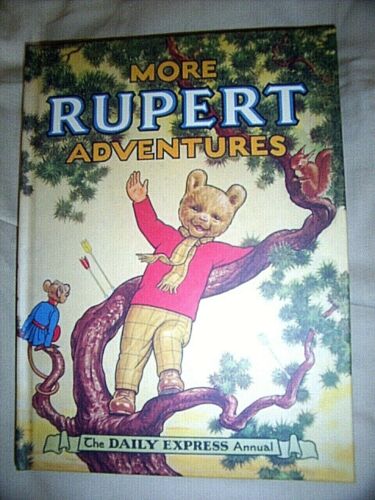
As children we hadn’t been familiar with Rupert Bear until two older boy cousins passed ALL their old Rupert Annuals on to us – and we loved them! We enjoyed all the cartoon stories of Rupert’s adventures and knew all the characters. My sister once said it used to annoy her that Rupert was never told off when he was late home for tea – but that aside, we loved them. My sister and I can still fold table napkins into water lilies after learning how to do it from an origami page in one of the Rupert annuals.

RUPERT-1952-ANNUAL-THIS-IS-A-COPY-OF-THE-1952      Every issue has an origami design for children or their parents to fold from a square sheet of paper. The directions for this paper water lily design appeared in the 1958 edition. Bear Origami, Pictures Of Leaves, Brain Parts, The Fifth Of November, Japanese Pagoda, 1970s Childhood, Paper Crowns, Country Fair, Mermaids And Mermen

Libraries

I have loved books and reading for as long as I can remember. I was thinking about libraries the other day and I realised that I use libraries less now than ever before in my life. The reasons are the same as they are for everybody else –

I can now look things up myself on my phone, ipad and laptop using the mighty Google.

I can now buy second-hand books in charity shops for as little as 50 pence and also very cheaply online and often postage free.

New books, too, are extremely affordable when bought in supermarkets or online.

I can also buy e-books and read them on any of my electronic devices. (I don’t, because I still prefer books, but I could.)

It’s no wonder that libraries and independent bookshops are closing in Britain.

All through my childhood, teens, twenties and thirties, being a member of a library was very important to me. Wherever I lived, I joined a library, sometimes being a member of more than one at a time.

As a child in the 1950s, we went to the library whenever we were in the nearby town which was five miles away. Below is a picture of the building it was in – taken a bit before the 1950s! When I lived in that area the building housed the library , the Labour Exchange and my dad’s office – he worked for the Forestry Commission. Although there was no library in our village (it was tiny) there was a lady who lived in a little house next to a chapel who ran a small book lending system from her front room. The main library used to drop new books off with her every so often.

llandovery-clock-tower

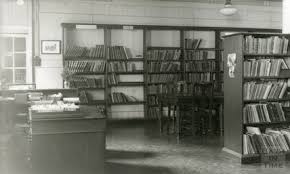
What I remember about libraries in the old days (even though I loved them) is how quiet and serious they were. You absolutely did not make a noise of any sort or you would be told off. I loved them because I love books and reading but I can see how someone less committed to reading could have been put off by the interior of a library.

Library 1  Library 2

Above – the interiors of a couple of old libraries. The pictures can’t convey the deathly hush which prevailed!

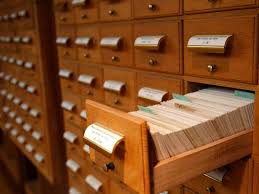
library files      library book

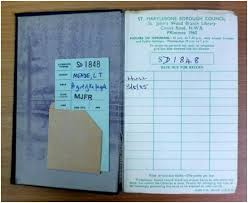
The pre-digital way of book-lending.

I have no recollection of ever being asked to do any independent research for homework when I was in school – not even when studying for A-levels. Lessons were all based on notes dictated by the teacher then and on learning by rote – but that’s another blog post! While I was at university I preferred to do most of my work in the university library. This was partly so that I could use the reference books but also because the atmosphere was more conducive to study than a cold, gloomy student rented house.

Libraries now often have art or history exhibitions running, they have computers the public can use, they are bright, friendly and welcoming. The children’s sections have toys and games and regular organised activities. Yet libraries are still closing all over the country. Where they have been saved and continue to function, they are often rehoused in a smaller space in a new building. The one shown below is a Victorian library building near where I used to work. In spite of a well-fought campaign to keep it open, it was closed over ten years ago. I believe it now houses offices so at least it isn’t empty or worse – demolished. The new library which replaced it is in a modern purpose built community centre. Public lending libraries began here in Britain in the 1850s, the main pioneer being William Ewart. Since 2010, nearly 500 libraries  have closed in England, Wales and Scotland. Some libraries facing closure have been taken over by volunteers.

normy library

Finally, a nice little tale of recycling!

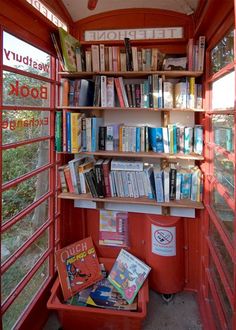
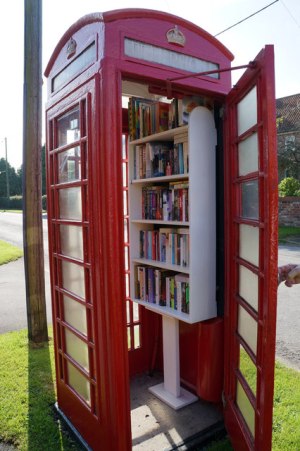
The iconic red telephone boxes found all over the UK are beginning to disappear but, thanks to a BT scheme called Adopt a Kiosk, many unused payphone kiosks have been transformed into libraries. This preserves the heritage of the red kiosk, particularly in rural locations and provides a library service in areas which lack one. Most of these libraries are left unlocked and are stocked by donations from local people. Anyone is free to borrow a book and donate a used book.

220px-Phone_box_library,_Whitwell,_IW,_UK    517d1d84e2bd9ff5150f1d852f0822bb--telephone-booth-free-library telephone-library-1

reading and And now, a few quotes about libraries:

Reading is an exercise in empathy; an exercise in walking in someone else’s shoes for a while. —Malorie Blackman

Whatever the cost of our libraries, the price is cheap compared to that of an ignorant nation. —Walter Cronkite

Libraries will get you through times with no money better than money will get you through times with no libraries. Anne Herbert.

Reading is to the mind what exercise is to the body. —Joseph Addison

As usual, I would like to say that all images and facts used in this post have been gleaned from the Internet and are readily available. However, if anyone objects to anything in this post, for any reason, please contact me directly so that I can remove it.

Nursery Rhymes . . . . . continued.

I have covered Nursery Rhymes in an earlier post but it’s a fascinating area and full of historical facts so I’m revisiting the subject and covering different rhymes.

Nursery rhymes are an important part of our history and cultural tradition here in the UK and it would be a shame if they died out. Each one has its own tune which comes to mind as soon as you see the words.

Half a pound of tuppenny rice,
Half a pound of treacle,
That’s the way the money goes,
Pop goes the weasel.

One theory claims that the rhyme originates in the grimy streets and packed sweatshops of Shoreditch and Spitalfields that provided Londoners with their clothing. A spinner’s weasel is a device that is used for measuring out a length of yarn; the mechanism makes a popping sound when the correct length has been reached. One imagines the spinner’s mind would wander to the more mundane, only to be brought back to harsh reality when the weasel went pop.

The third verse suggests an alternative origin, which is based upon the Londoners use of cockney rhyming slang;

Up and down the city road,
In and out the Eagle,
That’s the way the money goes,
Pop goes the weasel.

Pop

To “pop” is a London slang word for pawn. Weasel can be traced to the cockney rhyming slang of “weasel and stoat”, or coat. Even a very poor Victorian Londoner would have had a Sunday best coat or suit that could be pawned when times got hard (Pop goes the weasel), perhaps on cold and damp Monday morning, only to be retrieved on pay day. The Eagle above refers to the Eagle Tavern, a pub located on the corner of City Road and Shepherdess Walk, in the north London district of Hackney. Although the usage of the building has changed over the years, the current Eagle pub dating from the early 1900’s, displays a plaque proclaiming the building’s connection with the nursery rhyme.

Georgie Porgie,
Pudding and pie,
Kissed the girls and made them cry;
When the boys came out to play,

Georgie Porgie ran away.

georgieporgie-greenaway

It is thought that the ‘Georgie Porgie’ in question was actually the Prince Regent, later George IV. A very large gentleman, George weighed in at more than 17½ stone with a waist of 50 inches (from eating so many puddings and pies?), and he became a constant source of ridicule in the press of the time.

Despite his large size, George had also established for himself a rather poor reputation for his lusty romps with the ladies that involved several mistresses and a string of illegitimate children.

Little Jack Horner sat in a corner
Eating a Christmas pie;
He put in his thumb,
And pulled out a plum,
And said “What a good boy am I”

CHO196

Little Jack Horner lived in the 1530’s, the time of the Dissolution of the Monasteries during the reign of Henry VIII. Jack Horner was steward to Richard Whiting, the last of the Abbots of Glastonbury. It is said that the Abbot, hoping to placate King Henry, sent His Majesty an enormous Christmas pie containing the deeds of 12 manors. Horner was given the task of taking the ‘pie’ to London. During the journey he managed to open the pie and extract the deeds of the Manor of Mells in Somerset, presumably the ‘plum’ referred to in the rhyme. A Thomas Horner did assume ownership of Mells, but his descendants and the present owner of the house claim the rhyme is a slander.

Hush a-bye baby in the tree-top,
When the wind blows the cradle will rock,
When the bough breaks the cradle will fall,
Down will come cradle, baby and all

Hush a-bye Baby, or Rock a Bye Baby as I knew it, was reputably written by a boy who sailed with the Pilgrim Fathers to America in 1620 and was the first English poem written on American soil. It is said to have been inspired by the Native American custom of popping babies’ cradles in the branches of trees.

a8bfb22e101ca3460e6862f4fabedf31--rock-a-bye-baby-baby-cradles

Jack and Jill went up the hill
To fetch a pail of water;
Jack fell down and broke his crown
And Jill came tumbling after.

jack-and-jill-went-up-the-hill (2)

The rhyme I knew as a child contained the lines

He went to bed

to mend his head

with vinegar and brown paper

images

. . . . but I recently found one which says . .

To old Dame Dob

Who patched his nob

with vinegar and brown paper   

jj3

The small village of Kilmersdon in north Somerset claims to be the home of the Jack and Jill rhyme. Local legend recalls how in the late 15th century, a young unmarried couple regularly climbed a nearby hill in order to conduct their liaison in private, away from the prying eyes of the village. Obviously a very close liaison, Jill fell pregnant, but just before the baby was born Jack was killed by a rock that had fallen from their ‘special’ hill. A few days later, Jill died whilst giving birth to their love child. Their tragic tale unfolds today on a series of inscribed stones that leads along a path to that ‘special’ hill.
.

The Books We Read and Loved.

I have talked about children’s books in the 50s and 60s before but this time I’m focusing on the ‘classics’. There were fewer books available then so those we had we read and re-read. They are still around but if they are known to children today it is more likely to be as a Disney film or a TV cartoon.

This is not an exhaustive list of classics from the time, it is a personal selection. I have limited it to the ones we had at home or borrowed from the library. As we were two girls and a boy, some of my favourite books were ‘girls’ books’ like Heidi. I remember less about the ones my brother read.

When we were still quite young my mum would read books like Alice in Wonderland and The Water Babies to us. Once old enough to read fluently I can remember losing myself in books like Black Beauty, The Children of the New Forest and The Secret Garden.

alice  I have such clear memories of our mum reading this to us before bed. We were in turn fascinated and horrified by it. Some of the images are pretty scary – a baby turning into a pig, for example!

black-beauty I absolutely adored this book! It is SO sad in parts! I pictured Squire Gordon as the kindest, most handsome man ever.

borrowers-mary-nortonMy sister and I were totally charmed by the Borrowers books. This was the first one then came The Borrowers Afield, The Borrowers Aloft and The Borrowers Afloat. Years later, as a teacher, I have read The Borrowers to children in my class and it still has a timeless appeal.

lion-witch-wardrobe-lewis      water-babies  As a child I was slightly disturbed by some of the weird things in these two books. I was easily scared I think and they had the same effect on me as Alice in Wonderland.


secret-garden What a lovely story this is! When I was about ten or eleven it was serialised on TV and shown at teatime on Sundays for eight weeks. The Sunday dramas were brilliant. Several of the books mentioned here were shown as TV serials in the 50s and 60s.

vintage-capt-marryat-children-of-the-new I remember when I was given this as a present my mum explained the Civil War to me in child’s terms. When we are young it’s difficult to picture the span of time and she told me years later that I completely misunderstood the time scale and asked her which side she’d been on!

little-princess-book-cover I’m fairly sure this was a Sunday afternoon serial on TV too but later than the 1960s.


poohbookcollectionThese were a huge family favourite! I think there were parts of some of them which the three of us knew off by heart.

heidi Oh, how I loved these books! I wanted to BE Heidi! I longed to live in a house with bedroom in a loft like Heidi’s. I read all three – Heidi, Heidi Grows Up and Heidi’s Children but my true love is the original Heidi.

Another book I really enjoyed was What Katy Did. There were two further books in the series – What Katy Did Next and What Katy Did at School.

katy


The following four photographs are showing the books I still have which were mine in my childhood and teen years. There are two showing spines only. This is because they have lost their dust jackets. In the ‘old’ days books had a paper jacket with a picture and writing on and underneath that was a plain cover with title and author on the spine. One of them is entitled Thunderhead and was written by Mary O’Hara. This was mine but had been my mum’s. It had been one of her favourite books as a youngster and she had kept her copy and gave it to me when I was old enough to enjoy it. It has her name and a date in 1947 written on the fly-leaf.

my-books           my-books-2

my-books3           my-books-4

These last few are just a collection of well known books from the time.

arabian-nights     secret-seven-on-the-trail     f-five     greengables26     littlewomen3-204x300


Children’s Books

Children’s books now are brilliant and the choice is bewildering. We had fewer books in my childhood but we loved our books and bedtime stories. For small children the picture books were usually (as far as I remember!) about fairies, puppies, children playing with toys and happy family scenes.

$_12           Bedtime Stories

Even when we were very young our mum used to read to us from the ‘harder’ books. We loved listening to all the ones now referred to as ‘classics’ such as Alice in Wonderland, Winnie the Pooh and Black Beauty. Good stories were read over and over again. I knew Black Beauty inside out!

railway-children-book-cover                                                         five-on-a-treasure-island-book-cover

Sambo  Nobody would write a book like this nowadays!

We were also read the The Water Babies and Paddington Bear. Other books we had were the collections of;  traditional tales, children’s poetry, nursery rhymes and fables.

Nursery Rhymes                Boys annual  Boys' Stories

When I was a little older I loved The Children of the New Forest, Heidi (the whole series), The Secret Garden and A Little Princess. Boys’ books tended towards adventure and heroes – Treasure Island, Robinson Crusoe –  whereas girls’books were of a gentler nature! There was very much a gender divide especially in the collections and annuals.

image  These are some of my own books from my childhood. I think I badly wanted to be Heidi for a while!

The books which all three of us (two girls and a boy) loved were the Enid Blyton Famous Five and Secret Seven series. Unusually for the time they appealed to both boys and girls. They were so easy to identify with as the kids were our ages and they had such exciting adventures.