Bows and arrows, guns and penknives.

The subject of children playing with toy guns, knives etc. is a controversial one. Many parents will not allow their children to play with any toys resembling weapons. I am not going to explore the rights and wrongs of that here, my thoughts in this post are about the large number of toy guns, swords and bows with arrows we played with as children in the 1950s. We also had penknives, sheath knives and catapults (not toy ones).

First the toy guns. There was quite a choice! Cap guns had a little roll of paper with dots of gunpowder on. When you pulled the trigger a little metal hammer hit the gunpowder spot and there was a satisfying click followed by a puff of smoke and a lovely firework-like smell. Excuse my very un-technical description of the mechanism!                                               Pop guns fired out a cork from the barrel which was attached by a string so couldn’t actually hit anything but made a great noise.                                                                                              Potato or spud guns fired small pellets of raw potato. My memory of the details fails me a bit here but I believe the gun was pressed into the raw potato and a pellet was punched out ready for firing.                                                                                                                                                   Lastly, there were the water pistols. I never enjoyed playing with them as much as I didn’t like getting soaked with cold water!


potato gun.jpg                               pop gun 1


marshal-2 cap gun                                                   cap rolls


watergun03.jpg


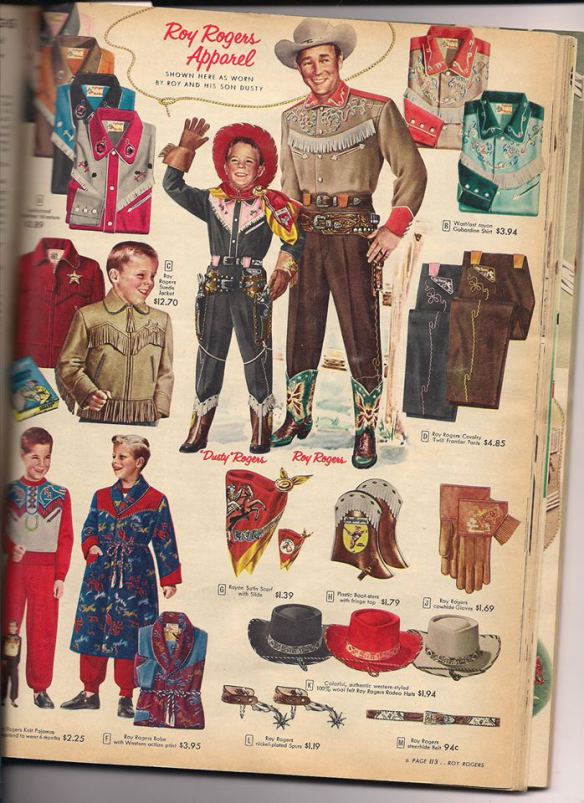
To understand our love of toy guns, it’s important to remember how massive Westerns were at the time in the form of both TV series and films. Who remembers The Lone Ranger, Laramie, The Range Rider, Rawhide and Bronco? The gun-toting cowboys versus the arrow-firing ‘Red Indians’ were the stuff of our childhood – even here in the UK. As children we had cowboy (and cowgirl) and Red Indian dressing up outfits. Which neatly moves us on from guns to bows and arrows. The bought sets had suckers on the end of the arrows which would stick (if you were lucky!) to a door or window. The cheaper ones, however, were the ones we made ourselves using wood from hedges and trees. Willow was the most flexible for a bow I seem to remember.


bows and arrows 1                  bows and arrows


outfits.jpg                             lone ranger


50s toy sword


Whereas the guns were toys,  the penknives, sheath knives and catapults we had as children were real. It was the norm for kids, especially boys, to have a child-sized penknife. They might have been smaller than adult ones but they were nonetheless real. They were great for whittling sticks! Because we all had them, we knew how to handle them and not misuse them. The same applied to catapults. The picture shows a typical bought catapult but we also made them from twigs and small branches.


roy rogers penknives                         sheath knife

catapult


Nursery Rhymes

nursery rhymes

I grew up hearing, reading and singing Nursery Rhymes. I brought my daughters up knowing them all too. They are a part of our history. Talking with friends the other day I was lamenting the fact that many children starting school at four years old (in my school anyway – it could be different elsewhere) know hardly any of them. They might just know Twinkle Twinkle Little Star or Baa Baa Black Sheep but rarely more than that. I said that I would hate for them to be lost from out culture. A friend then pointed out that many of the words were, in fact, violent and dark.

When I thought about it I recalled cats being drowned in wells, choppers chopping heads off, babies falling out of trees, helpless blind mice having their tails cut off, robins being shot with bows and arrows, a boy and girl falling down a hill and the boy fracturing his skull and an overweight lad chasing little girls and trying to kiss them. I could go on!

Apart from the literal meanings, we now know that most of these rhymes refer to historical events and people, albeit in the form of a simple children’s rhyme. I won’t got into all the meanings and origins here, they are extensively covered in texts and on the Internet. I thought I would take a few of the ones I knew and loved best as a child and say whatever comes to mind.

HumptyDumpty

Humpty_Dumpty_1_-_WW_Denslow_-_Project_Gutenberg_etext_18546

One theory is that Humpty Dumpty was the name of a very large cannon used in the Civil War in Colchester in 1648 which fell off a church roof and become damaged beyond repair. That might or might not be true but what is known is that Lewis Carroll was the first person to illustrate Humpty Dumpty as a comical egg character.

Mary, Mary, Quite Contrary

Mistress_Mary,_Quite_Contrary_1_-_WW_Denslow_-_Project_Gutenberg_etext_18546

This was one of my favourites as a small girl. I think that was probably because it has such pretty girly images in the words! The Mary in the rhyme is reputed to be Mary Queen of Scots.

Old Mother Hubbard

Old_Mother_Hubbard_Illustrated.png

Until I researched this picture I hadn’t realised Old Mother Hubbard had so many verses! There is a cottage in Devon which is supposedly where the real Mother Hubbard lived. I always felt sorry for the poor dog. My daughters and I always refer to having a Mother Hubbard cupboard if supplies are running low and we need to go shopping.

Lucy Locket

lucy locket

When I was in primary school Lucy Locket was a circle game we played a lot in the playground. Lucy Locket and Kitty Fisher are believed by some to have been courtesans in the time of Charles II who had a quarrel over a lover.

Are nursery rhymes sweet and historical or are they gross and the stuff of nightmares?

I love them and think it would be very sad if they disappeared from children’s lives.


Things you don’t see any more – and things you don’t see so often.

  • Kids with bare knees in winter.

Boys wore short trousers until their teens – with knee length socks in winter, short socks in summer. Girls wore skirts and pinafore dresses all year with long (knee-length) socks in winter.

boys in shorts


  • Most adults wearing hats out of doors.

Whether it was a cloth cap for working outside or a trilby for walking to the shops or the office, men wore hats outside. It was rare when I was very young in the 50s to see a hatless man outside. The hats were always removed on entering a building. They were also removed if a funeral cortege went past. Women, too were rarely hatless. My mum had ‘best’ hats for church, going out hats for visiting people or going somewhere ‘nice’ and everyday hats for popping to the local shops. These came in winter and summer varieties. My grandmothers always had hat-pins in theirs!

hats

  • Women wearing gloves in summer.

When women went somewhere smart they wore gloves even if it was summer. Summer gloves were usually white or cream and made of cotton. I also remember me and my sister having to wear white summer gloves with our best spring outfits to church at Easter and Whitsuntide.

gloves

  • Bus conductors.

I lived in the country so visiting a town was exciting and going on a bus or a tram was part of the adventure. You entered at the back of the vehicle and the conductor came to you in your seat to sell you a ticket from his machine which he carried strapped to him.

conductor

  • Rag and Bone men.

This is another thing we didn’t see in the country but we did have one which used to go past my grandmother’s house which was in a town.When I was small I used to think he was shouting ‘Rainbow!’. What did they do with the bones, I wonder?

rag and bone man

  • Delivery vans selling practically everything.

We had each week (some came twice a week) – a butcher’s van, a bread van, a grocery van, a fish van and a pop van. My mum once cancelled a bread man because he used to put unwrapped loaves on the seat he had just been sitting on to drive while he got his change out.We were only allowed to have pop very occasionally as my mum was very careful with our teeth.

delivery van

  • Shopkeepers adding up on paper.

The tills didn’t add up in the old days. The prices of the items were jotted down in a column and then added up before being rung into the till. The paper they added up on was very often the top one of a pile of paper bags or sheets of greaseproof. My mum used to say she could add up a column of figures as quickly upsidedown as she could the right way up from years of keeping a close eye on the bill and making sure it was added up right!


Grocer


  • Kids climbing trees.

I, my brother and my sister spent half our childhood up trees I’m sure! I don’t ever remember falling or hurting myself.

tree climbing

  • Metal dustbins.

All bins were metal and were carried on the bin men’s backs and shoulders. Nothing was wrapped in bin liners in those days so they must have got pretty smelly at times!

bin men


************************

Dressing Up

All children love dressing up. Dressing up outfits are plentiful and cheap nowadays. My two grandsons, aged five and three, love to be dressed as Power Rangers, Storm Troopers, Spider-Man and Iron Man.

Image result for dressing up outfits for kids       

When I was a child dressing up at home involved whatever we could find – Mum and Dad’s clothes and shoes, drawn on beards and moustaches, Nana’s hats, any belts and bags from around the house plus various other props. One year we (that is me, my brother and sister) were given a dressing up outfit each at Christmas. Mine was a nurse’s outfit, my brother’s a cowboy one and my sister’s was a cowgirl’s costume – cowboys were huge at that time in films, books, comics and on TV. We thought they were amazing and wore them for as long as we could squeeze into them as we grew. When I wore my outfit and had my red, plastic pince-nez on the end of my nose (they hurt me, but I didn’t care!), I really felt like a proper nurse.


Apart from dressing up at home there were fancy dress occasions. Every town and village had an annual carnival – in some parts of Britain this would have been known as a gala or fete. There was always a fancy dress parade with prizes for the best costumes. The mums went all out to create outfits for the children and often for themselves as adults dressed up too. People dressed up as famous characters past or present, story characters, pirates, fairies, witches and so on. Dressing up as a tramp was always good fun. At that time the ‘tramp’ was a common sight. They were vagrants who walked (tramped) from place to place living on handouts from well-wishers – and their wits. The other name for tramps was ‘gentlemen of the road’. I now know that many of them had been traumatised in the two World Wars and had been unable to settle back into normal life so took to the roads.  At that time Post-traumatic Stress Disorder was unknown or mis-labelled ‘shell-shock’ and with no such thing as counselling they were left to get on with life as well as they could.


Anyway, back to fancy dress. My mum was a skilled seamstress (from necessity) and was also very creative. Some of the costumes I remember her putting together are; my brother as a golliwog (I know, they’re not PC now but to us at that time they were just toys), Little Bo Peep (my sister, complete with a big black spider made by my dad and suspended by elastic) and Dr Fuchs (my dad dressed in a duffle coat and wellies accompanied by my brother’s ride-on tractor with the name Sno Cat on a sign attached to the front).For those who don’t remember the name, Dr Vivian Fuchs’ Trans Atlantic expedition reached the South Pole in 1958. The vehicles they used to cross the Antarctic were known as Sno-Cats.

This is a picture of me and my sister dressed for a fancy dress parade. My mum made the costumes on her Singer sewing machine out of crepe paper. We were dressed as the soldier and lady on the Quality Street tin – note, if you can see it, the Quality Street tin my sister was carrying! Next to it I have put a picture of an old Quality Street tin in case anyone doesn’t know the man and woman I’m talking about.

Qual St       Qual St 2

To this day I still love fancy dress and would rather put my own outfit together than hire a ready-made one. It’s more fun!


As always, I have used a mixture of my own photos and relevant one sourced from the Internet. If I have infringed copyright I fill happily remove any offending photo.

Simple Pleasures

Most of my posts focus on what was different when I was growing up in the fifties and sixties. This one is about what hasn’t changed.

We have just been away for a week. By we I mean me and the other half, our three daughters and their other halves plus the four grandchildren aged from eight months to five years. We had rented a house the coast of Northern Ireland and the garden led directly on to the beach. What occurred to me while we were there was just how little children need to keep them happy when there is plenty of space for them to play, run around and use their imaginations.

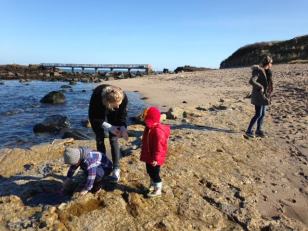
The beautiful stretch of beach we had next to the house had sand, stones and rock pools. We had a couple of balls and some buckets and spades and they were able to run, dig, collect pebbles and shells – even bury one of the dads in the sand (as I remember doing with my dad), leaving his head free of course!

The photographs are a mixture of our recent ones and their fifties equivalents.

              beach

We had a lovely expanse of grass outside the house with a low bank and the children spent ages simply rolling down the bank – something I remember loving as a child!

rolling_bw          rolling

To the rear of the house was an enclosed garden which they named the secret garden. At dusk we went out with a torch looking for the rabbits which came out to play on the grass.

Indoor time was when they played hide and seek, got the paper and crayons out to draw, or played make-believe games. They were read stories at bedtime. On a couple of afternoons we walked along the coast towards the small local town and stopped off at a playground which had swings, climbing frames and slides.

50s playground          IMG_5105

kids reading                                     IMG_5018

Okay, so all this sounds very twee and idyllic, I hear you say! I’m not saying they didn’t cry, argue, get jealous or grumble. They’re small children after all, and small children are good at all of that.

I’m not saying that children have too many toys these days or that children watch too much TV. There are great toys, books and TV programmes for kids now.

The message, if there is one, is that today’s children can still enjoy the same pleasures we enjoyed years ago.


Where did they go? Part 2

Once I started thinking about words, phrases, items and brands which have disappeared from use since the 1950s, I kept remembering more and more!

Some of the sweets and chocolates which have gone are Spangles, Bar Six, Tiffin (my favourite!), Five Boys and Fruit Polos.


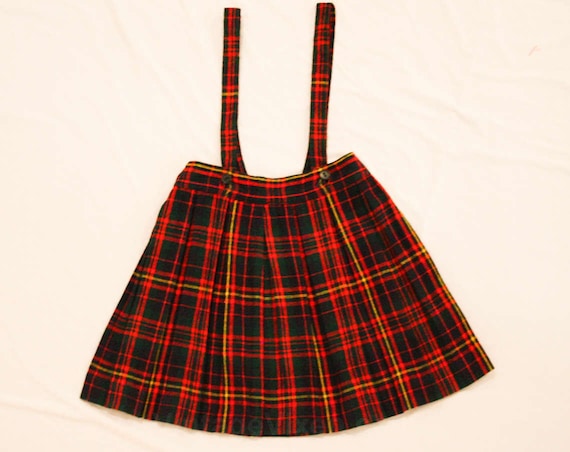
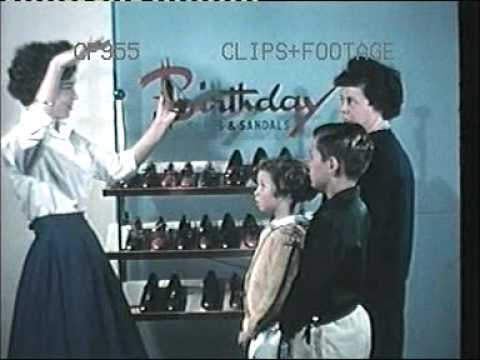
As for clothes, does anyone remember wearing a Liberty Bodice? It was an extra warm button through vest which most children wore all winter when I was little. As girls rarely wore trousers in those days, winter wear was a warm skirt or pinafore dress in wool or corduroy. Kilts were extremely popular and for the very young they had straps like the one in the photo. Disappeared brands I recall – Cherub and Ladybird clothes. Birthday, Start-Rite and Tuf shoes.                     

The golliwog is an extinct toy now for all the right reasons. However, in the politically incorrect days of my childhood, they were very popular toys. Robertson’s Jam’s golly badges were extremely collectible! To the children of the times a golly was a colourful soft toy and completely innocent. Many of the toy cars my brother, sister and I played with were Dinky Toys. They were made by Mecca I’ve discovered when researching for this post. Now that’s another toy brand which has disappeared!


One last food memory – who remembers rissoles, faggots and spam fritters?

Where did they go?

Recently I was reading with some children in school. The book was Michael Morpurgo’s Butterfly Lion (brilliant writer, fantastic book!). Chapter One is called Chilblains and Semolina Pudding. Before doing any reading, I had to explain the two things to the children. I know people do get chilblains and you could, if you wanted to, buy semolina and make a pudding with it. Yet as far as the kids of today are concerned they are unheard of. We were very familiar with both in the 1950s. I suffered from chilblains every winter and semolina pudding was a regular (if rather unpleasant) feature of school dinners. This started me thinking of other things which were part of our lives as we grew up which today’s children have no knowledge of.

I will start with food. Semolina pudding had several relatives in the milk pudding family. I think rice pudding is the only one which has survived into the 21st century in the UK – and even that isn’t very common. The others were macaroni (yes, pasta in a dessert!), ground rice, sago and tapioca (nicknamed frogspawn – the reason for this can be seen in the photo).


With the advent of ice-cream, mousses and brands like Angel Delight, the traditional dessert blancmange has disappeared from the face of the earth. It was a milk-based, coloured and flavoured dessert thickened with cornflour and set in a mould. It was often served with jelly. For our birthday parties when we were little my mum used to make a rabbit-shaped blancmange and surround it with chopped up green jelly.

         Mum had a rabbit jelly mould like this.

A warm drink in the evening was also largely milk-based and could be cocoa or perhaps Ovaltine or Horlicks. I think they can still be bought but I don’t think many  children drink them or have even heard of them.

Image result for ovaltine                 

Moving on now to school and school uniforms. All school uniform for boys included a school cap which had to be worn every day throughout school if the boy stayed on until 18 years old. Long trousers were not worn by boys until they were thirteen and uniform shorts were worn with long woollen socks.

                     Image result for school duffle bag 1950s                      

Girls wore gymslips until thirteen when they could wear skirts. There were no tights (they hadn’t been invented) so long socks were worn in winter, ankle socks in summer – even if you were a sixth-former! In our school the girls had to wear a beret (known as a tam) and woe betide you if you ever stepped outside school without it on!

                                 1950's Leather School Satchel

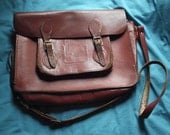
The school bag – for boys and girls in secondary school – was a leather satchel. Games and P.E. kit was carried in a duffle bag.Two more expressions unknown to today’s children! The school uniform coat was a gabardine mac or raincoat, usually double-breasted and belted.

Here are some other things today’s youth have not heard of (I’ll cover these in more detail in Part 2):

Meccano,  plimsolls, cycling capes, leather footballs, Dinky toys, Liberty bodices, golliwogs, Spangles, leather footballs and bus conductors. Watch this space!

St David’s Day

St David is the patron saint of Wales and St David’s Day (Dydd Gwyl Dewi Sant in Welsh) is celebrated on 1st of March – hence this being posted today. We say Happy St David’s Day with these words.

image

These are my memories of St David’s Day in Wales in the 1950s and 60s. All towns and most villages held events such as a concert or eisteddfod with music, singing, poetry and dancing – and still do. Our school always held a St David’s Day concert. The national emblems are the daffodil and the leek and we wore one or the other to school on the day. The smell in our school hall was overpowering, especially when those wearing leeks became peckish and started nibbling! I wear a daffodil on every March 1st and have done all my life – even though I live in England now.

The traditional St David’s Day dish is a stew made with lamb, leeks, carrots and potatoes. It is called cawl (pronounced cowl) and communities would often hold a concert with a cawl supper. The little currant-studded griddle cakes known as Welsh cakes (delicious, too!) would usually follow.

image

Hobbies

In the 1950’s, when I was growing up, hobbies were an important part of a child’s life. Now the word barely exists. Children today either have ‘interests’, which can be anything from a computer game to a TV programme, or they are in a club or team – rugby, cheerleading, karate, ballet etc.
In the ‘olden days’ evenings, particularly long winter ones, and wet weekends were not punctuated by phone, tablet, TV or trips out to groups and classes. We needed to be entertained and occupied and this is where hobbies came in.
Hobbies were mainly gender driven so if you see a girl you spent time knitting, embroidering or doing cork-work (who ever hears that word these days?). Boys made models (Airfix comes to mind), collected stamps or spotted cars.

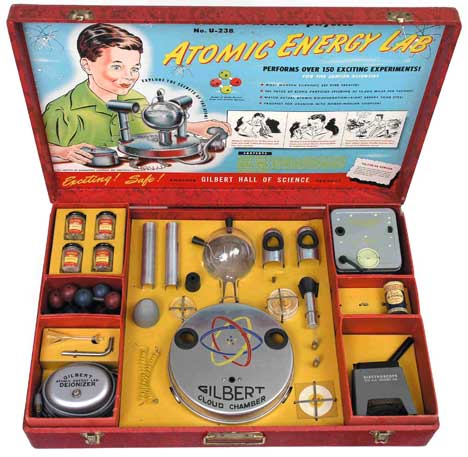
We were given presents at Christmas and on birthdays like basket weaving sets, raffia kits, plaster modelling, felt work, painting by numbers. I also remember science sets, magic kits, printing sets (John Bull) and Post Office sets.


Image result for fifties toys and games

We didn’t have all of these things at the same time. I’m recalling some of the games, sets and kits which passed through our childhood and gave us pleasure.

NEW-JOLLY-POST-OFFICE-PLAY-SET-TRADITIONAL-1950s-RETRO-TOY-PAPER-STAMPS-SALE