First of all, apologies to regular readers (if I still have any!) for the long silence. I’ve had a very busy summer plus it gets harder to think of topics I haven’t already covered. So I thought I’d return with a simple list of things which have changed since I was a child in the 1950s. Just a list, no waffle, no pictures. Readers of a similar vintage to me will recognise them. Memories from other countries will be different. I can only speak for rural Britain which is all I knew.
We’d never heard of or seen duvets. Beds had a bottom sheet, top sheet, a few blankets, a counterpane (a word you never hear now) and in winter an eiderdown.
We didn’t have mugs, just cups and saucers.
TV programmes started in the evening apart from an hour in the middle of the day when there were programmes for pre-school children. Not everyone had a TV.
Nobody had washing machines, tumble dryers, microwaves or freezers. Many people didn’t even have fridges, phones or cars.
Gay meant happy, jolly, carefree. Mobile only meant able to move, not a phone. Remote only meant far away, not a TV control.
Most men wore hats outside and took them off indoors. Women usually wore hat and gloves to go out shopping, visiting or to church. They had winter gloves and summer gloves.
When you were unwell, even if it was just a cold, you stayed in bed. The doctor would visit and your mum would buy you Lucozade.
Toilet paper was hard and crunchy like baking parchment or greaseproof paper. There were no tissues. Everyone carried cotton handkerchiefs (hankies) which were washed on a Monday (wash day) and ironed on Tuesday.
Dustbins were metal and everything went in. There was no recycling apart from glass jars and bottles, many of which were worth a few pence when returned.
There were no charity shops but communities held jumble sales.
Children’s birthday parties involved presents, party games, sandwiches, jelly, birthday cake – and guests were not given a party bag to take home.
I could go on, but that will do for now. Hope you’ve enjoyed it and recognised some things!
The first form of music listening came from our earliest groups of people. This music was not considered organized as we might call the music we listen to today, rather, it used forms of clapping, drumming, and oral music with varying types of singing.
Later, some of the more popular music appeared in churches. Many musical artists and writers began to write music as a response to God and to the church. It was used as a tool to unite people.
Throughout the centuries, people have enjoyed making and listening to music. Singing in the home was popular, often around a piano. With the coming of the music halls in Victorian Britain, popular songs were becoming well known and sung. The first form of bought music was sheet music. As the popular songs of the day became known people would buy the sheet music and play in groups in homes, pubs and community spaces.
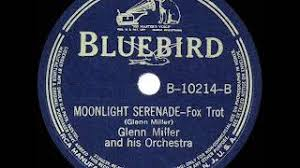
In the late 1800s, Thomas Edison invented the first record player known as a phonograph. By the 20s and 30s gramophones, later known as record players, and the black discs revolving at 78 rpm became more readily accessible to the public. The record player and records themselves evolved through several different stages from the 78’s to the newer, smaller 45’s (singles) and the 33rpm LPs later known as albums.
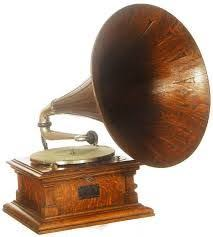
We always had a record player at home and one of my siblings still has our parents’ wonderful collection of 78’s. In our village there was a ‘big house’ where the local gentry had lived for generations. The little boy from the house went to our village school for a few years until he went away to boarding school at 7. While he was in our school I remember going to his birthday parties. His mum used to play music for us for the game of musical chairs on a wind-up gramophone with one of those brass horns as a speaker. A bit like the one below. This was in the mid 50s and none of us had seen one of those before, apart from on the HMV labels.
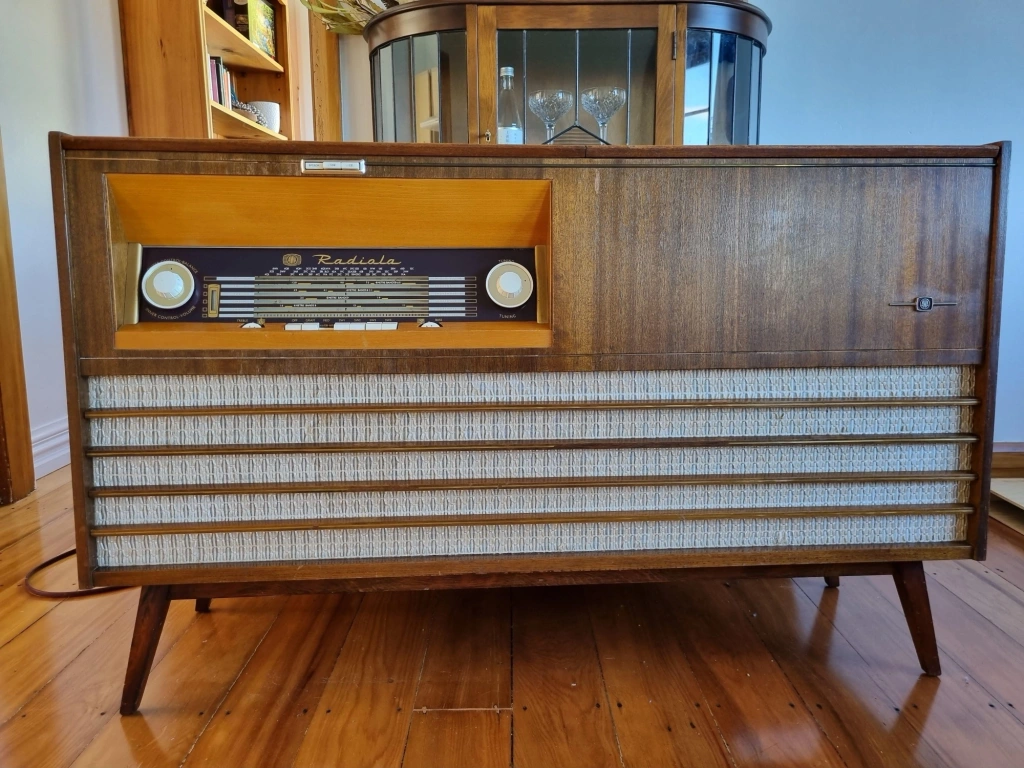
In the early 60s my parents bought a combined radio/ record player known as a radiogram which was housed in a wooden casing like a sideboard. We thought it was very sophisticated!
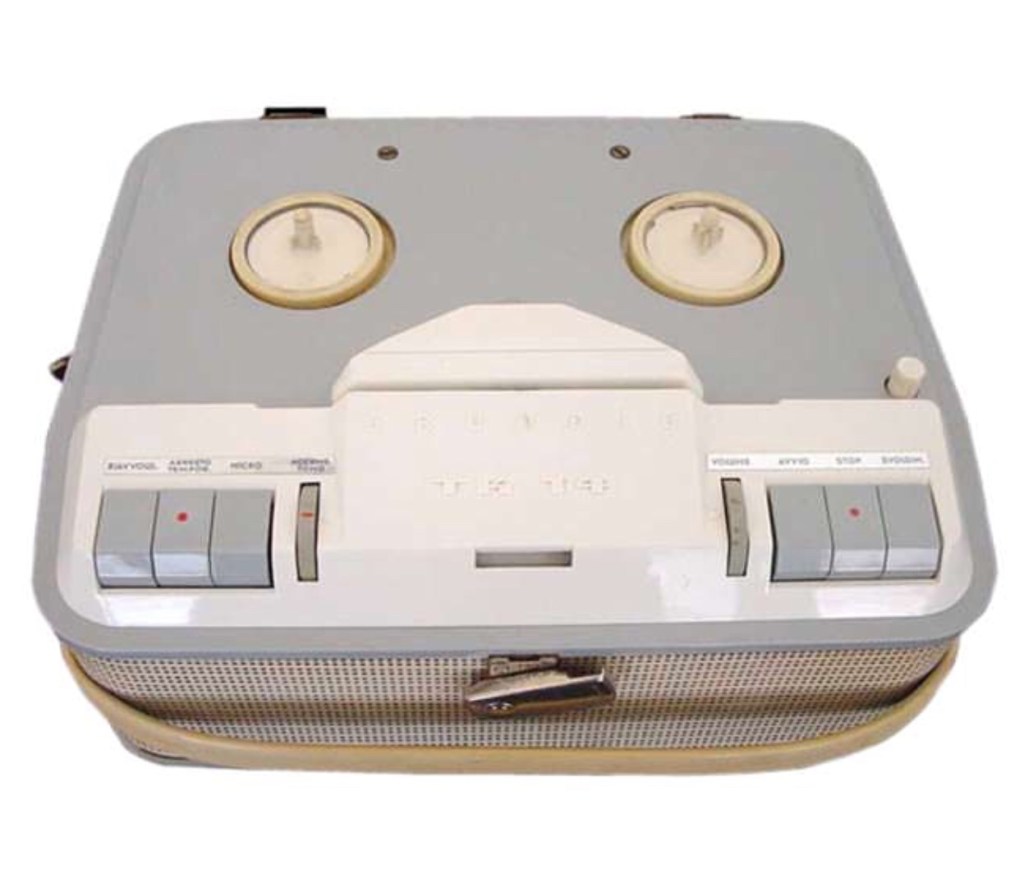
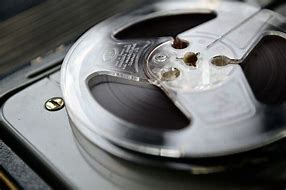
In the mid 60s my mum and dad bought a reel to reel tape recorder. I can still remember that it was a make called the Grundig TK14. My brother, sister and I had so much fun recording music from the radio. We were teenagers by then and into pop music. We couldn’t afford to buy all the records we would have liked to so this was a great way to save our favourite songs to play again and again. We had to hold the microphone next to the radio and be very nifty about pressing STOP just before the presenter started talking again.
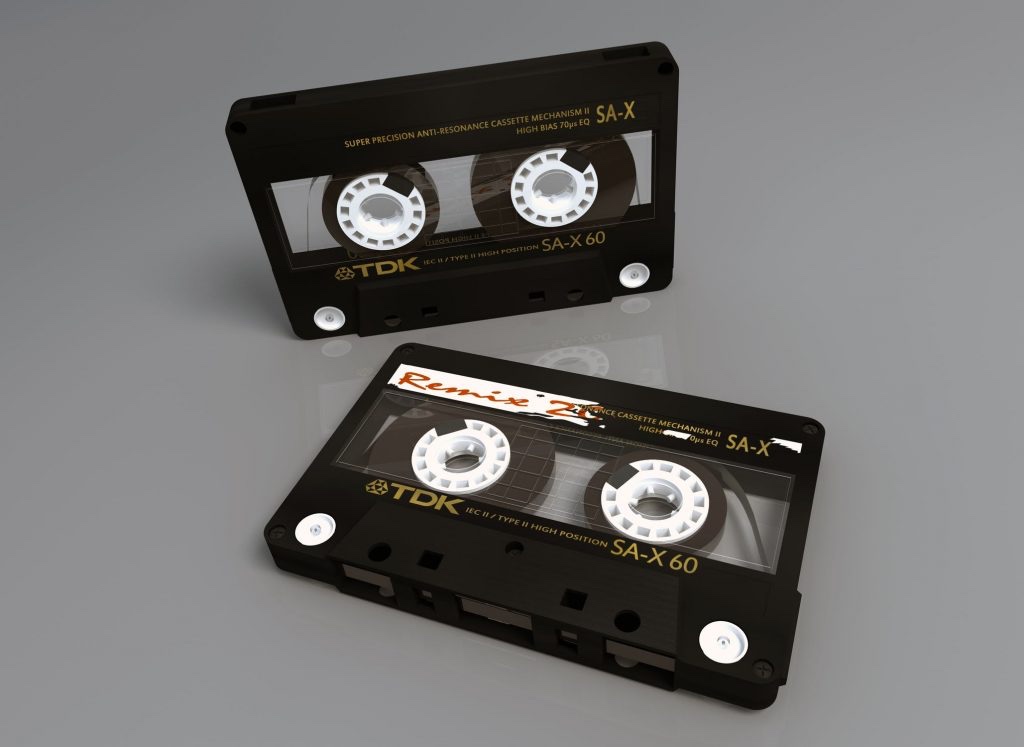
Then along came cassettes. Oh, the joy of swapping albums with friends and recording them onto a C90 or C60. Once I was able to have a cassette player in my car I could listen to my favourite albums as I drove. We’d come a long way from the 78’s and 45’s of my childhood.
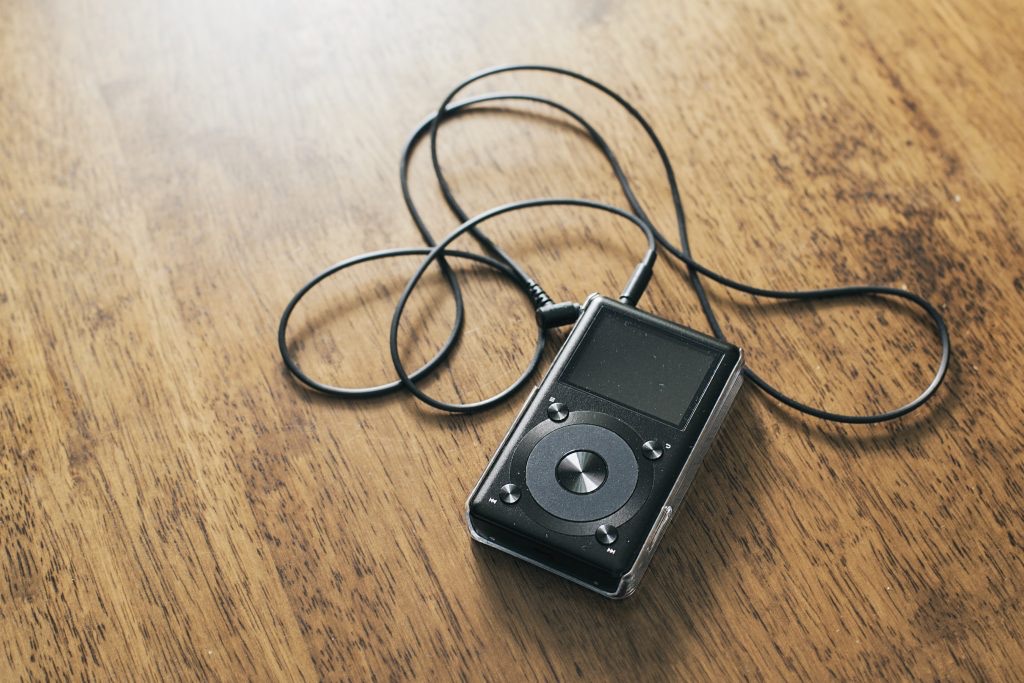
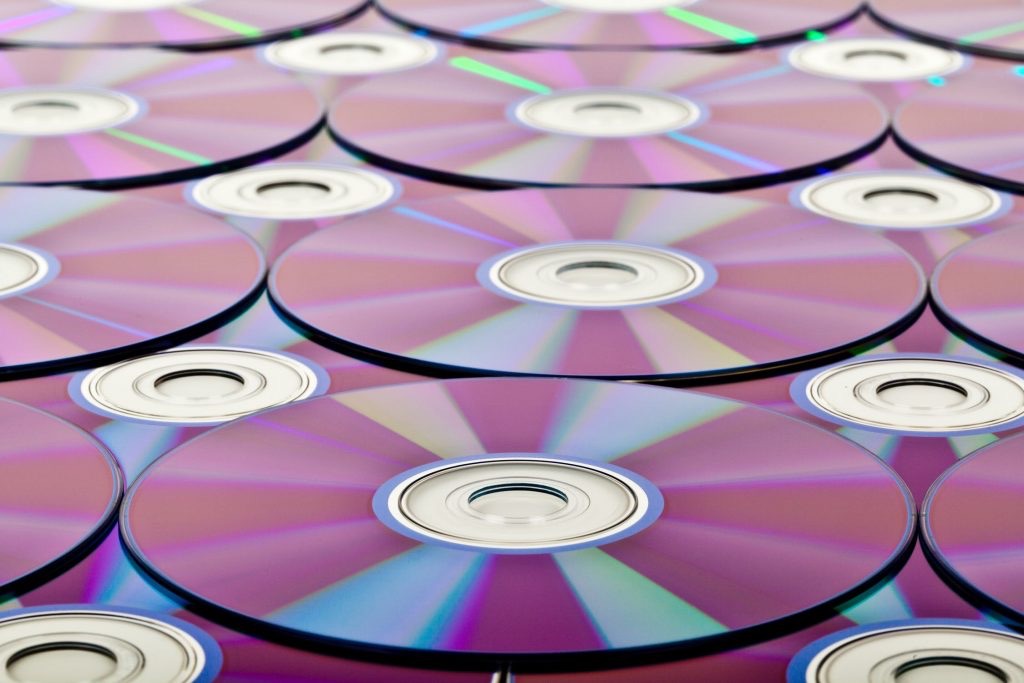
I am now into the eras you will all remember very well. So I will skim through and just mention a few stages which come to mind – The Walkman, the iPod, CD’s and eventually streaming.
Credit to Google Images and Wikipedia. If anyone objects to the inclusion of any images in this post please contact me and it will be removed. Facts are checked but I apologise for any errors you might spot!
Once again, I’m apologising for such a long absence. I began to fear that I was running out of topics to cover which relate to the 50s and 60s. But I miss blogging and I have acquired a number of followers so I’m going to start again with a topic I know I’ve covered before. Hopefully it’s a bit different this time.
I did a ‘big shop’ this afternoon at a local supermarket. I often find myself musing whilst shopping on how very different food shopping was when I was a child. Not that I ever did the shopping!
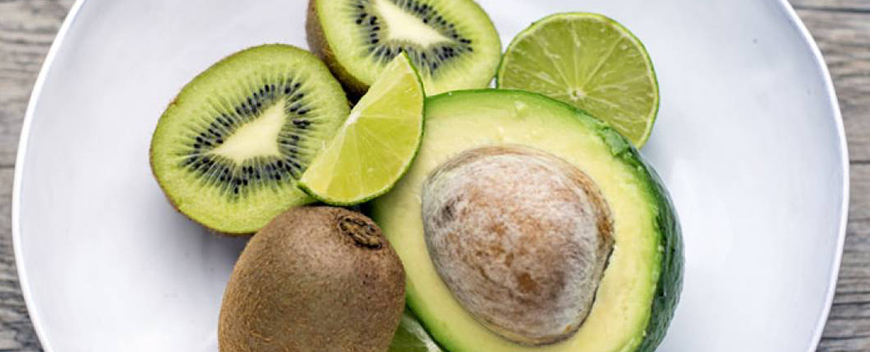
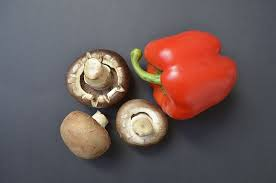
As I was browsing along the fruit and vegetable aisles I was choosing between various types of peppers and mushrooms, picking out the best avocados, kiwi fruit and pineapples and wondering which apples to buy. Way back in the 1950s pineapples only came in tins. We had mushrooms when we picked them in the local woods and fields and I’d never heard of peppers or kiwi fruit.
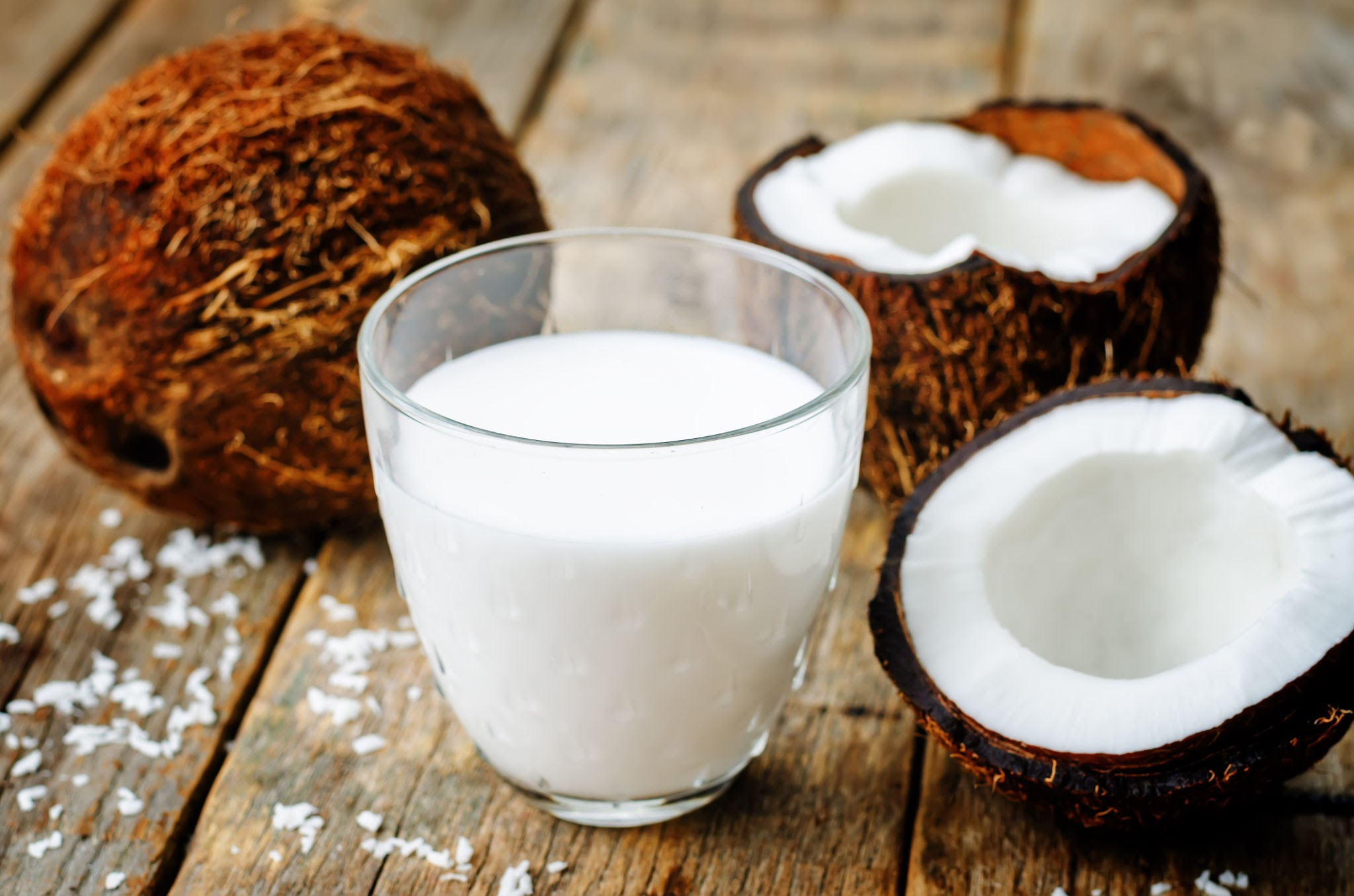
In the aisle displaying tinned goods I bought a tin of coconut milk which I use in curries. Once a year, when the fair came to our local town, my dad would buy or win a fresh coconut. Once home he would drill a hole in it and pour out the coconut milk to share out as an exotic drink. Then he would break the shell up in his garage and share out the pieces so that we could eat the fresh coconut.
In the cereals aisle I walk through two sides of shelves lined with every sort of breakfast cereal from the Corn Flakes, Shredded Wheat and Weetabix of my childhood through a plethora of types too many to list.
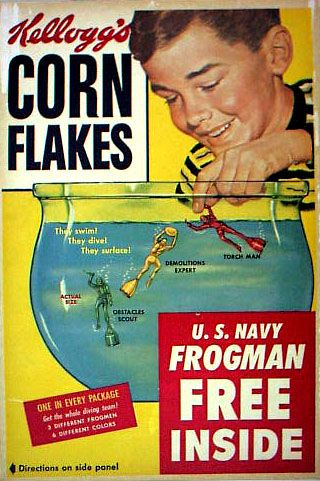
There was often a free toy in cereal packets.
Then on to dairy (and non-dairy). Back in the 50s we had milk and we had cheese. There was normal milk and long life (sterilised) milk. Now there are dozens of different kinds of milk, dairy and non-dairy. Where I lived, deep in rural Wales, our village shop sold one kind of cheese and Kraft cheese spread triangles – which I loved! Yoghurts didn’t come on the scene until the mid 60s.
There were a couple of different tea brands available in the 50s, no frozen goods, no ready meals, no dietary choices such as low fat, vegetarian, vegan, gluten-free, sugar free, organic, decaffeinated. Fruit and veg were largely seasonal apart from oranges and bananas. Very limited and much simpler! But I would rather have the choices of today than the limited range available in the 1950s – even though it’s fun to look back.
I always loved writing letters. I wrote that in the past tense because it’s not something which happens much any more. Even I, who have loved writing and receiving letters all my life, now rely almost entirely on text message and email. The exception is greetings cards in which I will often enclose a hand-written message.
As a young child I exchanged regular letters with my grandparents who didn’t live close by and didn’t have phones. After Christmas or my birthday I would write thank you letters to relatives who hade sent presents. The thank you letters could be a bit of a chore when written to relatives I rarely saw! Whilst in secondary school I exchanged letters with a friend who had moved to another town and a primary school friend who went to a boarding school at 11 years old. I always saw my boarding school friend when she came home in the holidays and I’m convinced that our regular writing of letters through her boarding school years is the reason why we are still good friends to this day. We live nowhere near each other now and haven’t done for years but we still get together when we can. The vast number of letters exchanged during term times kept our primary school bond, forged when we were four years old, strong.
In the 60s when I was in secondary school, pen friends were very popular. They were arranged by the school. I imagine they used an agency of some sort. During my years in high school I had two pen friends in America and I loved swapping letters with them and comparing the music and fashions we liked and the ways in which we spent our leisure time. For a couple of years I was pen-pals with a French boy. Looking back, the French ones would probably have been arranged by our French teacher with a view to improving our French skills and their English ones. I was expected to write in French and he in English. Although these pairings, both French and American, were arranged by school the letters were done in our own time and not checked so it felt more like a friendship than an educational task. They were also optional. We were asked if we wanted to be hooked up with a pen friend.
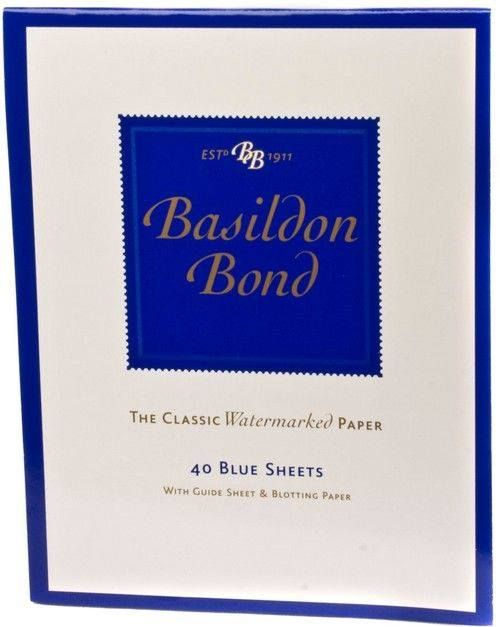
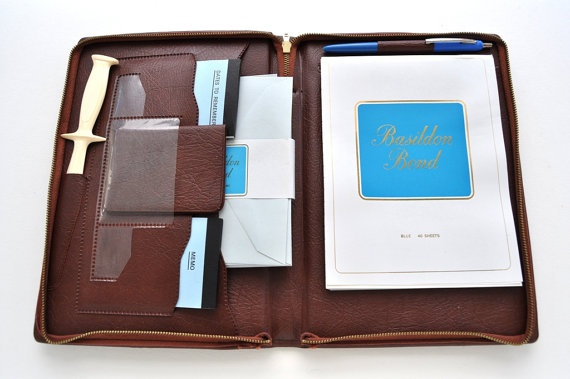
As a young child I wrote on lined paper, soon graduating to unlined paper. The unlined pads always had a sheet of guide lines to put under the page you were writing on. Moving into my teen years I favoured coloured writing paper and matching envelopes – often blue Basildon Bond like the one below.
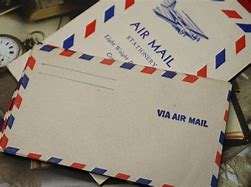
The pen friend letters were written on special lightweight airmail paper with lightweight envelopes carrying a border of red and blue.
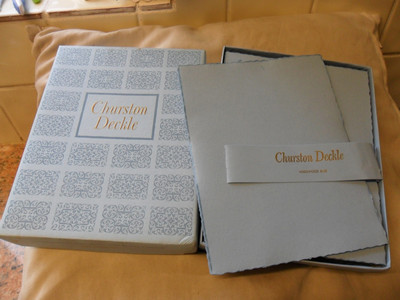
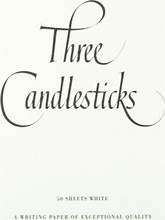
I loved going to a stationery shop and choosing a new set of paper and envelopes. In my early twenties I favoured Churston Deckle in a shade of cream called (I think) ecru and also a brand called Three Candlesticks. Part of the pleasure of writing on quality letter paper was using a fountain pen rather than a biro.
I also had a beautiful red leather writing case bought for me as a gift. Writing cases looked like this inside and had a zip around three sides to stop everything falling out. I still have my grandfather’s which is just like this one.
Credit to Google Images and Wikipedia. If anyone objects to my use of a particular image please contact me and it will be removed.
Apologies for a longer than usual break between posts. Perhaps I had bloggers’ block or maybe it’s becoming harder to think of topics I haven’t already covered. Over the past few weeks things have occasionally popped into my head and I’ve realised that they aren’t around any more. So this is a random collection of items. The only thing they have in common is that we don’t see them any more.
Motorbikes and Sidecars
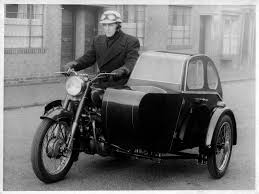
My dad used to ride a motorcycle. When he married my mum he added a sidecar. My mum finally dug her heels in when she was pregnant with me and, as she described it, was being squished into the small space, hurtling along feeling too close to the road and unable to communicate with my dad. So he bought his first car! I have no idea of the make or model of either his motorbike or the sidecar so this is a stock image of something I imagine to be similar to what they had in 1951.
TV Westerns
We acquired our first TV when I was ten in 1961. It was so exciting! We three children enjoyed many programmes such as Sketch Club, Tales of the Riverbank, Zoo Quest and David Nixon’s magic show – which led me to want to be a magician when I grew up. For a while, anyway! Adventure programmes like Whirlybirds and RCMP we also loved. But right at the top of the list were the cowboy serials. We absolutely loved The Lone Ranger and The Range Rider. I also recall Laramie and Bronco. There is no cowboy history here in Britain so we devoured those Westerns as they were a totally new genre of story-telling for us and their adventures and heroic deeds were like nothing we’d ever come across before. My brother and I even got cowboy outfits for Christmas one year.
Enid Blyton
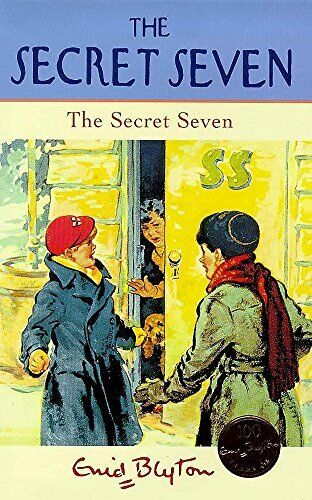
Oh, how we loved the Enid Blyton books! When I was enjoying the ripping yarns of the Famous Five and the Secret Seven my sister, who was younger than me, was enchanted by Tales of Green Hedges and The Magic Faraway Tree. The Five and the Seven had the most amazing adventures such as catching robbers and smugglers and yet always seemed to get home in time for tea. Although disapproved of nowadays by some, Enid Blyton was a prolific and hugely successful children’s author. At her peak she was writing fifty books a year. She usually began writing soon after breakfast, with her portable typewriter on her knee and, stopping only for a short lunch break, she continued writing until five o’clock, by which time she would usually have produced 6,000–10,000 words. Rumours that Blyton operated “a company of ghost writers” persisted, as some found it difficult to believe that one woman working alone could produce such a volume of work.
Rompers
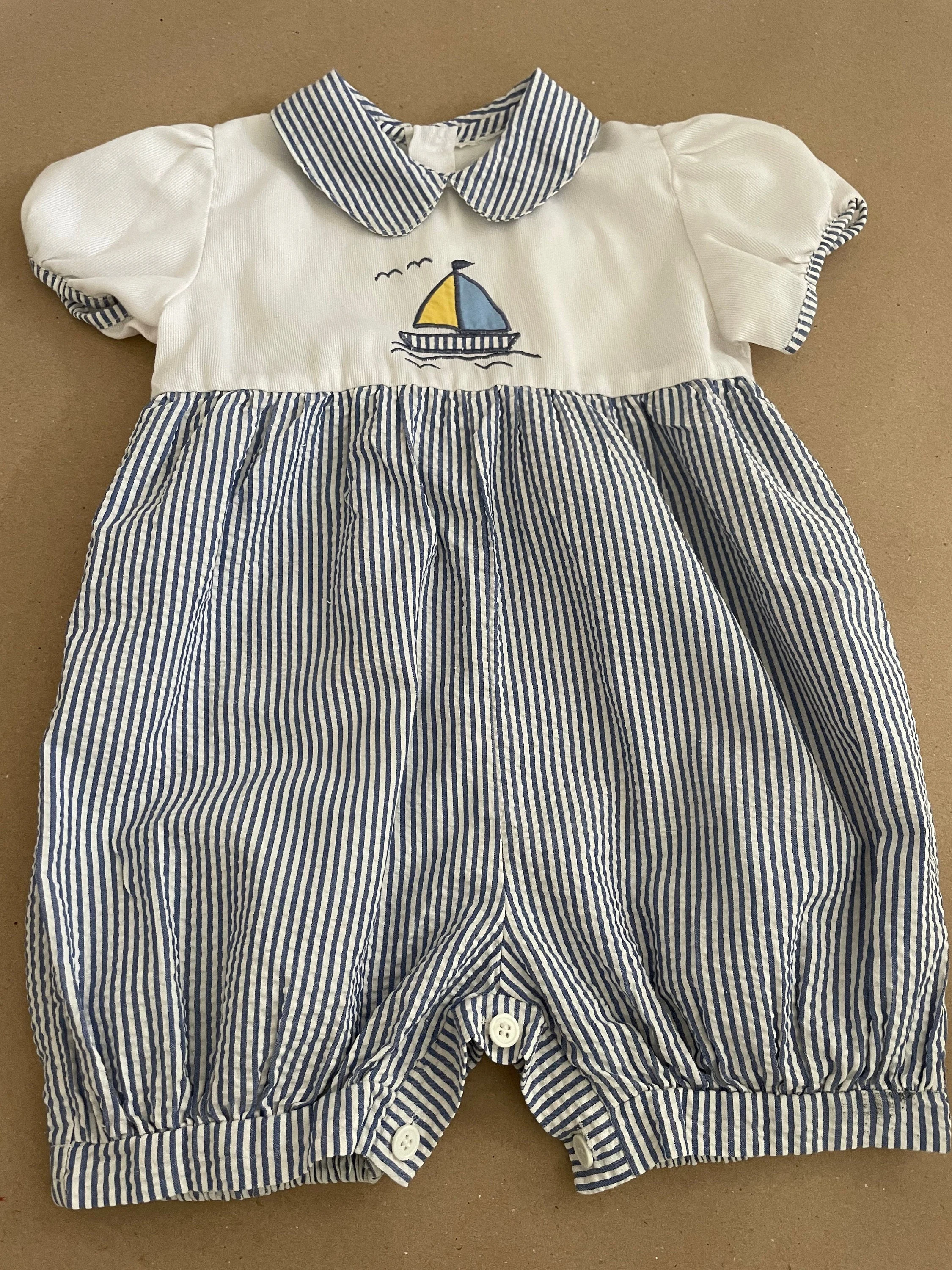
When I was little, girl babies and toddlers wore dresses and little boys wore rompers. There were no unisex clothes, no Babygro’s, no tiny denim jeans and sweatpants and no tights, just socks.
Above is one of our family photographs of a brother and sister (they will know who they are!). The boy is in rompers and the girl in a dress.
45’s and 78’s
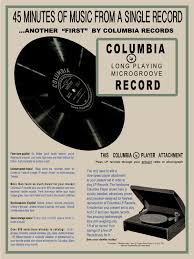
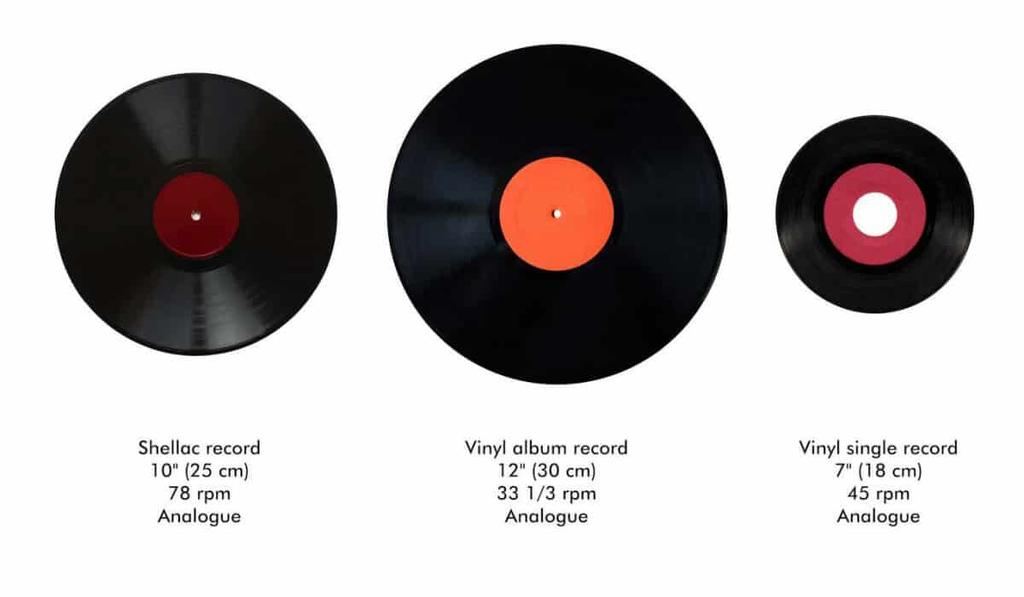
Music was played on discs. The very first ones were wax, then shellac and later they were made of vinyl. They were identified by their speed. When I was small the gramophone records (as they were known then) my mum and dad had were LPs (albums) which were played at 33 rpm and singles known as 78’s. Both were 12″ wide. Then, by the time I was old enough to be buying my first pop records, the singles were known as 45’s and were much smaller (7″) .
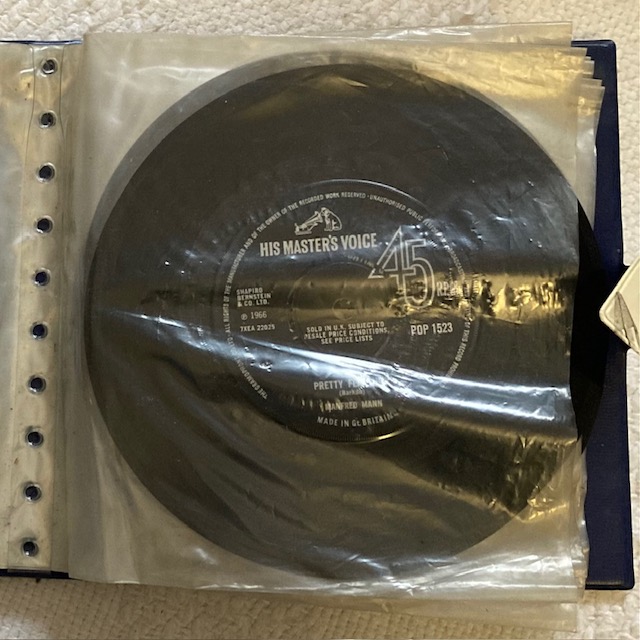
This is a potted history of the vinyl record. From 1939, Columbia Records were developing vinyl technology and in 1948, introduced the 12” Long Play (LP) 33 1/3 rpm record. The rivalry between RCA Victor and Columbia led to the introduction of another competing format by RCA, the 7”/45 rpm EP. The period where both of these formats fought for dominance from 1948-1950 was known as the “War of the Speeds.” After a few years, the 12”/33 rpm LP became the predominant format for albums, and the 7”/ 45 rpm record became the format of choice for singles. They always had paper sleeves and great care had to be taken with them as they scratched very easily. Or they could be kept in a wallet like the one below.
This is a handy little holder for 45’s which my brother gave me for as a birthday present when I was in my teens. It’s still full of my old singles. It has enough plastic wallets for 20 singles but I’ve got two in each so it’s quite a collection! There are no scratches on any of them, I was very careful with my records! The folder was really useful for taking records to parties or to friends’ houses.
Talcum Powder, Milk of Magnesia and Calamine Lotion
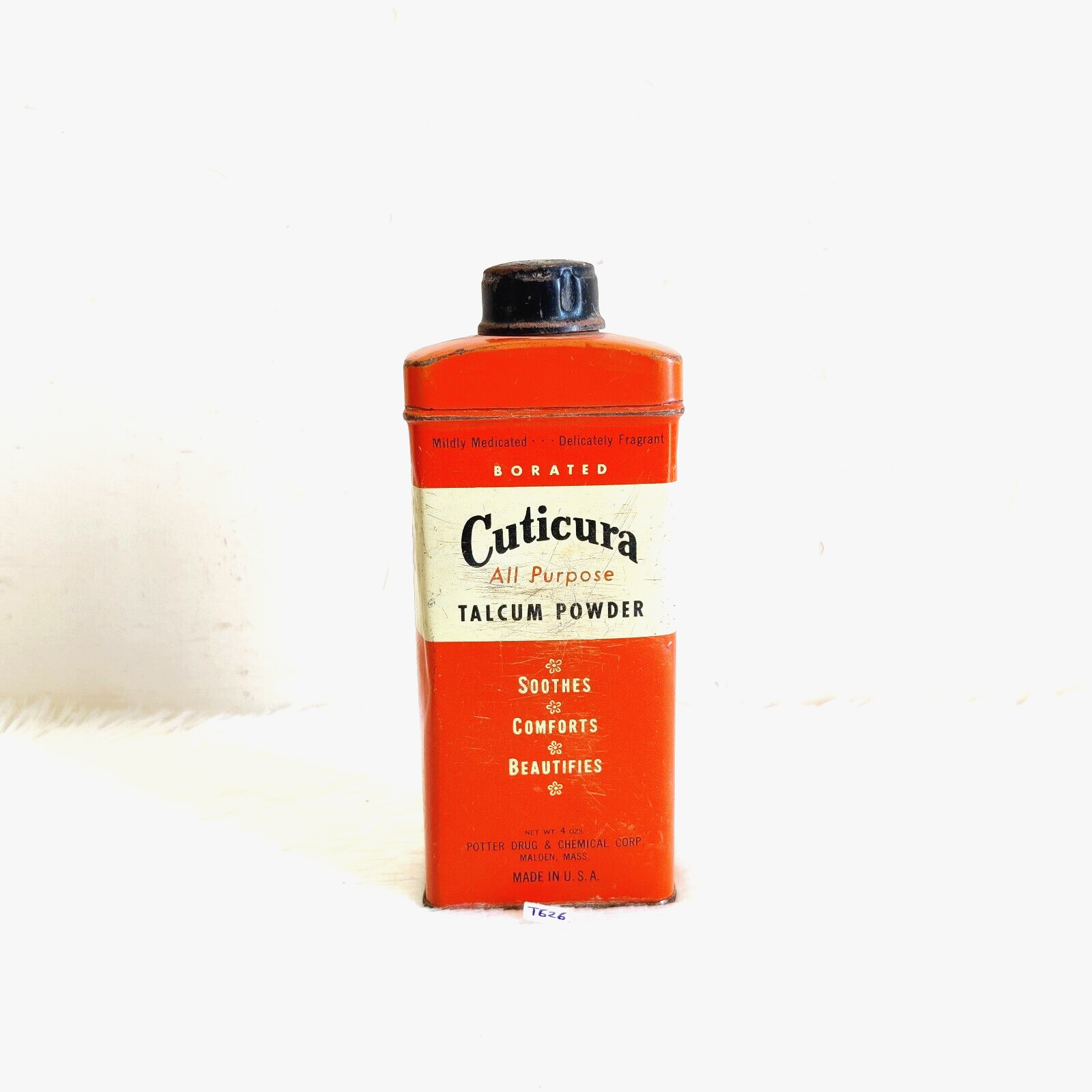
No bathroom was complete without a tin or two of talcum powder and a bottle each of Milk of Magnesia (for indigestion) and calamine lotion (for skin problems like sunburn, rashes and insect stings). Iodine was also popular and it’s what the teachers used to put on a cut if you fell and hurt yourself at playtime. How it stung!!!
There were everyday talcs like Johnson’s Baby Powder and, one of my mum’s favourites, Cuticura. You could also by talcum powder to go with a favourite perfume, sometimes they came in gift sets. A scented talcum powder was always a much appreciated gift for a mum, aunt or grandmother.
Credit to Google Images and Wikipedia. If anyone objects to my use of a particular image please contact me and it will be removed.
Designed by Sir Giles Gilbert Scott in 1924, the first red phone box appeared on Britain’s streets two years later. The design went from K1 (Kiosk 1) to K8 (Kiosk 8) and was finally replaced by the KX. The K6, which was designed in 1935, was designed to commemorate the Silver Jubilee of George V. It was consequently sometimes known as the “Jubilee” kiosk. It went into production in 1936. The K6 was the first red telephone kiosk to be extensively used outside London, and many thousands were deployed in virtually every town and city, replacing most of the existing kiosks and establishing thousands of new sites. In 1935 there had been 19,000 public telephones in the UK: by 1940, thanks to the K6, there were 35,000.
Public telephones were an essential part of life until relatively recently when mobile phones arrived on the scene. When I was a child most homes didn’t have a phone in the house. Even if you did, once you were away from home the red phone boxes were plentiful. The photograph below is what the interiors of phone boxes were like when I was growing up. A local call cost 4d – four old pence – and took four penny coins. When your call had been put through you posted your four coins into the slot and pressed button A when it was answered. If it wasn’t answered (no answering system in those days!) you pressed Button B and got your coins back. There was a shelf in the kiosk which held a telephone directory. When I was in my teens and old enough to go out with friends in the evening at a weekend, my dad always made sure I had four penny coins with me in case I needed to call home for a lift or some other reason.
The old 1d (one penny) coin which was enormous compared to today’s coins.
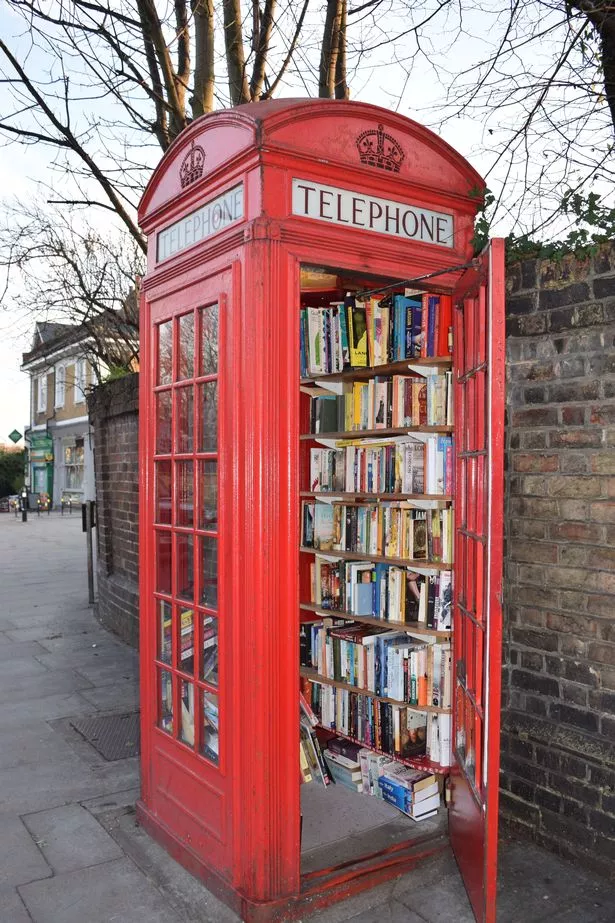
Although their number and use has declined in recent years, many of them have already been repurposed by communities. Through the ‘adoption scheme’, for just £1, more than 5,000 communities have turned our iconic red phone boxes into something that brings value and enjoyment to local people – from libraries, to food banks, and defibrillators.
Some communities have adopted kiosks as libraries or book exchanges.
Many kiosks now serve as defibrillators.
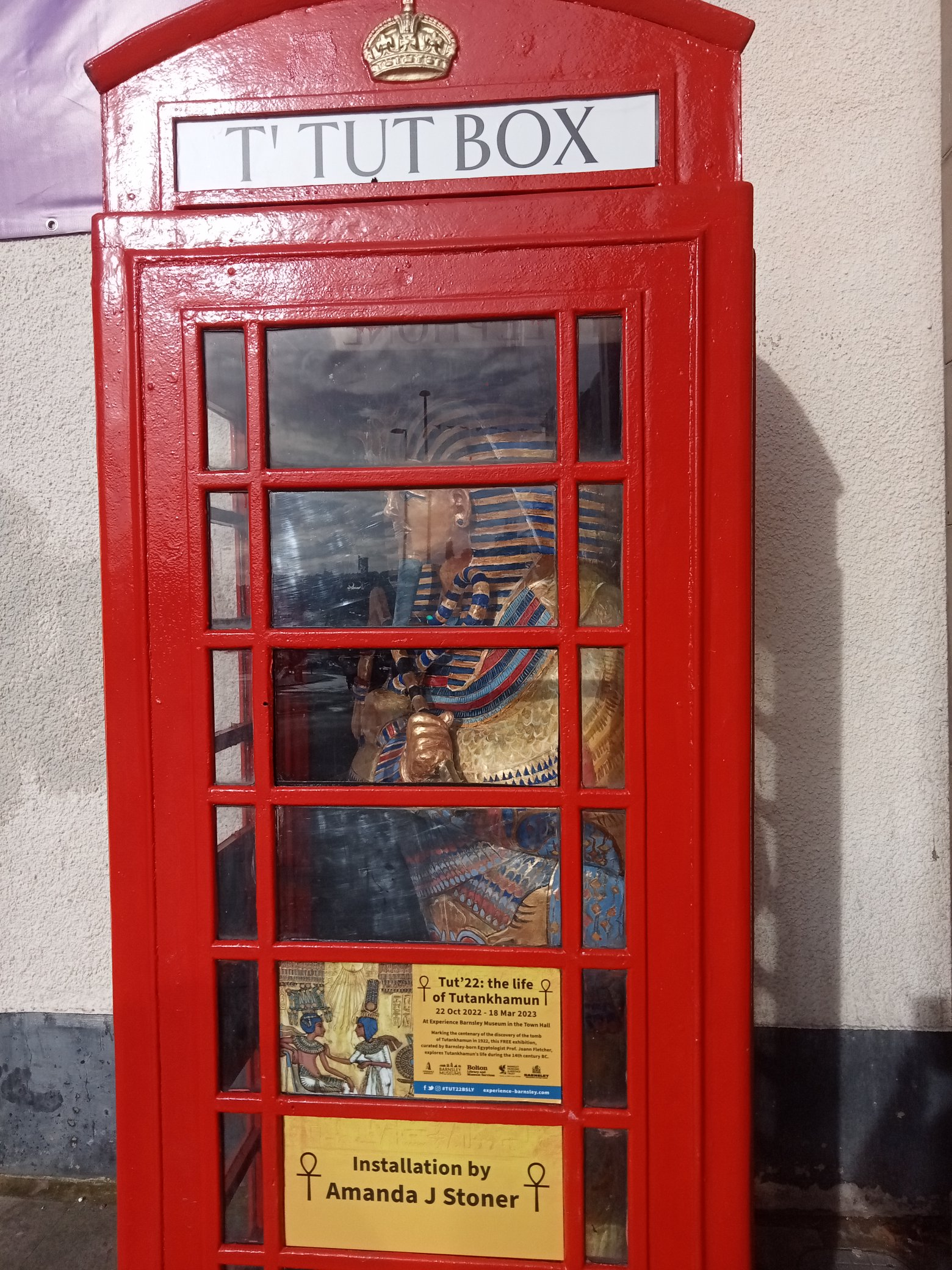
The following three are are pictures of phone boxes not far from me which are used as mini art galleries and museums with exhibitions changed regularly.
A picture of a so-called ‘phone box graveyard’.
The KX which replaced the traditional red kiosk. Even these are few and far between now.
As always, credit to Wikipedia and Google Images. I make every effort to avoid infringing copyright but if anyone objects to the use of any image or info in my posts, contact me and it will be removed.
Technology has moved on at an incredible pace in the past few decades. Back in the days before we had the internet there were things which we needed which we don’t need as much any more.
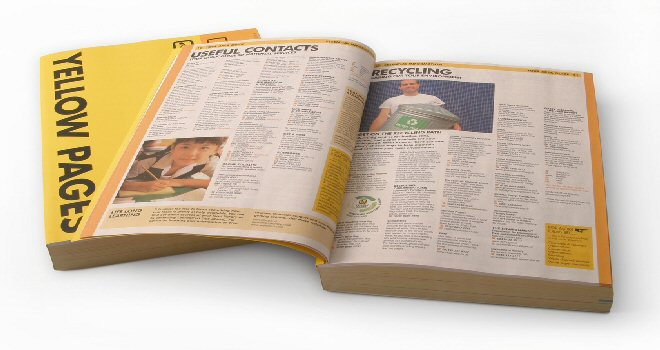
I’ll start with telephone directories. In the days when all phones lived at home and were connected by wires we received a new telephone directory and a new Yellow Pages every year. One winter I did a few weeks work delivering Yellow Pages and I walked miles!
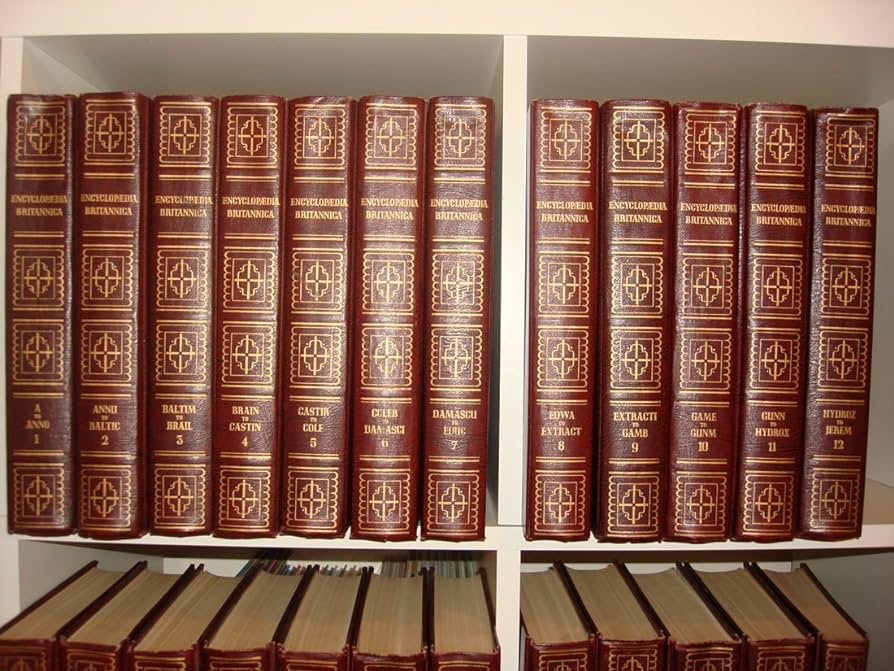
If I wanted to find out about something back in the 50s and 60s my first port of call was my mum and dad’s set of encyclopaedias. After leaving home, when I didn’t have encyclopaedias to hand, I would make a note of what I wanted to find out and call into a library.
Many homes had a Home Doctor book or a First Aid book. I bought one when we were expecting our first baby in 1980. I’m also lucky enough to have two very old home doctor books which came from my grandmother’s house. One I’ve managed to date to the 1920’s and the other one is from the 1800s but I can’t guess closer than that.
I know people who don’t buy books at all any more but read all their fiction online.
I love recipe books and still use them but I also use the internet if I’m looking for something in particular which I don’t think I have a recipe for.
I also always have a book of road maps in my car but when going somewhere new I increasingly use my phone to navigate me there.
When we used to go on family holidays when I was a child, and later with my own family, we would pack a guide book, a road atlas, and perhaps a bird spotter’s guide and a flower identification book. Or books about trains, castles . . . . whatever the family’s interests.
Now we don’t just have the internet available, most of us have it in our pockets on our smartphones.
Here is a random selection of some of the things we can manage without now – when we want to.
Having said all that, I still love books! I have many books of all sorts, still read fiction in paper form, still take a newspaper and love a good browse in my recipe books.
As always, credit to Wikipedia and Google Images. I make every effort to avoid infringing copyright. However, if anyone objects to my use of an image please contact me and it will be removed.
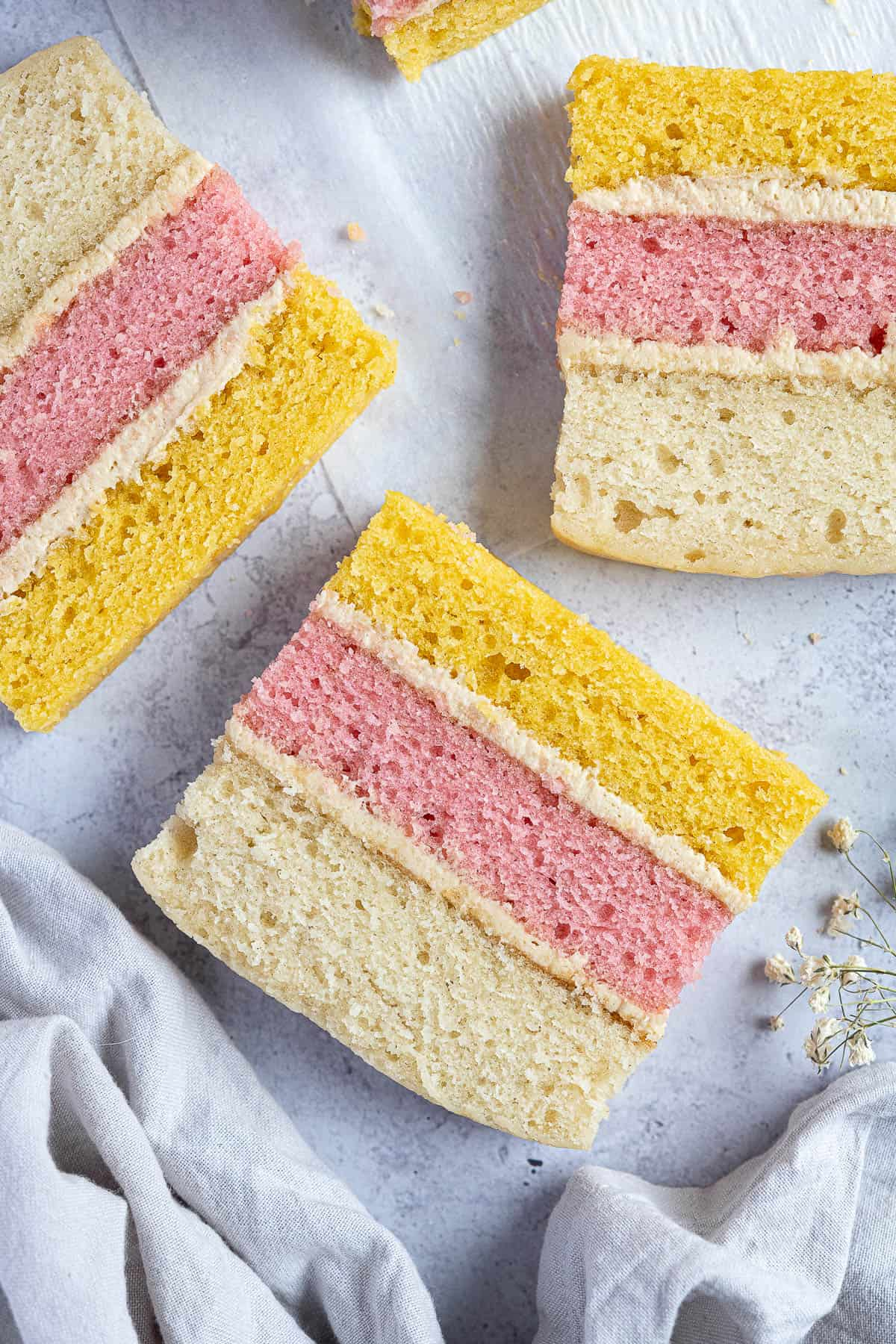
When I was a child my mum baked every week. All mums did back in the 1950s and 60s. She used to make sponge cakes, fruit cakes, chocolate cakes, scones, fruit tarts and pies etc. If we had visitors coming it was always in the afternoon for tea. I don’t remember my parents ever having people as dinner guests in the evening. When guests came the thing to do at that time was to serve ‘shop cake’. It was as though home made cake was too ‘everyday’ and that you were making an effort to produce something a bit more special. This was possibly because ‘shop cake’ was more expensive then than home baking. Nowadays everyone really appreciates home baking and if someone is coming here I like to make a cake.
Of course, these are just my memories from the 1950s. Other people who lived through those times but in other areas might have had completely different experiences!
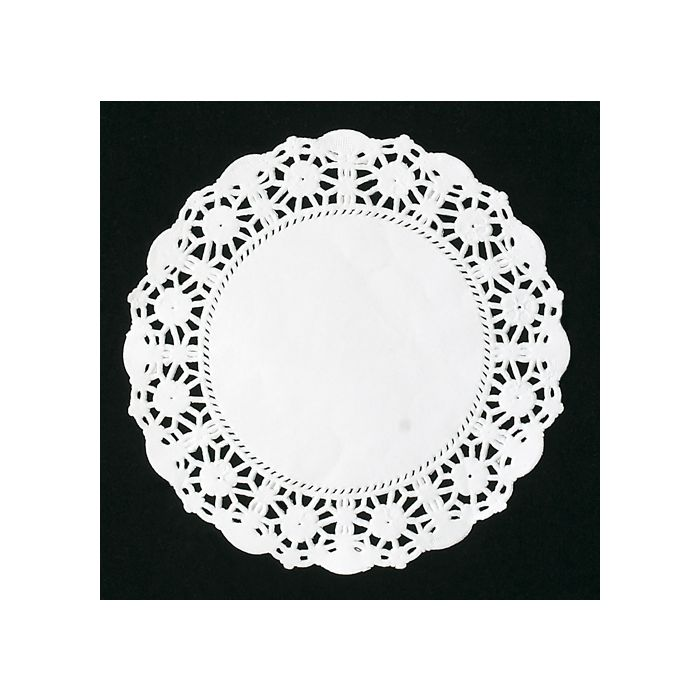
Paper doilies were very popular and were usually only bought for teatime with guests or for birthday cakes.
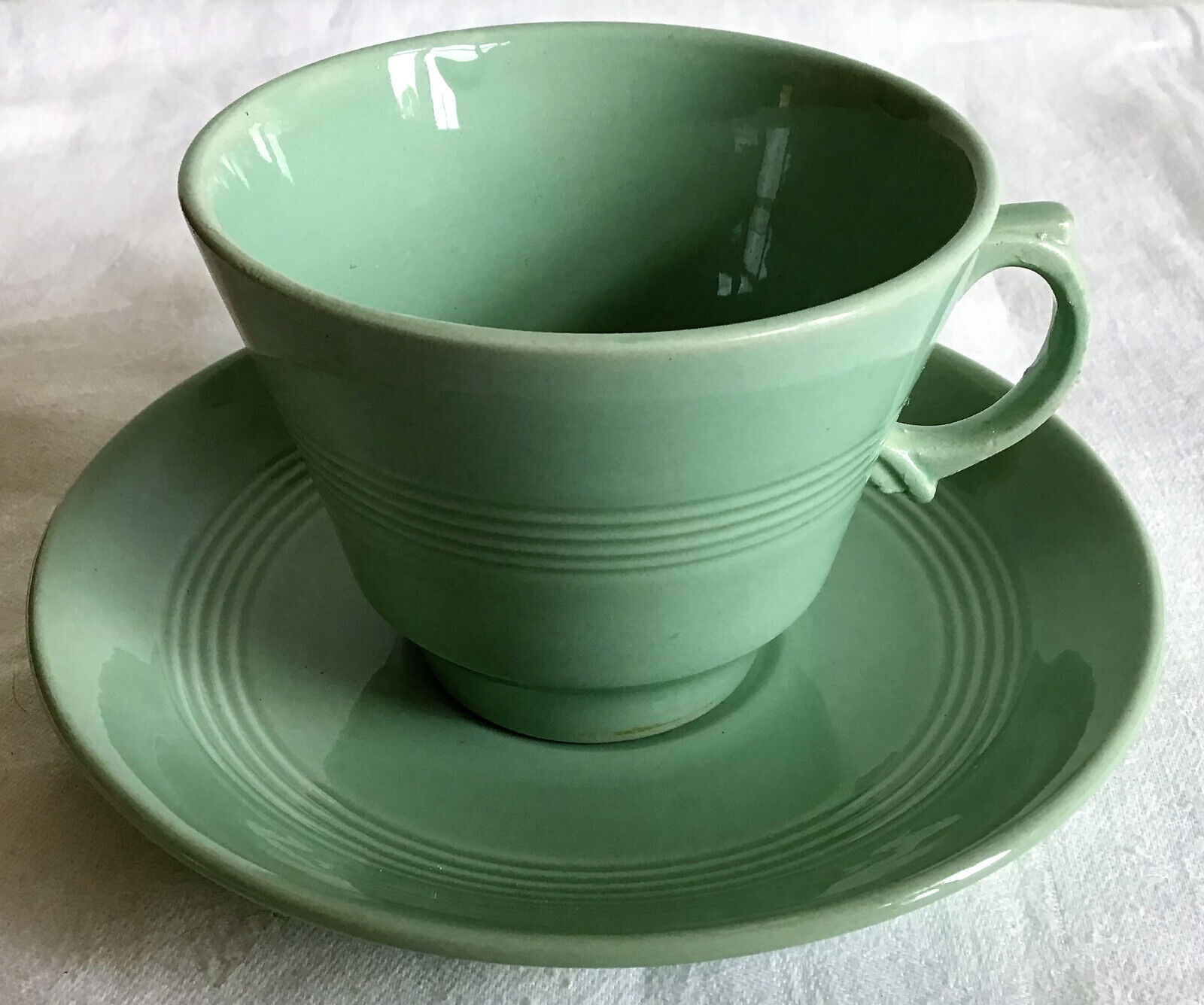
Mugs were not usual back in the 1950s and tea bags hadn’t even been invented. Cups and saucers and a teapot were the norm.
But for visitors there would be the better set of china brought out or even the set kept for very best. Everyone had a tea set in the dresser or china cupboard which rarely saw the light of day and had usually been given as a wedding present.
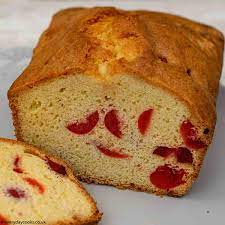
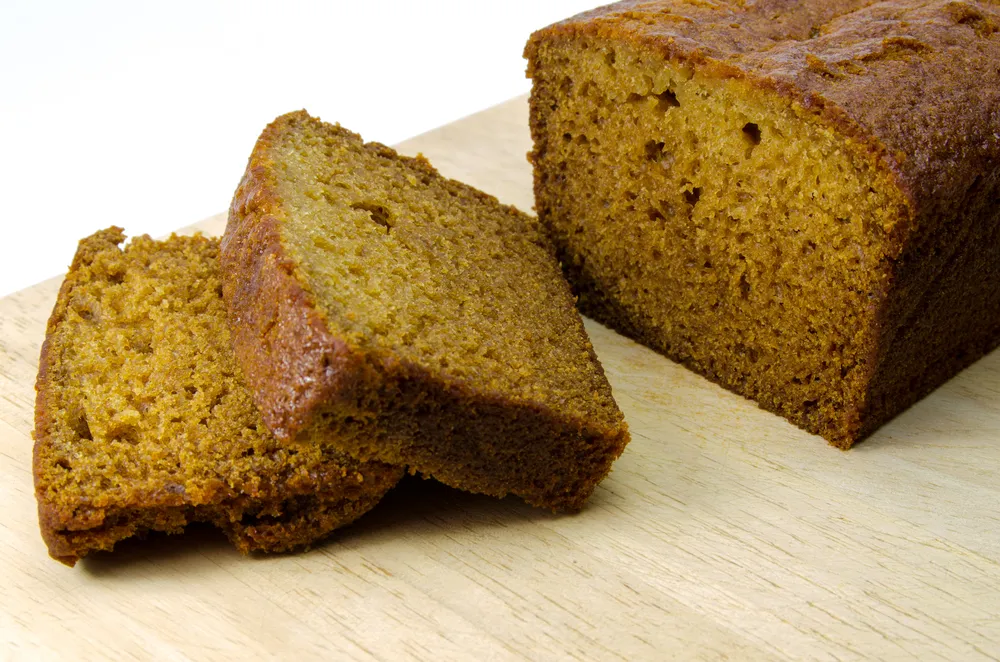
The following is what I remember of the shop cakes available back then where I lived. I know these types of cake all still exist but this post is to give a flavour of a what 1950s teatime spread might look like.
Battenberg which I used to call ‘window cake’ when I was small.
Angel cake
Dundee cake
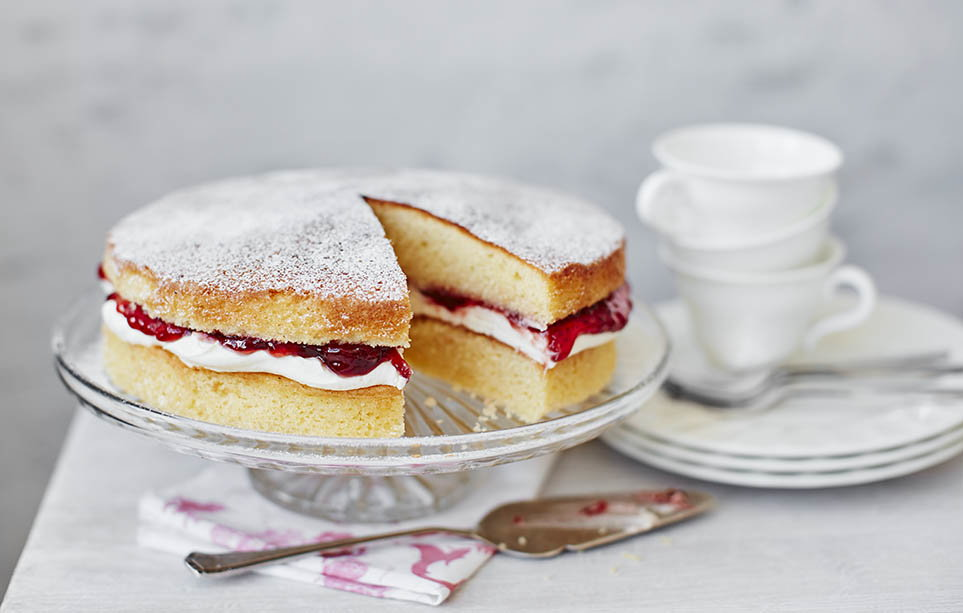
Victoria Sponge. The sponges of the 1950s, home made or bought, would never have had fresh cream in them. There would be jam, butter icing or both. This is because most people didn’t have fridges in the 1950s.
Jam tarts. A box of six usually contained two with red jam (strawberry or raspberry flavour), two with purple jam (blackcurrant of blackberry) and two with yellow jam (apricot jam or lemon curd). The jams were more of a flavoured, coloured gel with no discernible seeds or pips. But I loved them!
Not one of my favourites but a popular teatime treat.
Ginger cake – which always had a lovely sticky top.
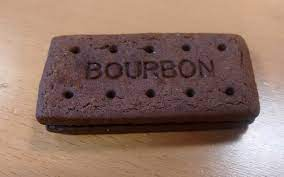
There would often be a plate of biscuits on offer too. We have a vast selection available now but these are two old faithfuls which I remember fondly from my childhood.
Credit to Google Images and Wikipedia. As always, I have endeavored not to infringe copyright. However, if anyone objects to my use of an image, please contact me and I will remove it.
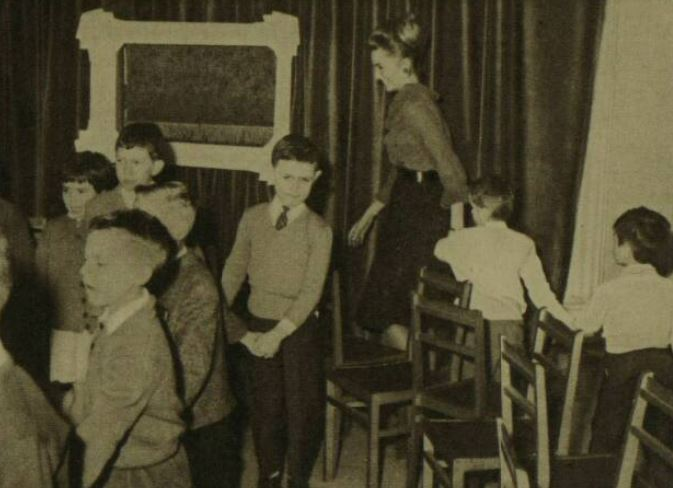
When I was a child birthday parties were small affairs and always held in the birthday child’s home with a handful of their schoolmates invited. We always had a birthday tea and a cake with candles on it and the rest of the time was filled with party games.
It’s interesting that some games we are very familiar with from childhood, appear in similar forms all over the world. Are there reasons why we play them which are are common to all people? A lot of these games have a different appearance due to the culture they’re from, but are constructed in the same fashion.
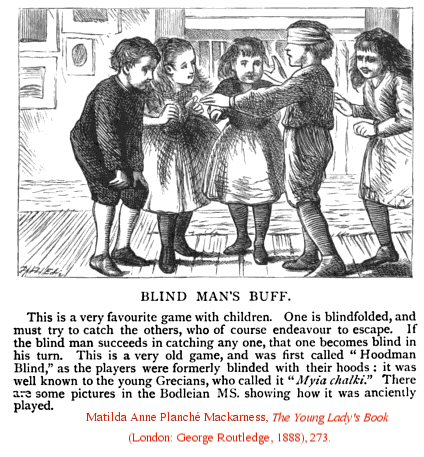
Blind Man’s Buff
A version of the game was played in Ancient Greece where it was called “copper mosquito.” The game is played by children in Bangladesh where it is known as Kamanchi meaning blind fly. One individual is blind-folded in order to catch or touch one of the others who run around repeating, “The blind flies are hovering fast! Catch whichever you can!” The game was played in the Tudor period, as there are references to its recreation by Henry VIII’s courtiers. It was also a popular parlour game in the Victorian Era. Whilst researching for this post I learned that the name of the game is now considered offensive by some and that the blindfolding of a child can be looked on as dangerous. So maybe it’s disappeared altogether?
Musical Chairs
The origins of the game’s name as “Trip to Jerusalem” is disputed. However, it is known to come from its German name Reise Nach Jerusalem (“The Journey to Jerusalem”). One theory suggests that the name was inspired by The Crusades wherein several heavy losses were incurred.
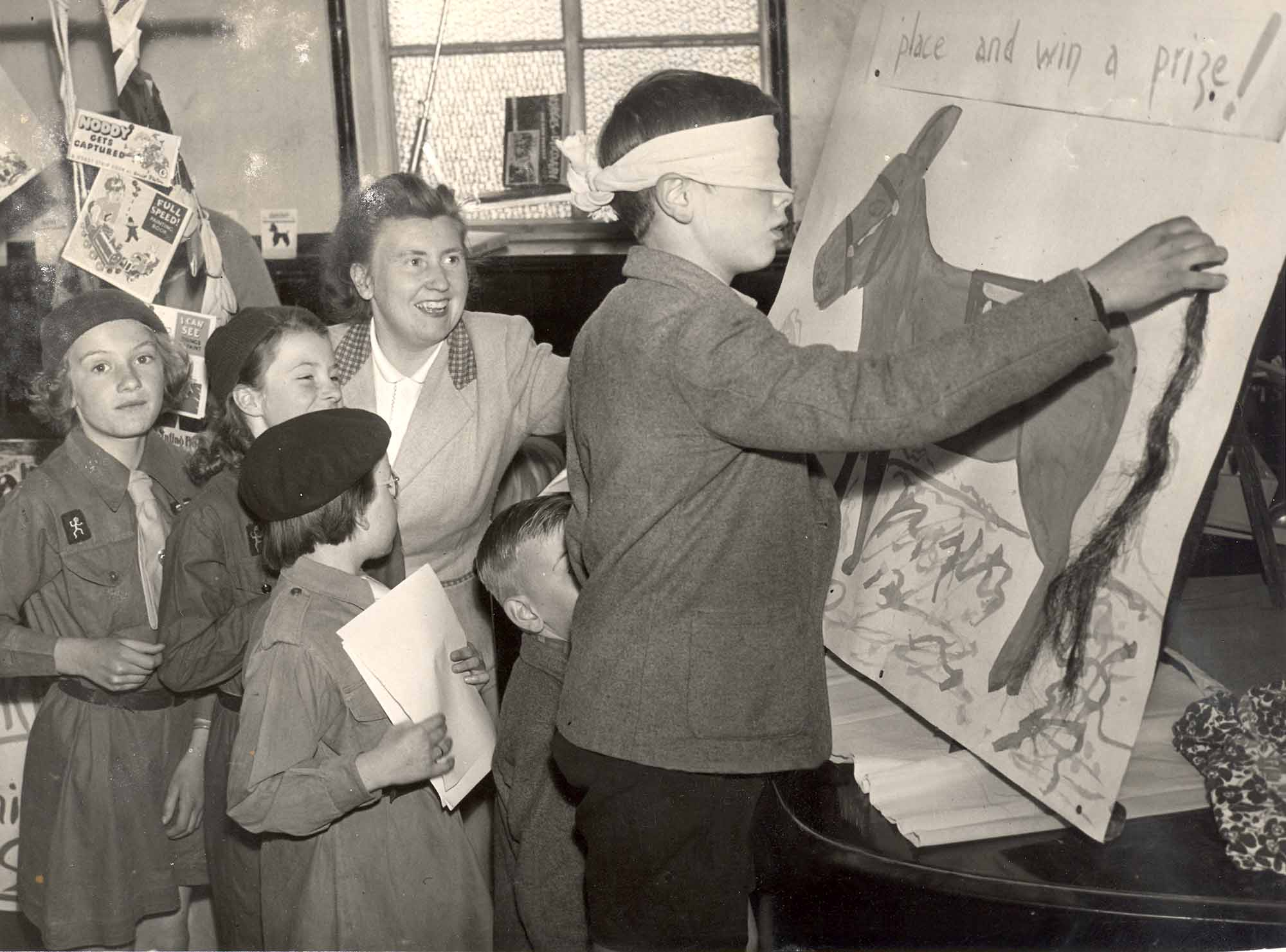
Pin the Tail on the Donkey
Pin the tail on the donkey is a game played by groups of children. The earliest version listed in a catalogue of American games compiled by the American Game Collectors Association in 1998, is dated 1899, and attributed to Charles Zimmerling. My mum used to draw the outline of a donkey on a piece of paper.
Pass the Parcel
Research tells me this is of British origin unlike Blind Man’s Buff which crops up in many cultures. Back in the 1950s the music was either played on a gramophone or on a piano. The parent operating the stop-start music kept a careful eye on the passing of the parcel to make sure everyone had a turn and to ensure that the birthday child was not the one to open the last layer which contained the prize. Back then it was something small like a chocolate bar.
Musical Statues
It seems that this game appears in various countries and has quite a long history. Some countries know it was Freeze Dance or Frozen Statues. Some homes had a parent who played the piano and some had a gramophone with a parent lifting the stylus – just like Pass the Parcel and Musical Chairs.
Dead Lions/ Sleeping Tigers
A great game for calming children down at the end of a party! I can’t find any history on it so it’s perhaps a relatively new invention.
Spin the Bottle/ Plate
On a personal note, I absolutely hated forfeit games! At some of the bigger parties like village parties there was the dreaded (by me!) spin the plate/ bottle game. If the bottle finished its spin pointing to you or if you spun the plate and didn’t get back to your seat in the circle you had to do a forfeit. This usually involved having to sing a song, recite a poem or do something like hop around the room. My worst nightmare!!
Credit to Google Images and Wikipedia. As always, I have endeavoured not to infringe copyright. However, if anyone objects to my use of an image, please contact me and I will remove it.
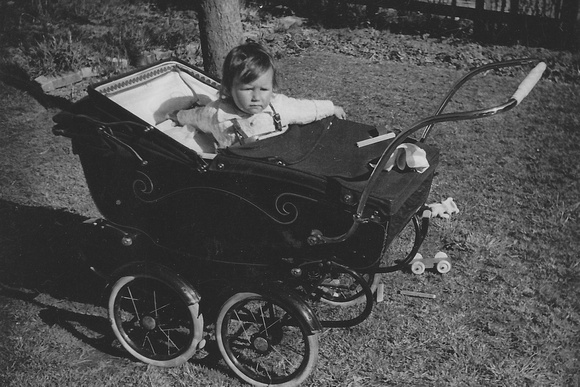
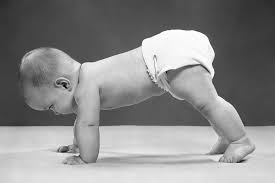
Back in the 50s and 60s, prams and pushchairs were big, heavy and cumbersome. Prams didn’t fold up to go on buses or in cars. Pushchairs folded but were still bulky and heavy. The baby started off in a big, usually coach built pram and at a certain age graduated to a pushchair. There were no lightweight buggies. Families with cars bought a small rectangular soft-bodied thing known as a carry-cot which just sat on the back seat with the baby lying in it. There were no seatbelts in cars then and definitely nothing securing the carry-cot. There were no car seats for babies, toddlers and children. They were held in an adult’s arms until old enough to sit up and then just travelled unsecured in the back seat.
A friend was recalling recently that in the early 70s, it was difficult to buy prams because there was a shortage of steel.
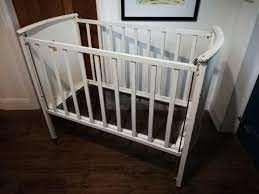
The basic design of cots is still much the same but modern ones are much safer.
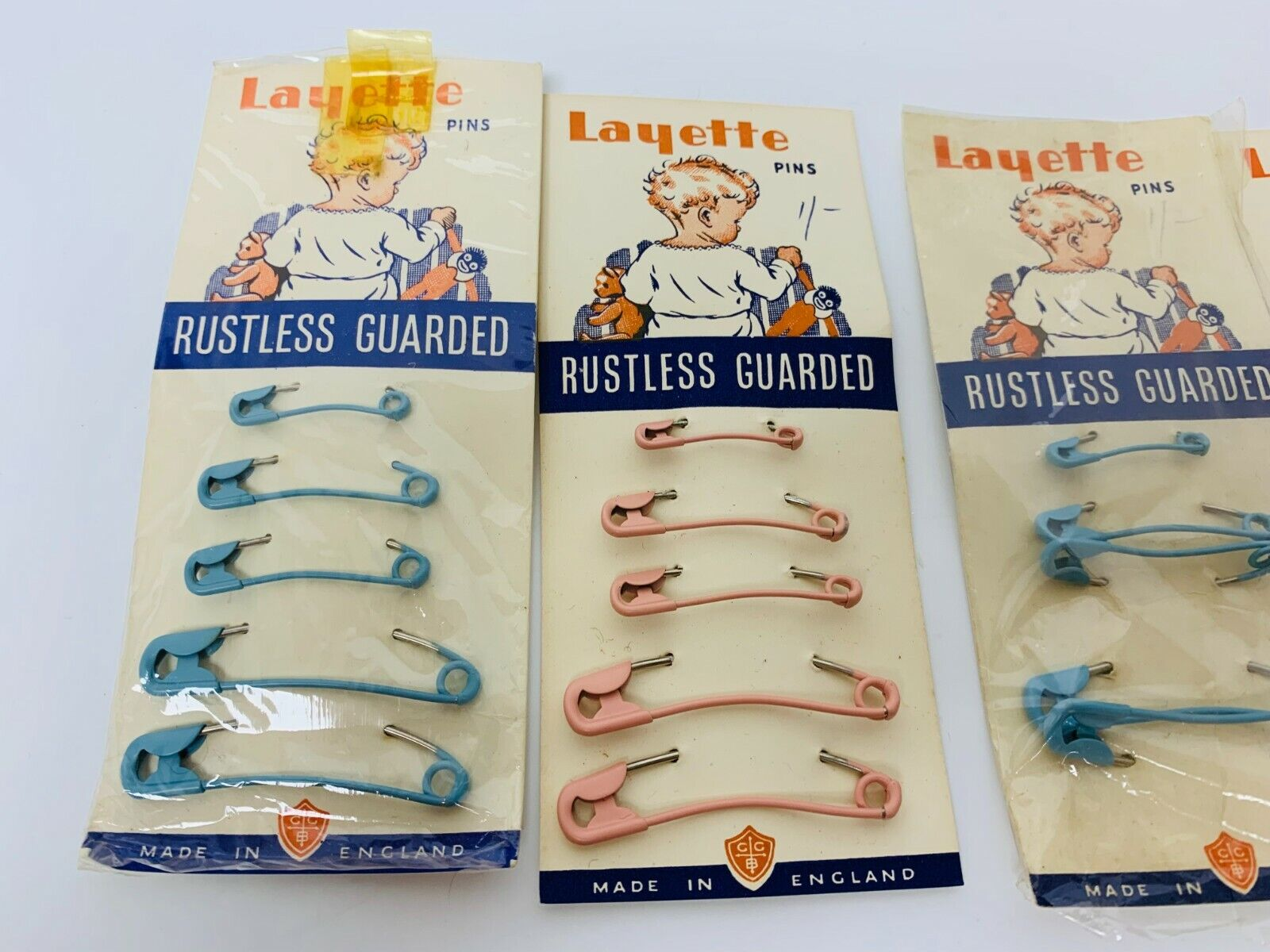
There were no disposable nappies. There still weren’t any when my children were born in the early 80s. Nappies were white towelling squares which were folded and pinned with special big safety pins called, appropriately enough, nappy pins. To add a waterproof outer layer a pair of thin rubber pants were pulled on over the nappy. These nappies needed to be boiled to keep them hygienic and white! When you consider that most households didn’t have washing machines or tumble driers the amount of work involved was enormous. I can remember pink and blue nappy pins ones like the ones in the photograph.
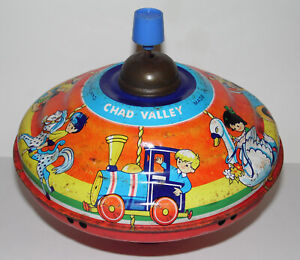
Many baby toys and toys for children were made of tin. There was no plastic. I remember my brother as a toddler cutting his leg on a toy made from tin. Also, the paints used on tin toys and on wooden cots were lead based and therefore toxic.
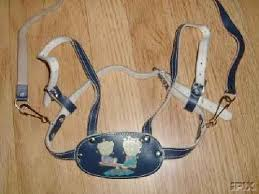
Very young children often wore reins like this when out with the family. I remember very clearly seeing children with walking reins on. They were leather and often pastel coloured with a picture on the front like these in the photograph. They were backed with a white fleecy fabric for comfort.
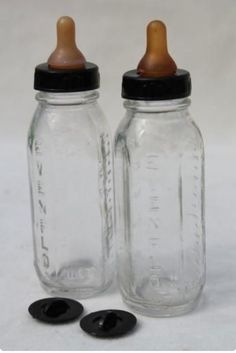
Baby bottles were made of glass and the teats were made of rubber.
Credit to Google Images and Wikipedia. As always, I have endeavored not to infringe copyright. However, if anyone objects to my use of an image, please contact me and I will remove it.
Welcome to my blog! I am an academic historian of medicine and the body, and 2014 AHRC/BBC 'New Generation Thinker'. Please enjoy and let me know what you think. All content is generated by AW and not AI!























 Childhood Memories of growing up in the 1950s and 1960s.