Phones you can carry around with you, that take pictures and can make video calls.
When we had our first telephone connected in our home I was about six years old. It was SO exciting! Our number was 9 as we were the ninth telephone in the village. It was heavy, black and was connected to the wall in one corner of our lounge. Not everyone had a camera and now we walk around with phones in our pockets which can take pictures too – as well as a multitude of other amazing things! I remember fantasising with my brother and sister about phones of the future. ‘What if you could see the person you were talking to as well! Just imagine!” Now children are growing up with Skype and Face Time and think nothing of it.


Instant access to information of any sort at your fingertips.
When I was young, and indeed right into adulthood, if you needed to find something out you looked it up in a reference book. If you didn’t have one at home – in an encyclopedia, atlas, dictionary etc – you went to your local library. Now we can turn on a laptop or whip a phone out of our pocket and find out what we need to know instantly.


Posting parcels in pharmacies, newsagents etc.
This is in here because I had to post a large parcel last week. Here in the UK, Royal Mail were the one and only postal service in the 50s and 60s. My parcel would have cost a fortune via The Post Office (who I normally use) so I researched couriers. I used a well known courier firm and located a convenient drop off point which happened to be a small pharmacy a few miles from where I live. It felt strange to be at a pharmacy counter, next to people picking up prescriptions and buying aspirin, to hand over my parcel.

Cars with radios which can also tell you which way to go.
Radios years ago were too big and cumbersome to be carried around and most also needed to be connected to mains electricity. Being able to listen to the radio in the car wasn’t something which ever occurred to us as a possibility. My first car radio was bought as a separate item and had to be fitted in to the car. As for Sat Navs! We had maps, road atlases and, in our family, an AA Handbook which came with membership of the AA breakdown service and contained a wealth of information about anywhere you wanted to visit. The idea of a voice reading out directions as you drove along would have been completely unbelievable in my childhood – or even twenty years ago!

People saying that red meat, bread, wheat, dairy, tea, coffee,sugar etc etc is bad for you.
First of all, I do know that we are now far better informed about allergies and about food which is better taken in moderation. What makes me smile is that back in the 1950s, these things were the staples of life and were all considered to be ‘good food’. My grandmother on my dad’s side loved feeding people up and really did think that sugar was ‘good for you’. She would be more than a little puzzled to see the complicated labels on food now.


Clothes made overseas which can be bought for less than it would cost you to make them.
In my childhood nobody we knew could afford to buy all their clothes in shops. My mum made most of our clothes and evenings were spent knitting or using her sewing machine. By the time my children were in school it was cheaper to buy ready made clothes than to knit or sew your own. Mass-produced knitwear and cheaper synthetic fibres meant that it cost me far more to go into a wool shop and buy the yarn to knit a sweater. I still enjoy knitting but as an enjoyable pastime rather than an essential.

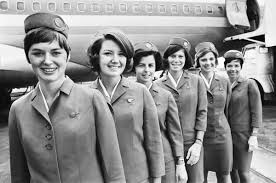
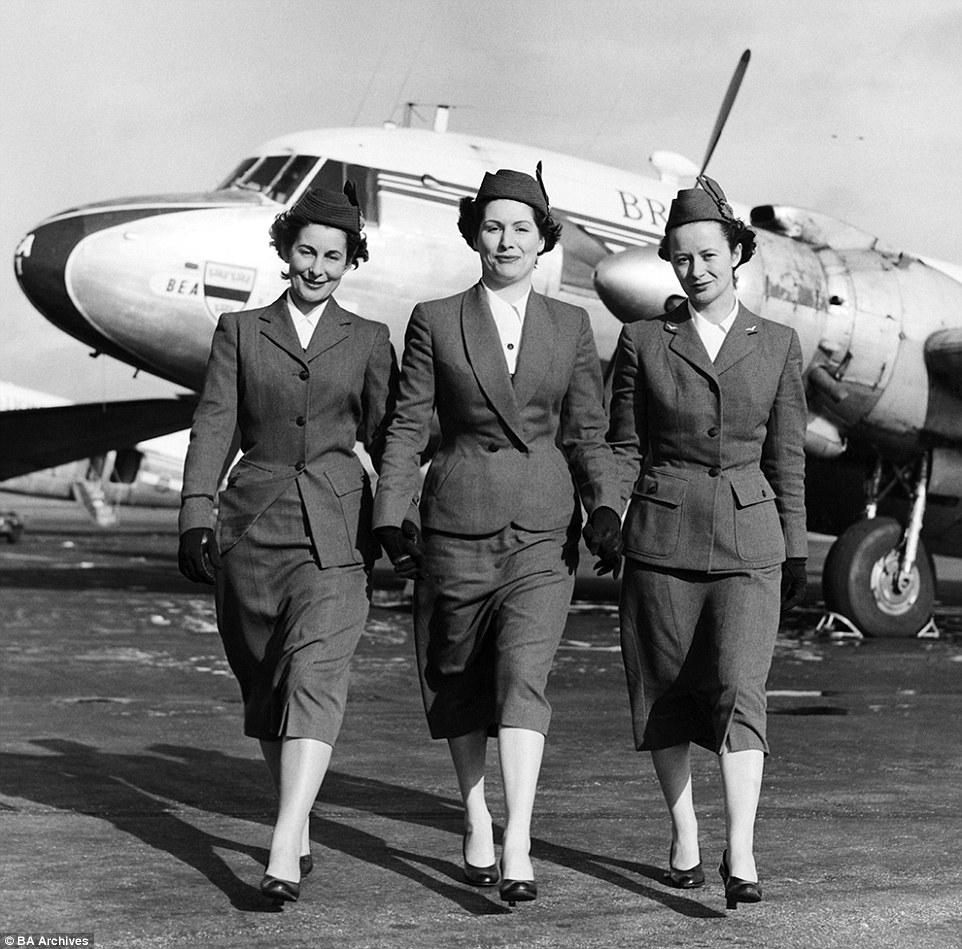
Flying being commonplace and affordable.
Nobody I knew flew in my childhood. I used to see planes in the sky but I never considered that ‘normal’ people might one day be using aircraft as a means of travelling to visit family or go on holiday.


Buying things with a piece of plastic.
Back in the 50s and 60s, we had cash and we had cheques. I remember my mum and dad using cheque books in shops when we occasionally did a ‘big shopping trip’ such as to buy new winter coats and shoes. The rest of the time it was notes and coins. Cheque books looked like the above for many years (courtesy of Wikipedia) with the diagonal lines across and the account holder’s address always written on the back in the presence of the shopkeeper. I would now struggle to find my cheque book although I do have one somewhere!
I remember the first TV ad I saw for a credit card. It was a Barclaycard advert and it featured a girl in a bikini heading out to the beach and shops with just a rectangular piece of plastic tucked into her waistband.


Buying things without even plastic.
My 2017 self can now purchase a huge range of goods – including rail and plane tickets from my Smart Phone or laptop.
 Childhood Memories of growing up in the 1950s and 1960s.