Keeping Clean

I was cleaning yesterday and, as I rummaged through my cleaning cupboard, looking through my vast array of sprays, wipes and cloths, it occurred to me that this is yet another way in which life has changed immeasurably since the 1950s. I’m calling this post ‘Keeping Clean’ because I’m looking at household products and toiletries.

I have often mused on the fact that everything is branded nowadays. We don’t just have milk, distributed by our local farm or dairy. We have the choice of branded milks – Cravendale, Arla, Dairy Crest. Water doesn’t only come out of taps, we can choose Evian, Volvic, Buxton, etc etc. In my childhood, dusters, dishcloths and floor cloths were unbranded and bought in a local hardware shop. Dusters were always yellow and square, floor and dish cloths were white cotton and sold in a roll to be cut into handy lengths.In our house, floor cloths were always recycled old vests discarded by the family when too small or worn. Everyone wore vests then, they were always white cotton and made ideal cleaning cloths. We now have a bewildering assortment of wipes and cloths to choose from – J-cloths, many brands of sponge and microfibre cloths, and even branded dusters e.g Swiffer!

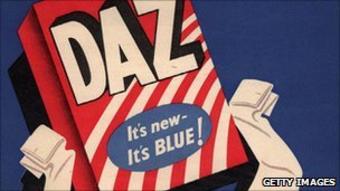

Cleaning products tell the same story. In the very olden days, people used generic substances like carbolic soap, beeswax and bicarb. In the 1950s there were brands to choose from but far fewer than now. People had brand loyalty too. My Mum preferred Daz washing powder, other households used Omo or Persil. I remember Mansion Polish, too and Dura-Glit for cleaning brass. There was no fabric conditioner so, although I don’t remember thinking this at all, towels must have been hard and scratchy after being dried out on the line.

In the world of toiletries, too, there were fewer brands. We always had Gibbs SR toothpaste and Lux soap, some preferred Imperial Leather, Pears, Colgate or, from the early 60s, Signal. What did the SR in Gibbs SR stand for, by the way? Dry skin was moisturised with Nivea or Ponds. There was no such thing as hair conditioner then and getting a comb or a brush through wet hair after washing was a nightmare, especially long or curly hair.

Leibster Award questions

These are the questions Life Lessons, Scribbles and Musings put to me, and my answers:

If you could meet one famous person, who would it be?
I would like to meet (but would not enjoy meeting) Adolf Hitler just to ask him – Why? What for? Do you feel any regret? Can I explain to you, in everyday terms, why what you did was so very wrong?
If you could time-travel, what time period would you like to visit?
I would like to see what it was like to live in a much earlier civilisation such as the Anglo-Saxon or Viking age in Britain.
What would your ideal day consist of?
A morning walk or run, time spent reading and writing, meeting a friend for a catch-up or a visit to a museum, real or virtual contact with my daughters and grandchildren, food cooked for me and music, live or recorded, in the evening.
What is the simplest thing that makes you smile?
A hug from one of my grandchildren.
How many times have you fallen in love?
Many times because I include the love which comes with the birth of children and grandchildren as well as romantic love.
What would be your dream job?
I wanted to be an archaeologist from a very young age. I took a different career path but it still seems like the perfect job to me and I’d love to give it a try.
Who do you look up to or who inspires you?
My friend Trevor who is one of the most fun, creative, loving, caring, intelligent and positive people I have ever met, and who has overcome more obstacles than anyone else I know.
What is your favorite season and why?
Spring. It’s the ever hopeful season heralding the end of winter and our first glimpses of summer.
What book(s) can you read over and over again?
I rarely re-read books but I have revisited Maus by Art Spiegelman several times. We must never forget the Holocaust and this book tells the story exactly as it was, in all its horror, but through a graphic novel.
Android or iPhone….which goes nicely with PC or Mac?
As long as they all work reliably and do what I want them to do, I don’t mind.
What is your all time favorite food?
My daughter’s Parmigiana which is sublime.

Here are some questions for my nominees.

If you could meet one famous person, dead or alive, who would it be?
What question would you most like to ask
Where in the world would you like to visit for the first time?
What is the simplest thing that makes you smile?
What was the last book you read?
What would be your dream job?
Who do you look up to or who inspires you?
What is your favourite month and why?
What makes you angry?
What is the trait you most deplore in yourself.
When and where were you happiest?

New blog post on the 50s and 60s coming later today.

Holidays and Travel Part 2

Two of my daughters and their three small children have been staying here this summer and have now returned home. This means I have time to get back to other things like writing this blog. Thinking about all the travelling done by our family when we visit each other has prompted me to revisit holidays and travel in the 50s and 60s.

As well as our annual family holiday and weekend visits to grandparents, we children had two other exciting days out to look forward to each year. One was the village outing and the other was the Sunday School trip. Both were arranged in a similar way and the same people went on the two trips – apart from the fact that the vicar only joined us on the Sunday School outing, not the village one.

A coach was booked and would be ready and waiting outside the village shop at 8am. Our local coach firm was Thomas Bros who also ran the school bus service.

   The photograph is not a Thomas Bros one but our coaches looked like this.

We always went to either Porthcawl or Barry Island. Or perhaps they are the two I liked best as they had permanent funfairs as well as beaches! All food for the whole day was packed up and taken with us, including flasks of drinks. The most we ever bought to eat whilst there was an ice-cream. There were not as many food outlets in those days and people didn’t have the money to buy cafe food all day for a whole family.

         Barry Island beach and fair.


Porthcawl beach and the funfair which was called Coney Beach.

So, a coach containing a whole village of mums and children and laden with bags of beachwear and food would set off for a day at the seaside. It was almost unbearably exciting. I’m sure it was terribly hard work for my mum! We sang songs on coaches and in cars in those days. These were not songs from the radio but songs which just seemed to be sung when travelling – many of them Welsh. Oes Gafr Eto? was one of my favourites. Crawshay Bailey was another one and I recently found out that the character in the song was a real person! He was was an English industrialist who became one of the great iron-masters of Wales in Victorian times.

At some point in the day we would walk into the town from the beach and funfair area. As we lived way out in the countryside, this was every bit as exciting as the sand and the rides. We would go to Woollies (F W Woolworth) and be in seventh heaven choosing pick and mix, cheap jewellery or toys to spend our pocket money on.

This is a 1950s Woollies – not necessarily one I’ve been in.

Advertisements for pic'n'mix sweets at Woolworths in 1938 - featuring Milady Toffees and QQQ Liquorice Allsorts I only ever saw Milady toffees in Woolworth’s.
As we sang and dozed our way back in the coach we were happy, sometimes sunburned – nobody knew much about sun protection then – and tired. It was always a Saturday. My dad would have had a whole day uninterrupted in his beloved garden.

This photograph is not a Thomas Bros one but our coaches looked like this.

This Blog has been nominated for the Leibster Award!

This blog has been nominated for the Leibster Award! It was nominated by Susan Gutterman Musin’ with Susan https://musinwithsusan.wordpress.com/
Many thanks, Susan. Keep up the fantastic blog.

The Liebster Award is an online award given to new, or undiscovered, bloggers by other bloggers.

Rules for the Liebster Award:

Once you are nominated:

Make a post thanking and linking the person who nominated you.
Include the Liebster Award sticker in the post too.
Nominate 5 -10 other bloggers who you feel are worthy of this award. Let them know they have been nominated by commenting on one of their posts. You can also nominate the person who nominated you.
Ensure all of these bloggers have less than 200 followers.
Answer the eleven questions asked to you by the person who nominated you, and make eleven questions of your own for your nominees or you may use the same questions.
Lastly, COPY these rules in the post.

I would like to nominate the following bloggers.

Diane, Hometogo232

Bisimodupe1975 at Femininematerz

Claremary, Around ZuZu’s Barn

Afternoon of Sundries

Elle,  THE ADVENTURES OF A SAMURAI, A SEANACHAÍ AND 4 FAIRY NINJA

Gertie’s Journey

Musin With Susan

I am so new to all this, I don’t know how to check how many followers they have. I’ve nominated them because I have enjoyed their blogs and because some of them have given me positive comments and words of encouragement in my early days of blogging, for which I’m very grateful.

Check them out!

More 50s and 60s posts later today!

Babies in the 1950s.

I have been out of circulation for a week as I have been visiting a daughter who has just had her first baby. With babies in mind, I have decided to post about 1950s babies and what they wore, how they were cared for, their prams and pushchairs etc.

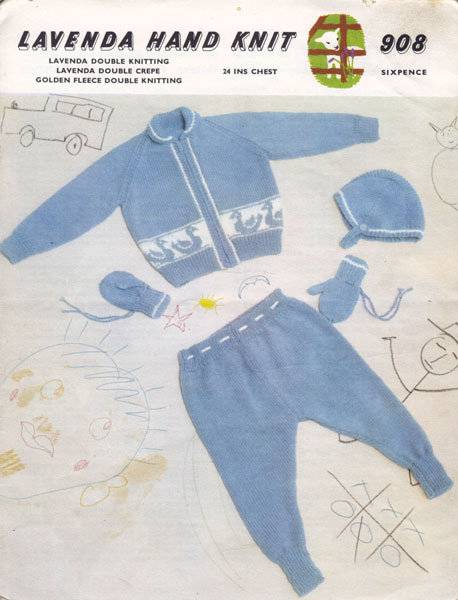
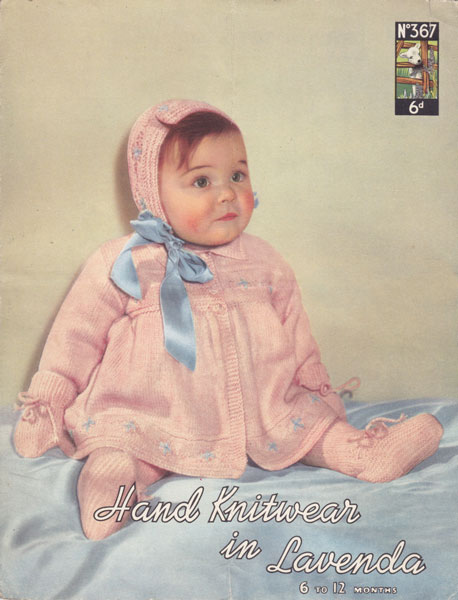
Most baby clothes were hand sewn or knitted in the 50s, few people could afford to buy everything in the shops. There were no baby grows, so for warmth they wore knitted leggings as well as cardigans and hats and bootees on their feet. Baby girls’ hats were called bonnets, baby boys’ knitted hats were known as helmets.

The girls wore dresses – most had hand smocking on them – and boys wore rompers or romper suits.

Baby colours were mostly white, pink for girls, blue for boys but lemon and pale green were acceptable for both which was useful when knitting during pregnancy.

Nappies were towelling, fastened with enormous nappy pins and covered with rubber (later plastic) pants.

There were no buggies. Prams were huge and metal-bodied and did not come off the wheels. Pushchairs, too, were large and solid and not very transportable. For mobility, parents used a carry-cot which was smaller, lightweight and had folding wheels. A baby could, therefore, be taken in a car lying in its carry-cot, the wheels folded up in the boot.

Sweets, Chocolates and Biscuits.

All children love sweet things. The fact that we didn’t have them all the time (mum was fussy about our teeth, money wasn’t plentiful, we didn’t live near any shops) made them even more of an attraction. When Nana came to live with us, she started giving us 6d each on a Saturday morning. We would either walk the mile to the village shop to buy sweets or, if Dad was working on Saturday morning, we would go in the car with him to the town and spend it there.

As well as the packets and bars, some of which are shown here, there were the large glass jars with loose sweets in which were weighed out in 4oz portions into a paper bag. If you bought 2oz, the paper bag was triangular. Some loose sweets I remember
– aniseed balls, barley sugar, Everton Mints and pineapple chunks.


T


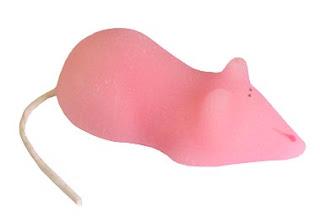
I remember there often being a sugar mouse poking out of the top of my Christmas stocking.

The biscuits I remember being offered most often when out for tea are – Nice biscuits, those horrid pink wafer ones, custard creams, Bourbon and ginger nuts. Cadbury’s chocolate fingers were strictly for birthday parties!

What we Ate.

I touched on this aspect of 1950s life in my first post – The Blog Begins. This post shares some more thoughts on food in Post War Britain.

We had a much smaller range of food available to us in the fifties. Living in a backwater, we were probably a bit behind everyone else. I was 17 when I first ate a red pepper. I first came across pizza on a visit to London as a student. Cheese choices were all native – Carphilly, Cheddar, Cheshire, Red Leicester. The first exotic cheese I knew was Danish Blue.  Normal, everyday cheeses such as Brie, Camembert, Ementhal, Mozarella were yet to be discovered in Britain!

Meals in recipe books and on menus didn’t have foreign names like Stroganoff, Risotto, Tagliatelle or Bolognese. Neither did they have convoluted titles like Pan-Seared Bass with Chargrilled Vegetables and a Caramelised Onion Marmalade. Or Hand-Cut, Triple-Cooked, Seasoned Potato Chips. Chips were just chips. We had meat and two veg (roast beef dinner, roast pork dinner), one pot meals (beef casserole, lamb stew), cold meals (ham salad, corned beef salad – how often do you hear of corned beef these days?) or chip meals (egg and chips, ham and chips, fish and chips). The meals which had names were reassuringly down to earth and self-explanatory – Toad in the Hole, Hot Pot, Macaroni Cheese (the only pasta we knew, but the word pasta was unknown to us at that time).

A 1950s nutriotionist’s thoughts on an ideal family menu for a week.

A 1950s Christmas menu.


Recipes didn’t have colour, or any, photographs. Most didn’t even have drawings like these – just text.

 Some ‘creative’ ideas for serving Spam in the 1950s.

The other old favourite was the snack on toast – beans on toast, scrambled egg on toast, poached egg on toast, cheese on toast, sardines on toast, spaghetti on toast (tinned spaghetti, of course.)

We also ate more offal than people do now; items like liver, kidney, tripe, brawn and sweetbreads.

Food was preserved by canning, salting, pickling, bottling, drying. With the advent of freezing came the arrival of delights (to we children, anyway!) such as fish fingers. Home freezers were uncommon until the very late 60s/ early 70s so fish fingers, frozen peas and Arctic Roll (mmmmm, loved it!) were bought and eaten on the same day.


Fruit any more exotic than apples or bananas were bought in tins. Tinned pineapple and peaches were eaten all year round and tinned pears, strawberries and mandarin oranges when the real thing was out of season. We ate fresh peas in summer when my dad grew them but tinned or dried the rest of the year.

   This was issued during rationing – which carried on after the war until 1953.

Holidays and Travel Part 1

Reading some travel blogs recently, I thought I would look back at childhood holidays and day trips. I have mentioned travel in passing in my earlier blog Transport but this time I will be digging a bit deeper – with my bucket and spade!

Image result for kids beach wear 1950s

I flew back from Ireland last night after spending a few days with my daughter and the grandchildren. How easy, quick and affordable travel has become in the last few decades! In my childhood, family holidays were taken by road, coach or train – if you were lucky enough to have one at all. Now that I sort all my trips out on a computer, it’s hard to imagine my mum and dad planning holidays to a different part of Britain for all five of us. We didn’t return to the same place each year so new accommodation had to be found each time. Before our first telephone, this would have all been done by letter!

Image result for picnic food 1950s  Image result for 1950s uk scotch egg 

Picnics were a big part of family outings. There were no fast food outlets and most post-war families couldn’t afford to eat in cafes too often so food was taken with you.

I remember – mainly sandwiches (egg and cress, Spam or tinned ham, Shipham’s paste), peeled hard-boiled eggs, tomatoes, scotch eggs. Drinks were tea in a Thermos flask and made up orange squash (I remember a brand called Quosh). There would be some pieces of home made cake after the sandwiches. I didn’t come across crisps until at least 1960 so they weren’t part of 1950s picnics.

Image result for 1950s uk thermos flask   

Driving to the coast for a holiday or a day trip often involved long traffic jams. Most beaches had little in the way of amenities, cafes and toilets often involved a walk back from the beach into the town.

In Sickness and in Health. 

People have always caught colds, measles, flu, have broken bones, grown old and had babies. So how were the 50s and 60s different?

When I was a child, you stayed in bed when you were unwell. Whether it was a cold, bronchitis, chicken pox or a stomach upset, being poorly meant staying home from school and staying in bed. The doctor was informed and visited regularly. We were five miles away from the surgery; nevertheless the highlight of a day confined to bed with spots or a temperature was the sight of old Dr Price (who probably wasn’t even old!) walking towards the house from his car. I can still remember how weak and wobbly the legs felt on the day you were first allowed to get up – just for a short while on the first day, of course!
At home mum put Germolene on cuts and grazes. I can still remember the thick, pink cream in the tin and that distinctive smell. However, if you hurt yourself at school they dabbed neat iodine directly onto the wound which was agony!!


We were given cod liver oil or cod liver oil and malt all winter which was supposed to keep colds away. There was kaolin and morphine for stomach upsets, boric acid for eye infections and camomile lotion for all skin complaints from sunburn to measles. A cough was treated with thick, brown cough mixture which always tasted vile. Our favoured brand was Hactos.

Other things I remember being talked about and used by older people such as grandparents are; gentian violet, kaolin poultices, syrup of figs and Epsom salts.

The  one great thing about being in bed poorly in the 1950s was – you were ‘allowed’ to drink Lucozade. In fact, it was practically compulsory! The thing which made it special was you weren’t ‘allowed’ to drink it at any other time. As soon as you were confined to bed with mumps or ‘flu, Lucozade would appear as if by magic. We were a mile walk from the village shop and five miles from the town but Lucozade was purchased for the poorly one – and only the poorly one! The siblings could just look and drool.

What we wore – some more thoughts and images.

First, a disclaimer.  All images used are freely available on the Internet. If, however, I have infringed copyright please inform me and the offending picture will be removed.


As can be seen in this photo, girls’ dresses were more or less smaller versions of what their mums wore. 


Notice the boy’s inevitable short back and sides with side parting.


A girl in my primary school had a rabbit cardigan just like this knitted in red and white.  When it became too small for her, her mum cut the sleeves above the elbow to make it bolero style. 


Yes, I had outfits just like this!

Puff sleeves, gingham, seersucker, Broderie Anglaise trim with ribbon threaded through, sashes tied at the back, pockets – some of the things I remember from summer dresses of the day.   


A pattern which could be adapted to make a day dress, a party dress, a skirt and top, all with a choice of collar styles. Notice the trousers. They weren’t common and were known as ‘slacks’. They were definitely not worn for school.