50s and 60s Learning

I’ve been a long time away from here. Sorry! Things happen.

I was thinking recently about the way we were taught when I was in school. Here are some random musings.

A lot of our teaching was very good. We learned the times tables and even now, anyone who is a liitle older can answer instantly a question like ‘What is 9 X 6?’.

We also had to learn poems off by heart. A love of poetry is a great thing to encourage. To learn what a poem is saying is so much more important than learning a given poem by rote. There even used to be poem recital competitions in school. I’m sure they put most pupils off poetry rather than instilling a love of poems.

When I was approaching the 11+, British readers of a certain age will remember this, we had to learn how to work out simple and compound interest. We were completely unaware what this meant in real life. We just knew how to work out the £%+- etc. I only realised about 20 years later what it was about.

One part of our English (now called literacy) lessons involved learning well known sayings and proverbs. For example, we had to fill in the blanks in

All that – – – – – – – – is not – – – – .

Too many – – – – – spoil the – – – – – .

This now seems quite odd as children today are encouraged to be creative and to write descriptively rather than to use learned phrases.

Any form of games or PE was virtually non-existent. Very occasionally, on a warm sunny day, our two teachers would take us out on the playground with rubber rings, bean bags and quoits. We probably got more exercise playing together at break times! Sometimes, on a fine day, we were all taken for a ‘nature ramble’. It consisted of our two teachers taking all of us, 25/ 30 children from 4 – 11, for a walk along the lanes around our school. Hardly any traffic so it was quite safe! We picked things, were occasionally given the names of plants – and we loved it!

Music was basic and traditional. We sang hymns in both Welsh and English. We also sang patriotic songs like Hearts of Oak and The Skye Boat Song without the faintest idea what they were about. I still have my recorder and my fingers still remember how to play the Skye Boat Song.

History was also traditional and consisted mainly of learning about famous people, mostly heroes and heroines. People like Florence Nightingale, Walter Raleigh and Captain Cook.
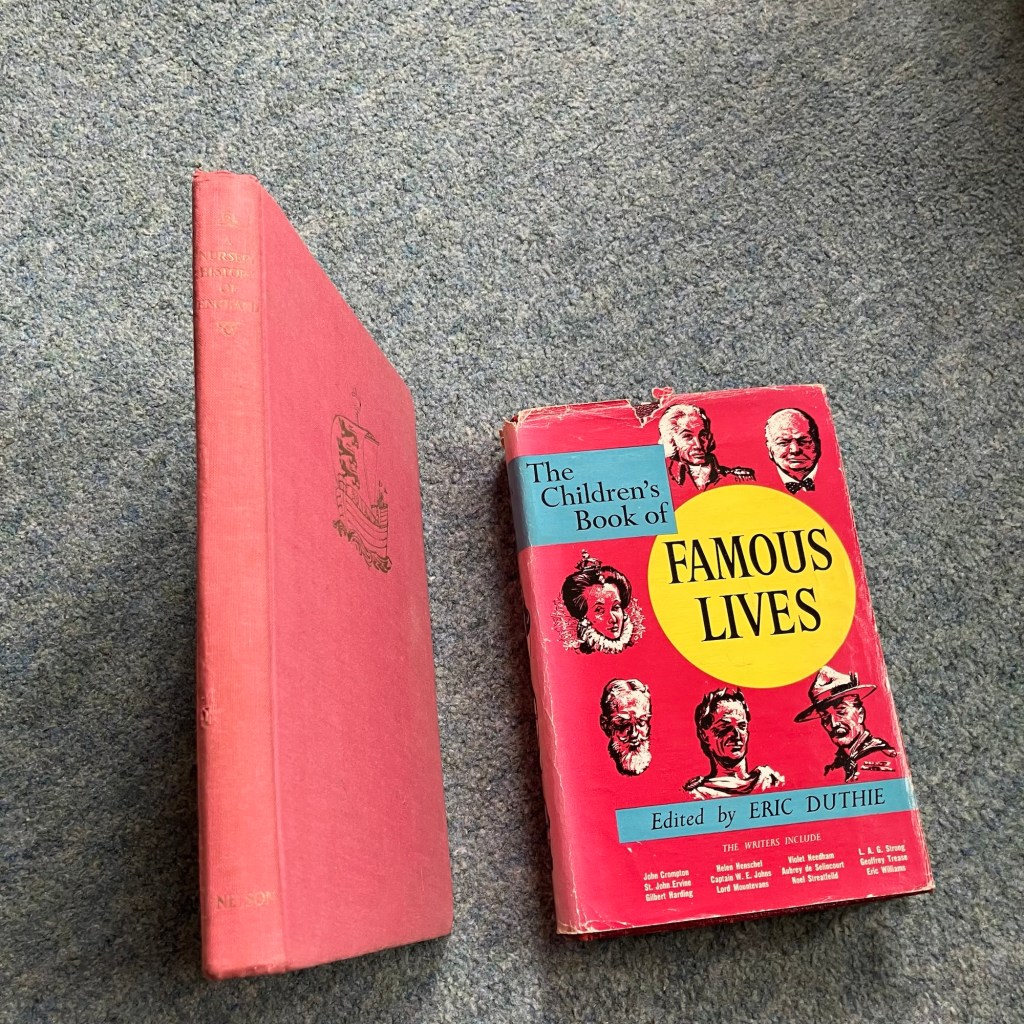
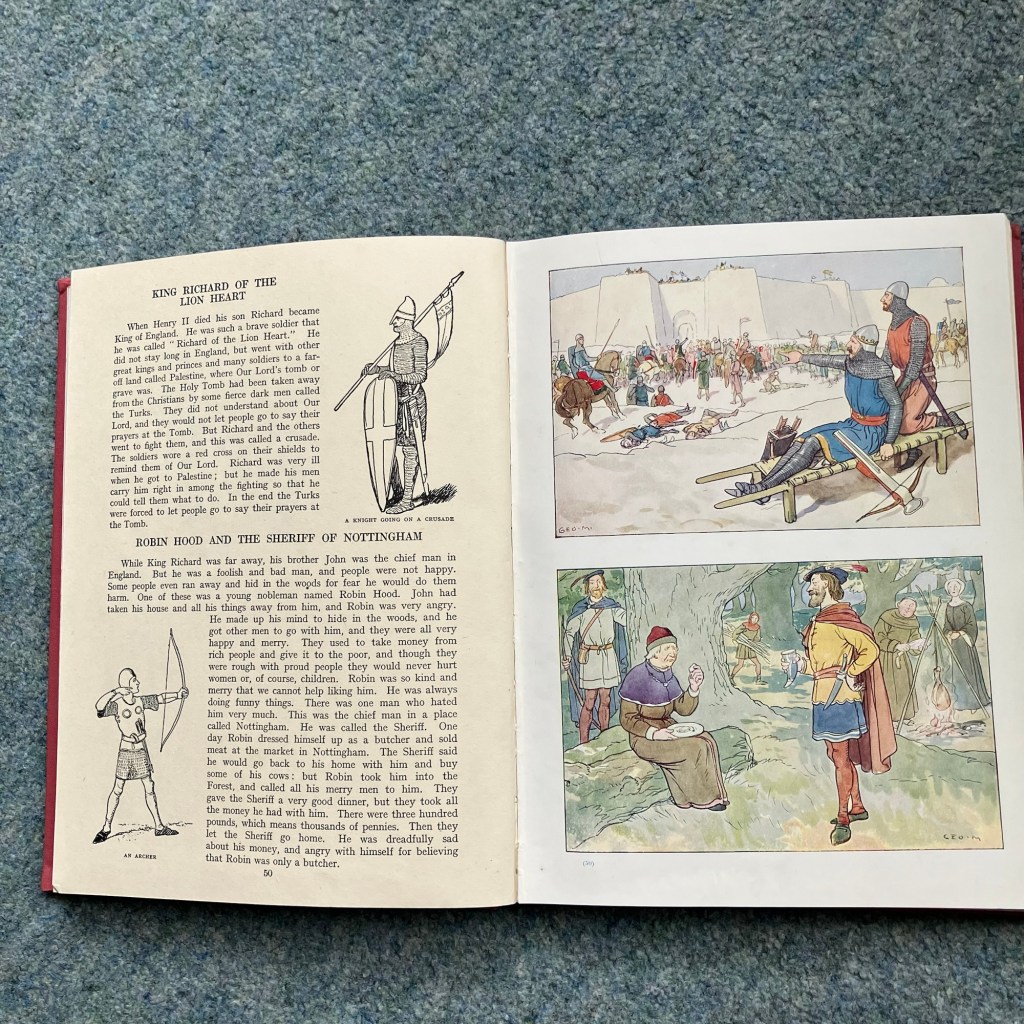
Here are two of my books from when I was a child. The one on the left is called A Nursery History of England (note, not Britain!) and has lovely coloured illustrations of which I’ve shown two.
Pens and Pencils

When I started school there were pencils which we learned to write with and pens which we were allowed to write with when we were a bit older, maybe seven or eight. Not much has changed. Except for the pens and, to a lesser extent, the pencils.

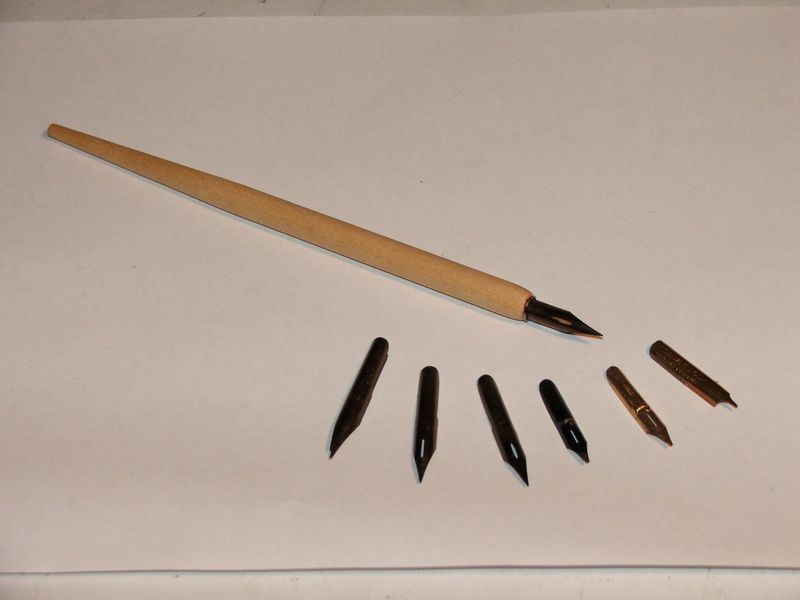
The only pens provided in my Primary School were the wooden handled dipping pens.

dip pen_webimage

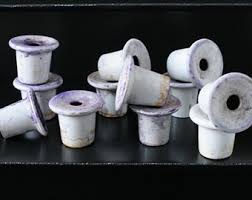
china inkwells

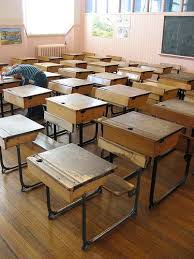
desks with inkwell holes

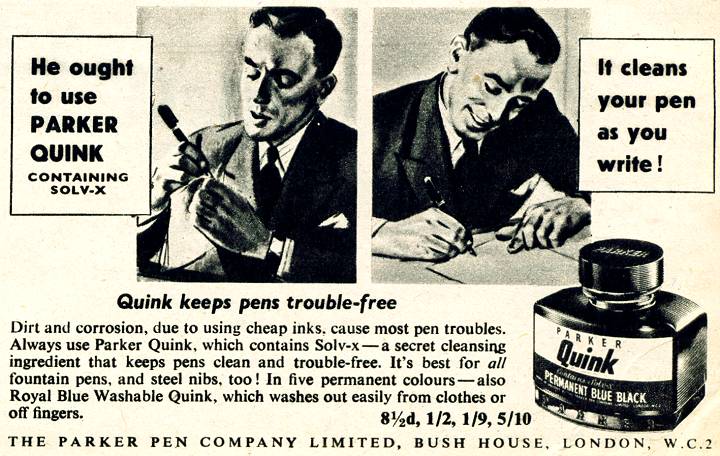
The ink for the pens was held in little china inkwells which fitted into holes in the desks. Each morning the ink monitors would make up a big jug of ink using ink powder and water, fill a trayful of inkwells, then place an inkwell into each desk hole. The standard issue school ink was a shade called blue-black.  I hated the dullness of that colour and longed to write with a bright blue ink. Although the top year in our primary school (eleven year olds) were allowed to use their own pens, the headteacher loathed ball-points (biros) calling them ‘new-fangled rubbish’ and banned us from using them. If you were lucky enough to have your own fountain pen, and I got one for my eleventh birthday which saw me all the way through high school, you could use that in school. I would fill mine from a bottle of Quink at home so that I didn’t have to use school blue-black ink. Parker pens were the most desirable but most of us had the more affordable Platignum pens. There were no other types of pen apart from Dipping pens, fountain pens and biros. Fibre tips, toller ball, fine felt-tips, fibre tips all had yet to be invented or at least to become mainstream. I remember when Tempo pens arrived on the scene when I was a student (and still a fountain pen user) and I loved them! To this day I am still not a fan of writing in biro, preferring ink pens or pencil.

parkerquink

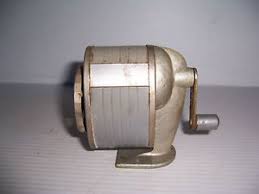
There isn’t as much to say about pencils. There is a vast array of colours and styles available now but the fundamental design hasn’t changed. I do remember we children being very excited in school when the teacher acquired a desk mounted pencil sharpener. What a joy to use! We all wanted to be pencil monitor and have the job of sharpening the class’ pencils first thing in the morning. These gadgets still exist, I have seen them in some classrooms in schools I worked in. The design hasn’t changed.

imagesdownloaddownload (1)

Then we come to colouring pencils or ‘crayons’. Again, the basic design remains unchanged. One well known brand I remember well is Lakeland. I loved the tins they came in with a Lakeland scene on the lid. Even the smallest tins of their crayons had the scenic image on the tin.

lakelandvintage-1960s-lakeland-pencil-crayon-tin-with

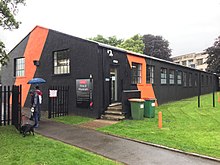
I didn’t know then but the reason they were called Lakeland was because they were manufactured in the Lake District. The Derwent pencil company began in 1832 in Keswick, Cumbria and remained well known for producing the finest pencils in the world. There is even a pencil museum in Keswick.

220px-keswick_pencil_museum_(geograph_5455667)  Keswick’s Pencil Museum.


As always, images are courtesy of Google Images and Wikipedia. If anyone objects to my use of any picture please contact me so that I can remove it.