Technology has moved on at an incredible pace in the past few decades. Back in the days before we had the internet there were things which we needed which we don’t need as much any more.
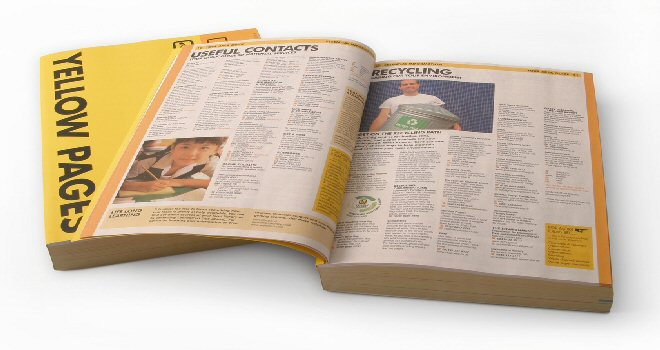
I’ll start with telephone directories. In the days when all phones lived at home and were connected by wires we received a new telephone directory and a new Yellow Pages every year. One winter I did a few weeks work delivering Yellow Pages and I walked miles!
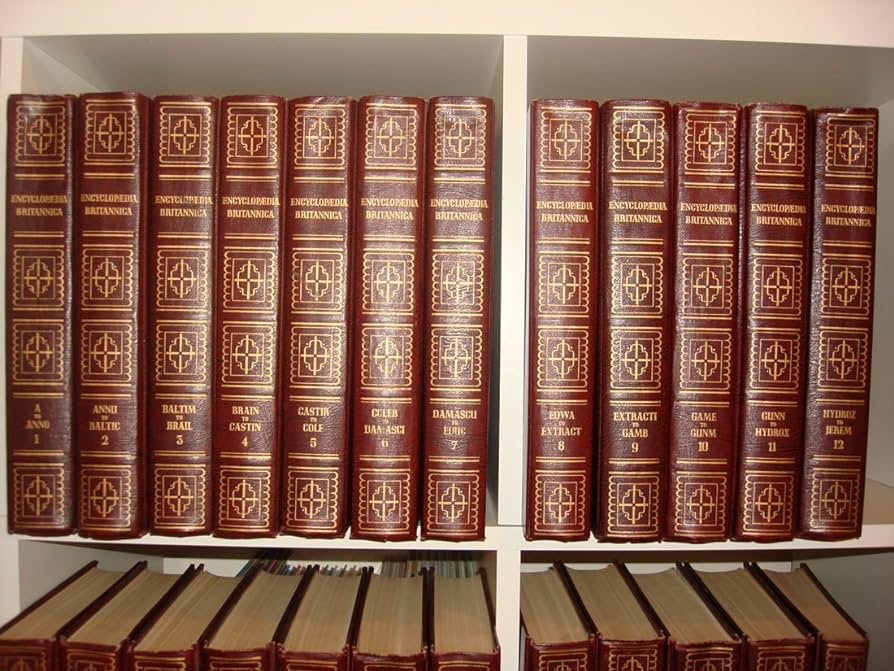
If I wanted to find out about something back in the 50s and 60s my first port of call was my mum and dad’s set of encyclopaedias. After leaving home, when I didn’t have encyclopaedias to hand, I would make a note of what I wanted to find out and call into a library.
Many homes had a Home Doctor book or a First Aid book. I bought one when we were expecting our first baby in 1980. I’m also lucky enough to have two very old home doctor books which came from my grandmother’s house. One I’ve managed to date to the 1920’s and the other one is from the 1800s but I can’t guess closer than that.
I know people who don’t buy books at all any more but read all their fiction online.
I love recipe books and still use them but I also use the internet if I’m looking for something in particular which I don’t think I have a recipe for.
I also always have a book of road maps in my car but when going somewhere new I increasingly use my phone to navigate me there.

When we used to go on family holidays when I was a child, and later with my own family, we would pack a guide book, a road atlas, and perhaps a bird spotter’s guide and a flower identification book. Or books about trains, castles . . . . whatever the family’s interests.
Now we don’t just have the internet available, most of us have it in our pockets on our smartphones.
Here is a random selection of some of the things we can manage without now – when we want to.




Having said all that, I still love books! I have many books of all sorts, still read fiction in paper form, still take a newspaper and love a good browse in my recipe books.
As always, credit to Wikipedia and Google Images. I make every effort to avoid infringing copyright. However, if anyone objects to my use of an image please contact me and it will be removed.
 Childhood Memories of growing up in the 1950s and 1960s.
It’s amazing how the internet has revolutionized our lives. Great post!
LikeLiked by 2 people
Thank you! I could also have included cameras, CDs etc etc
LikeLiked by 1 person
I wish people actually used the UK spell check when they are writing or commenting in public. It makes me cringe every time I see ‘there’ for ‘their’ etc, and the old Primary teacher in me feels very sad.
LikeLiked by 2 people
Unfortunately a lot of online dictionaries are wildly inaccurate.
LikeLiked by 1 person
Definitely!
LikeLike
Yes I agree with the spelling when writing, our English teachers would feel as though they had wasted their time in teaching us good grammar and spelling but I’m sure it’s a different way of teaching these days, so irritating and words like eg. Juggle, they pronounce it as juggleing when in fact it is not it is juggling.
Life in the 50s and 60s was good and I had wonderful parents who cooked great meals for my brother and I and the type of meals then were basically meat and 3 veg’ with junket for dessert or jelly or Spanish cream or steamed pudds, lots of milk pudds such as sago, rice pudding, semolina and the like and even my children loved those pudds.
Clothes were also different with wee girls wearing bodices under their clothes that fastened with rubber buttons, brown ribbed long stockings for the winter, pleated skirts and always a knitted jersey with shiny shoes on our feet.
I had a penchant for prams especially cane and used to take the neighbours babies out at the weekend, I still love to see retro prams to this day and cringe at the style of the more plastic prams that look more like golf carts these days. I read the plunket book called MODERN MOTHERCRAFT – a green cover where it said babies should be lying flat due to the softness of their spine so no chance of that today where Mums use the terrible car seats that make the babies look like half shut pocket knives. I always thought that Britain led the way in pram styling, I adored your pram styles.
I still bake too I’m one of these retro people that love all things domestic and in the 70s i used to send to Mothercare for my daughter’s clothes they were just so lovely, she was the first girl in her school to wear coloured knee high socks lol.
We also went on picnics in the Austin 7 car and Dad would light the thermette to get the water boiled for tea while we ate sandwiches, bacon and egg pie and cakes.
Well it was lovely sharing some things with you and I hope you all have had a happy life, I’m so sad if you didn’t
Carolyn
LikeLiked by 1 person
What a lovely response! It’s comments like this that make my blogging so rewarding. The trouble is, I’m running out of topics to cover! Thanks for your kind words. I’ve had a good life and I’m still here which is a bonus.
LikeLike
So pleased to hear considering what Britain went through in the Blitz, I am an avid reader of family sagas about the war in Britain and have learned so much.
🙂
LikeLiked by 1 person
That sums it up ! Just how I feel.
LikeLiked by 1 person
A kindred spirit!
LikeLike
Hello Meryl, I always welcome a new post from you. Recently I moved to another city (a very large one) and was bemoaning the unavailability of print street maps. I checked my local bookstores and every other possible neighbourhood outlet I could think of. There wasn’t one to be found! I suppose I shouldn’t have been as astonished I was, but I couldn’t help it. I’m not sure I’d have been any luckier in a more touristy part of the city. I’m “making do” with city maps on the internet, but it’s just not the same as spreading out a complete paper map and poring over it, and I’m loathe to order from Amazon.
LikeLiked by 1 person
Hello Helena. I’m so glad you enjoy my blog! Thanks for commenting. There’s nothing quite like a paper map!
LikeLike
Great post!
LikeLike
I have books too; many of them. I kept the old ones from my family as a tribute to learning. I use the internet now, but still turn to my books for certain things. Technology is a nice little tool, but the printed word is much better. Nice read.
LikeLiked by 1 person
Thanks for commenting. I agree with everything you’ve just said!
LikeLiked by 1 person
I enjoy your blog and glad to have found it. I was also a kid in the 50s and that alone is inspiration for many of my stories.
LikeLike
Hi,
I grew up in the 60s and 70s, but everything you say was still valid. I compiled all of it into a new book, LIFE BEFORE THE INTERNET, which you can check out at: https://www.lifebeforetheinternet.com/.
Thanks!
Michael
LikeLiked by 1 person
For some reason I didn’t get an alert for this comment and have only just come across it. I’ll check out your book. Thanks for sending the link!
Meryl
LikeLike
Funny thing about maps: although we always had them, I don’t recall their being used as frequently as today’s GPS. Most of the road trips I made were between major cities and perhaps because of that one always knew the way. And trains were heavily used.
In terms of words and meanings, etc., they were demanded, both at home and at school, and consequently one grew up with a pretty good grounding in grammar, punctuation and syntax.
Lastly, I don’t believe that because so much information is available electronically that this makes it automatically better; it’s definitely more modern and more slick plus you don’t need to carry around a large tome to find what you want but those advancements do not necessarily make them better. And who writes or approves what we read online?
LikeLiked by 1 person
I completely agree! Thanks for commenting.
LikeLike