Thank you to my readers and followers. I had some really lovely comments after my last post – Space. Also, last week I topped 150 000 hits which I’m very happy about.
I have always listened to a lot of music and since writing the Space post a few songs have been running through my head so I’ve decided to add Part 2. I wrote about our long-standing fascination with space and space travel and I mentioned several books comics relating to space travel, some of them published well before the first attempts at travelling to outer space. The same applies to music so here is a short list, in more or less chronological order, of pieces of music and songs which are about Space and Space travel. I apologise if I have missed any really obvious ones – or your favourite. Feel free to comment. I have crept into the 70s, 80s and 90s for this one!
Gustav Holst’s work The Planets Suite was written in the period 1914-18 and although not about Space travel, it reflects our ongoing curiosity about Space. He gives each planet a character related to the ancient Greek and Roman gods they are named after and he portrays the characteristics of that god as if they were also the planets’. For example, the planet Mars is named after the Roman god of war and the Mars part of the Planets is an angry sounding piece. Classicists, please forgive my layman’s explanation!
In 1954 Bart Howard wrote Fly Me To The Moon and there have been many versions recorded. The one we all think of when we remember this song is Frank Sinatra‘s version released in 1964.
Purple People Eater. I can remember this song from when I was a child. A novelty song, it was a minor hit for Sheb Wooley who released it in 1958. It was a favourite for several years on Children’s Favourites on Saturday mornings. People at that time still talked about ‘Martians’ and little green men and wondered whether there was life elsewhere in Space.
David Bowie‘s album Space Oddity album, released in 1969, is considered by many to be one of his finest works and even those who don’t know the album are probably familiar with the words ‘Can you hear me Major Tom?’ and are able to hum the tune if not sing the whole song.
Bowie‘s Life on Mars? came out in 1971.

Elton John‘s Rocket Man released in 1972 is familiar to all, I’m sure. The recent film about Elton John’s life is called Rocketman.
Also released in 1972 was The Carpenters‘song Calling Occupants of Interplanetary Craft. This one, like the previous three, was around at the time when Man was actually going up into space and even landing on the moon. Space was massive news.
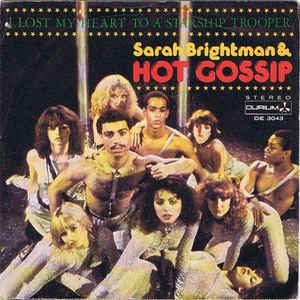
In 1978 Sarah Brightman and Hot Gossip recorded I lost My Heart to a Starship Trooper.
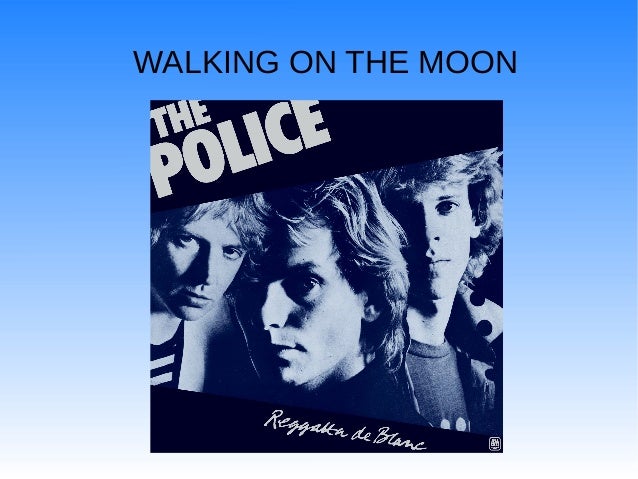
The Police recorded Walking on the Moon in 1979.
1986 saw Europe release The Final Countdown.

This song is a favourite at sporting events, often being played to rally crowds. On 2 October 1990 just a few hours before the German reunification, the English segment of international radio broadcaster of former East Germany RBI, played the intro of the song.
REM‘s Man on the Moon came out in 1992

In 1998 Belle and Sebastian recorded A Space Boy Dream which was about a boy who dreamed that he had the opportunity to fly to Mars with his dad and his sister but in three separate spaceships.
While I was drafting this post yesterday I heard on the radio that William Shatner had become the oldest person to travel to Space and back. Which led me to think that I haven’t yet covered films and TV programmes about Space through the decades. Possible Part 3?
Credit to Google Images and Wikipedia. As always, I have endeavored to ensure that nothing used in this post infringes copyright. If anyone objects to my use of an image, contact me and I will remove it.


 ‘Uncle Mac’ the voice of Saturday mornings in the 1950s.
 ‘Sparky’s Magic Piano’ is the second in a series of children’s audio stories featuring Sparky, an original character created for Capitol Records in 1947. Sparky is a little boy with an overactive imagination. His adventures involve inanimate objects which magically come to life and talk to him. This is the one I remember best. Sparky’s voice was Henry Blair and the magic piano’s voice was created using a piece of equipment called Sonovox.
 I was amazed to read that the song ‘The Laughing Policeman’ which I used to hear in the 50s had been recorded in 1926! Charled Penrose sang it and it was written by him and his wife but based on ‘The Laughing Song’ by George Johnson which was first recorded in the 1890s. This was proper music hall stuff!
 Big Rock Candy Mountain next. I loved this song! I loved the way Burl Ives’ wonderful voice and the fantasy world described in the lyrics painted vivid pictures in your mind as you listened. His ‘I Know an Old Lady’ was another regularly played song.
 In 1952, a film was released based on the life of Danish story teller Hans Christian Andersen. Several of the popular songs of the 50s were from this film. Danny Kaye starred as Andersen and sang the ones I remember best – ‘The King’s New Clothes’, ‘Thumbelina’ and ‘The Ugly Duckling’.
 Recorded in 1956, written by Ralph Butler and sung by Mandy Miller the song ‘Nellie the Elephant’ was used for many years to teach the correct rate for compressions in CPR in First Aid classes. Expert opinions differ so don’t take it as gospel!
 The tune to ‘Teddy Bears’ Picnic’ was written by John Walter Bratton in 1907 and the lyrics by Jimmy Kennedy in 1932. Irish born Kennedy lived in Somerset and is buried there. Local folklore claims that a wood in Staplegrove Elm, Somerset was the inspiration for the song. The popular 1950s version was recorded by Val Rosing.
 This novelty song, written by Bob Merrill in 1952, is reputed to be loosely based on the folk tune Carnival of Venice. A recording by Lita Roza was the one most widely heard in the UK, reaching No. 1 on the UK Singles Chart in 1953. It also distinguished Roza as the first British woman to have a number-one hit in the UK chart as well as being the first song to reach number 1 with a question in the title.
 Two children’s Favourites perennials were ‘You’re a Pink Toothbrush’ and ‘Gilly Gilly Ossenfeffer’ by Max Bygraves. He was seen as the amiable family man but was reputed to be a serial philanderer who had many extra-marital affairs, some resulting in children. He did, however, remain devoted to his wife until the end of her life when they were both in their late eighties.
 Yorkshire born Ronnie Hilton was a popular ballad singer who had several hits in the 50s including a Number One hit in 1953. His very popular children’s song was ‘The Windmill in Old Amsterdam’.
 This was such a fun song! So far I have been unable to find out whether ‘The Runaway Train’ is based on a true story. Liverpool born Holliday was hailed as Britain’s answer to crooners like Sinatra. However, he was plagued with mental health issues and died from a suspected overdose in his late thirties.

 Childhood Memories of growing up in the 1950s and 1960s.